CALLED TO HOLINESS — 20151227

image379In the last issue of this article, I began to present some General Principles relating to finding our true selves. I ended the article with the fact that Jesus knows that we have thoughts of vengeance, violence, lust, pride; there is no sense in trying to hide from Him what He already knows. And yet that is what we try to do when we repress our evil thoughts – we are trying to hide them from Him and from ourselves. The problem is that we don’t wasn’t to admit that such thoughts could even come from us. We are afraid to admit that we have the potential for evil. However, if we lose touch with the potential for evil, two dire consequences await us: our potential for evil will be out of the control of our conscious minds and therefore it will be more apt to be in control of us; and we will also lose touch with our potential for good. In other words, we will not know who we are.

It seems that there are many people in our society who are in this state today. Because they justify their evil thoughts and rationalize their evil deeds, they also cannot see clearly the good within themselves. Therefore, they are ripe for the evil repressed in their unconscious minds to rise up and take over their lives. They live lives of mutual destruction in hatred, anger, jealousy, and the like and create fruitless and frustrating relationships. Our newspapers are filled with their stories, our social agencies are backed up with their cases, and our courts are log-jammed with their litigations.

Jesus’ answer to all this is that we need not fear our potential for evil if we immediately bring it to Him, for He has been victorious over all evil. Because of His Cross, none of us on earth needs to be in bondage to the evil of which we are capable. Therefore, Jesus asks us to tell Him the thoughts of our minds and to let them go into His hands, thereby cleansing our inner selves and making us whole and wholesome.

What are your reactions to this information?
Learning Our Faith From the Greek Fathers of the Church — 20151227

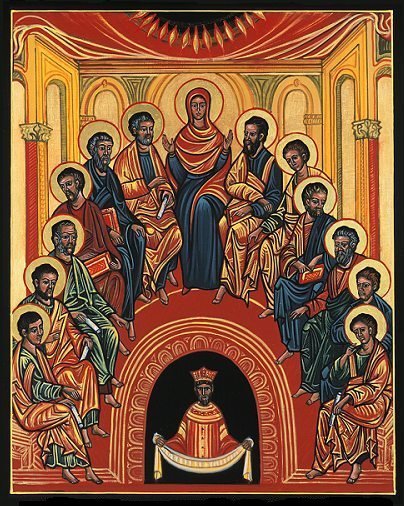
PentecostIn Greek patristic and Byzantine thought, human salvation is understood essentially in terms of participation in and communion with the deified humanity of the incarnate Word, the New Adam. When the Fathers call the Spirit the “image of the Son,” they imply that He is the main agent which makes this communion a reality. The Son has given us “the first fruits of the Spirit,” writes Athanasius, “so that we may be transformed into sons of God, according to the image of the Son of God.” Thus, if it is through the Spirit that the Word became man, it is also only through the Spirit that true life reaches all men. “What is the effect and the result of the sufferings and works and teaching of Christ?” asks Nicholas Cabasilas. “Considered in relation to ourselves, it is nothing other than the descent of the Holy Spirit upon the Church.”

The Spirit transforms the Christian community into the “Body of Christ.” In Byzantine hymns for the feast of Pentecost, the Spirit is sometimes called the “glory of Christ” granted to the disciples after the Ascension, and at each Eucharist, the congregation after communion chants: “We have seen the true light! We have received the heavenly Spirit! We have found the true faith and we worship the undivided Trinity, for the Trinity has saved us!”

Pentecost, the birthday of the Church, is the moment when the true meaning of Christ’s cross and glorious Resurrection becomes manifest, when a new mankind enters back into divine fellowship, when a new knowledge is granted to “fishermen.” This is the main theme of the feast of Pentecost in our tradition, and, curiously, it matches the awareness of many modern students of Christian origins that full understanding of Christ’s teaching is indeed a “post-Resurrection” experience of the early Church: “The Spirit, through His appearance in tongues of fire, firmly plants the memory of those man-saving words which Christ told the Apostles, having received them from the Father.” But the “knowledge” or “memory” granted by the Spirit is not an intellectual function; it implies an “illumination” of human life as a whole. The theme of “light,” which, through Origen and Gregory of Nyssa, permitted the association of the Biblical theophanies with Greek Neoplatonic mysticism, also permeates the liturgical hymnography and prayers of Pentecost.

Hopefully this is all beginning to make more sense

The Spirituality of the Christian East — 20151227

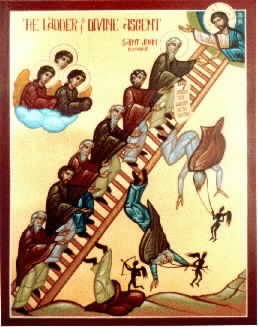
Ladder of Divine AccentBefore the Feast of the Lord’s Birth, I was sharing thoughts about the 11th Step on John’s Ladder, Talkativeness and Silence. While we may think of talkativeness as a bad quality, very few usually connect it with sin. But as long as we consider the tongue to be autonomous – something that falls outside the scope of Christian ascesis, something independently of God – it will inevitably become a tool of sin. As St. James writes:

The tongue is a fire, a world of iniquity. The tongue is so set among our members that it defiles the whole body, and sets on fire the course of nature; and it is set on fire by hell. No man can tame the tongue. It is an unruly evil, full of deadly poison. With it we bless our God and Father, and with it we curse men, who have been made in the similitude of God. Out of the same mouth proceed blessing and cursing. My brethren, these things ought not to be so.

Silence is the fruit of repentance, mourning and the remembrance of death. Even the chattiest of people are silenced when they are faced with somber and sobering thoughts. When we remember our sins, when we remember death and judgment, we can find no place for idle words. Thus St. John writes:

The man who recognizes his sins has taken control of his tongue, while the chatterer has yet to discover himself as he should. The man who is seriously concerned about death reduces the amount of what he has to say, and the man who has received the gift of spiritual mourning runs from talkativeness as from a fire.

By contrast, when we are spiritually lazy, we try to fill the vacuum with pointless chattering. The Ladder pinpoints three fundamental causes of such talkativeness. I wonder whether you can guess those in advance?

Next week, the three fundamental causes!

Understanding Our Ukrainian Greek-Catholic Church — 20151227

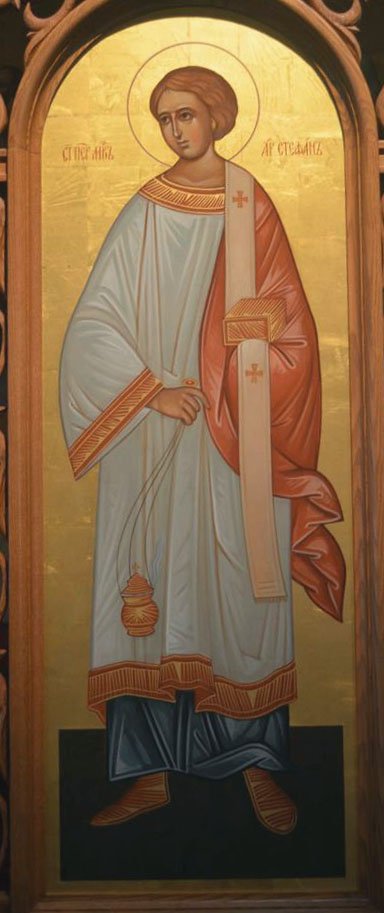
decon_doorIn the feast of the Nativity we admired the infinite love and sacrifice of God for us. On the third day after the feast, the Church places before us the heroic example of the love of God in the person of the Protomartyr Stephen. St. Gregory of Nyssa says:

Behold we go from one feast to another and receive grace upon grace. Yesterday the Lord the universe filled us with wonder, whereas today the disciple of the Lord fills us with wonder. In what manner the former, and in what manner the latter? The former, for our sakes assumed human nature, while the latter for the sake of the Lord rid himself of human nature. The martyr’s death of Stephen is truly singular, as is his cult, which is enjoyed in the Church of Christ since apostolic times.

The Eastern Church gives Stephen a title that is threefold: Apostle, Protomartyr and Archdeacon. Stephen belonged to the 70 apostles whose memory our Church honors on the 4th of January. For his holiness, fortitude and zeal in spreading the word of God, he deserves the title of apostle in every way. The Acts of the Apostles say that he was “a man full of faith and of the Holy Spirit”.

Stephen was not only a zealous apostle, but was also the first martyr. Accused before the Sanhedrin by false witnesses, he bravely professed the holy faith. For this they led him out of the city and stoned him to death. This occurred in the year 34 or 35 CE. Like Christ, he too prayed for his enemies at his death. Saul, a young Rabbi who later became the Apostle Paul, took part in his martyrdom. As a result of this heroic act, Stephen has received the title of Protomartyr or First Martyr. The Holy Fathers highly extol this title in their sermons and it is emphasized, in a special way, by our Church.

Our Church has an additional feast in his honor on August 2nd when it remembers the translation of his relics to Constantinople in the year 560 CE.

He is given the title of Archdeacon because he was first among the seven deacons chosen to take care of the poor.

Originally his feast was celebrated on the second day after Christmas. When, however, the Eastern Church   instituted the Synaxis of the Mother of God somewhere in the seventh century, his feast was transferred to the third day after Christmas.

The feast of Stephen was already generally known in the fourth century and was celebrated on an equal footing with those of the Apostles. His relics were first found in 415 CE. There are many and different legends that surround this First Martyr.

The Divine Liturgy and Our Worship of God — 20151227

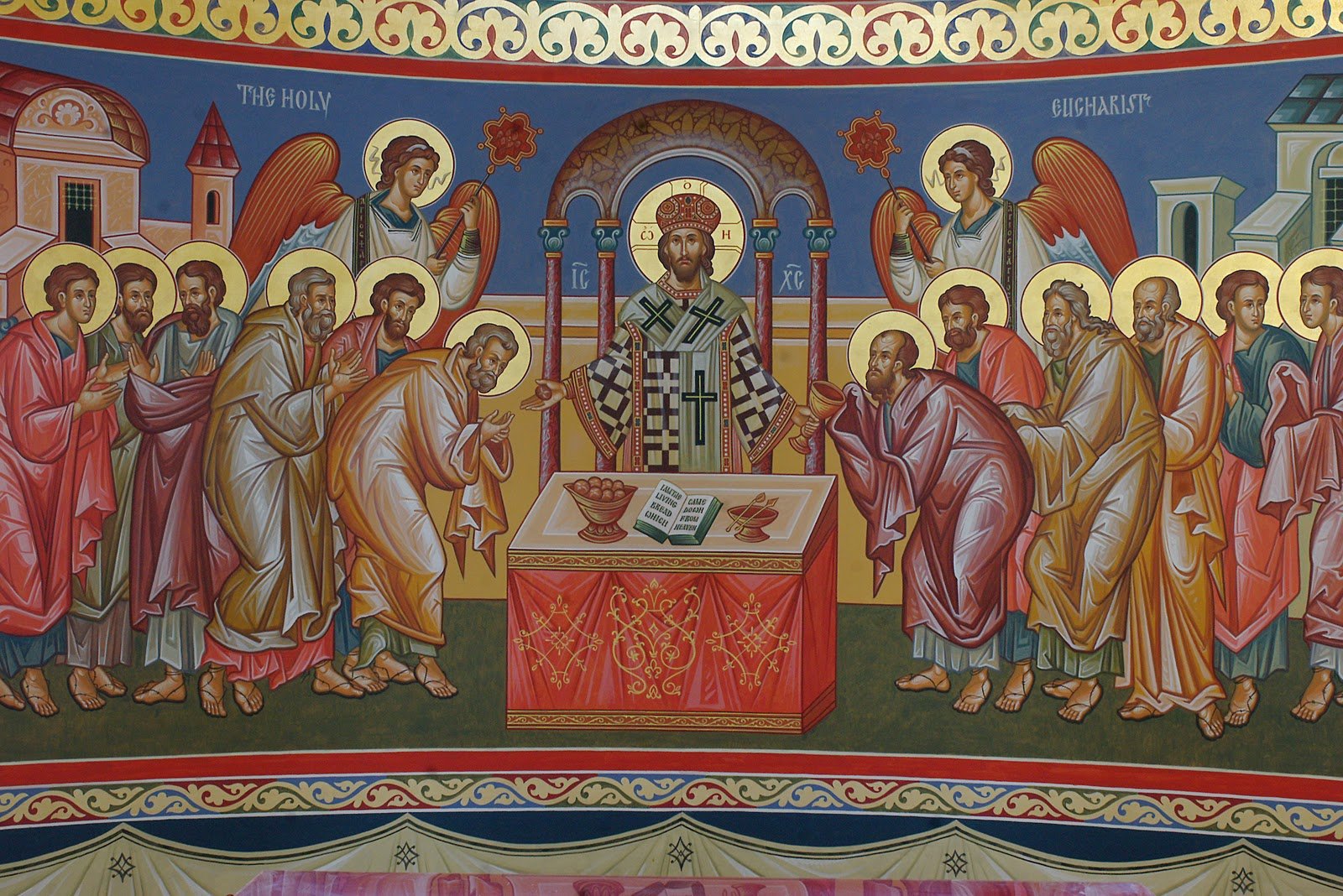
Holy Eucharist IconIn the last issue of this article, I shared the fact that the Church is a community that gathers for anamnesis, and is in a profound sense formed and shaped by it. This is perhaps most evident in the Eucharist, and most fully developed in the sense of remembrance and anticipation at its heart. Luke shares the story of the two disciples who, on the road to Emmaus, encountered Jesus, after His death, on the road to Emmaus: Jesus explained to them in the whole of scripture the things that referred to Himself and then He broke the bread, and offered it to them. Then their eyes were opened, and they recognized Him and then without a moment’s delay they set out and returned to Jerusalem.

This story illuminates the complex dynamics of this activity of anamenesis. The climax of the story occurs when the risen Christ breaks bread with them. This text gives us an insight into the Eucharist. Just as in the liturgy, the disciples heard scriptures explained to them; then they shared a meal during which the risen Christ is recognized in the breaking of bread. There is continuity with the Last Supper and there is a moment of transformative encounter, which moves the disciples to return to Jerusalem where the Church is coming into being, and they begin to engage in mission.

Individually and corporately we need to remember and anticipate in order to make sense of our own identities and purpose in the world. The Church is dependent on its act of anamnesis: her life and witness over two thousand years has been punctuated by obedience to the command ‘Do this in remembrance of me’. It is a practice that is both retrospective and anticipatory. In the Eucharist we remember God’s acts in salvation history, culminating in Christ’s life, death and resurrection and focusing on the Last Supper. Like the disciples on the road to Emmaus we encounter Christ in the present to be nourished and transformed. The Church is called into being. The process of anamnesis has effects in the present as the Church is sent out in service and mission as His Church, anticipating the future Kingdom. To share in broken bread and out poured wine is to participate in the body of Christ. Thereby, the Church is formed as the body of Christ in and for the world. The Church celebrates the Eucharist and is formed by and in it.

Gaining a Deeper Understanding of the New Testament — 20151227

Saint PaulI have been sharing information about First Timothy which is attributed, albeit inappropriately, to St. Paul. Hopefully my readers have found time to pick up their New Testaments and read this short letter.

In its final chapter, this letter deals with the question of wealth. This indicates that in at least some Christian communities by the time it was written, there were some who were “rich” – perhaps not superrich, but rich by the standards of the time. The author cautions against wanting to be rich:

We brought nothing into the world, so that we can take nothing out of it, but if we have food and clothing, we will be content with these. But those who want to be rich fall into temptation and are trapped by many senseless and harmful desires that plunge people into ruin and destruction. For the love of money is a root of all kinds of evil, and in their eagerness to be rich some have wandered away from the faith and pierced themselves with many pains.

Having food and clothing – having what we need – is the basis for any real contentment. It is enough. Though wealth itself is not condemned, the   desire for it is: “The love of money is a root of all kinds of evil.” That is very strong language and it invites the   question: Is that true?

In almost the last verses of the letter, the author suggests what to say to those who are already rich and yet Christian:

As for those who in the present age are rich, command them not to be haughty, or to set their hopes on the uncertainty of riches, but rather on God who richly provides us with everything for our  enjoyment. They are to do good, to be rich in good works, generous and ready to share.

The list includes both negatives and positives: the rich are not to be haughty or to trust in riches; they are to trust in God, do good, and be rich in good works, generous, and sharing.

Thus, even as 1 Timothy reflects the settling down of Christianity and early stages of accommodation to the dominant culture, it also in   its cautions about wealth preserves some of the radical impulse of Jesus and Paul and the earliest form of Christianity. It is a document that is characterized as accommodationist. This doesn’t mean, however, that it is without value and merit.

The arguments advanced against Pauline authorship can be summarized as follows: (1) The errors described in the Pastorals are Gnostic errors of the 2nd century; (2) the stage of organized Christian communities is that of the early end century; (3) the style and vocabulary are so different from the genuine Pauline letters; (4) the tone of the Pastorals, emphasizing the fixity of the traditional truths is opposed to the spirit of the genuine Pauline letters.

Christmas: One of Our God’s Manifestations

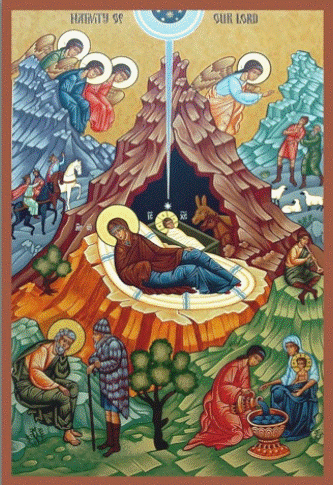
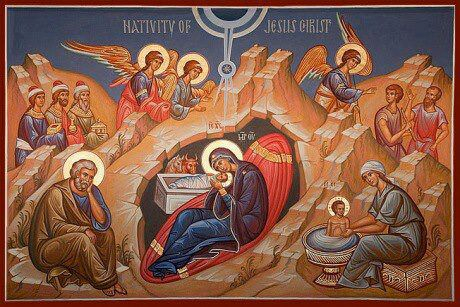
nativIcons are a theology, a theology in color, expressing the experience of God with lines and paints rather than with discursive language. The goal of icons and that of written theology are the same – to lead others to the mystical experience of God. The icon of the  Nativity of our Lord is packed with theology. Most comes from Holy Scripture and all comes from Tradition. It depicts in paint the Incarnation, God being man, and the beginning of our salvation.

In the traditional icon of the Nativity, a number of different persons are depicted. There are, of course, angels. Some stand in awe at the great mystery. Some announce the news to the simple shepherds. The foreign Magi, also known as the Three Kings, are there to announce that salvation is for all humankind. Also depicted are midwives bathing the Christ Child in order to reinforce the   belief that He is human.

In the lower part of the icon, both Joseph is being tempted by an evil spirit depicted as a shepherd, not to believe Mary’s story that the child is special and that this is a virgin birth. It should be noted that Joseph, by Eastern Christian tradition, is shown as an older, widowed man. Joseph, because he trusted Mary, overcomes this temptation and becomes the protector of the Virgin Mary and the guardian of Jesus.

The Virgin Mary is shown looking towards Joseph, relying on her Lord, praying that he will not listen to Satan. Mary is lying on a red blanket signifying the color of life.

Next to the Child in the cave are an ox and donkey there to remind us of Isaiah 1:3, “The ox knows his owner and the donkey knows his master’s crib. But Israel does not know, and my people do not consider me.”

Christ is shown in a dark cave to represent that He is the light of the world. Christ is wrapped in swaddling clothes and in a crib. The crib symbolizes the future tomb in which He will be laid and the swaddling clothes the shroud that will cover Him in His burial. This is done intentionally to illustrate that the purpose of the Incarnation of Christ was to make possible the Crucifixion and Resurrection.

The entire story of Christ, as it is presented by the Church, starts at the end, His death and Resurrection, and looks back to His birth.


From the Pastor’s Desk

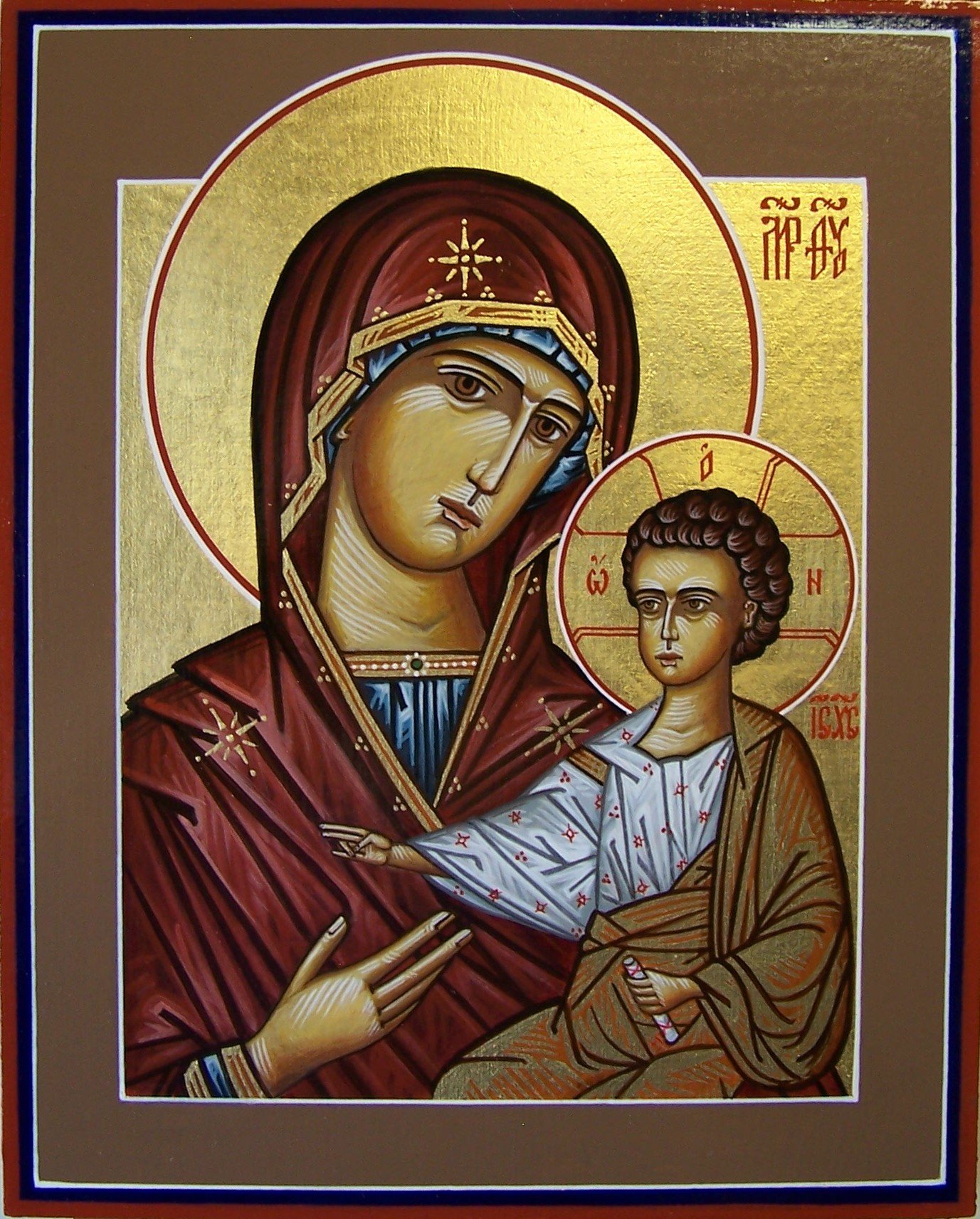
theotokosTHANK YOU

A word of thanks is offered to: all who   have so generously supported the two spiritual communities I serve; all who took the time to offer me Christmas greetings; all who donated for flowers to enhance our worship space; all who have supported various community activities; all who assisted in any way to make our services special and beautiful by singing or serving; and all who have come repeatedly and prayed together with me. It is my sincere hope that, in some way, my efforts have helped you on your life’s journey.

Many, Many Thanks  

SPECIAL GREETINGS

Special Christmas Greetings are extended to those who may be reading this Bulletin but were unable to celebrate this feast with me because of health or miles separating us. Please know you were remembered. May God bless you abundantly with peace,  happiness and good health.   Christ IS Born! Glorify Him!

WELCOME

A warm welcome is extended to any who have joined us for our Christmas celebration as either first time guests or old friends. Please know that your presence for our celebration was welcomed. I hope that your experience was spiritually rewarding. Please know that you are always welcome and I truly hope to see you again in the future.

Christ IS Born! Glorify Him!

When the  Lord Jesus was born of the Virgin, the whole creation lit up. Behold, shepherds keep watch, the Magi adore, angels sing hymns of praise and Herod  trembles, for the Savior of our souls has appeared in the flesh

nativity-icon

Dearest Brothers and Sisters,

Christ IS Born! Glorify Him!
Христос Раждається! – Славіте Його! 
– Ukrainian

Kristus De Je Rodil! – Slavite Ga! – Slovenian
Christos Gennatai! – Doxasate! – Greek
وُلِد المسـيحُ، فَمَـجِّدُوه – Arabic  

As we celebrate again the Birth of Our Lord and God and Savior Jesus Christ, we are filled with gratitude for the gift of life. By His incarnation in the Person of Jesus, God revealed that it is His life-force that clearly animates all living things – gives us existence.

By His birth as a human person, God has revealed that humans are made in His image and have the   potential to become unto His likeness. The great Eastern Father of the Church Athanasius, clearly drawing upon the words of Peter, stated his belief in literal deification saying “The Word was made flesh in order that we might be made gods. Just as the Lord, putting on the body, became a man, so also we humans are both deified through his flesh, and henceforth inherit everlasting life.” The phrase that our Church proclaims with Athanasius are God became man so that man might become God.

This belief gives us reason to rejoice again when we proclaim Christ IS Born since it speaks not only of God’s great love for us but also provides us with the hope that can sustain us on life’s journey. I would share again with you, my believed family and friends in Christ, this belief as a way of encouraging you to place your hope and trust in God, the giver and sustainer of life.

We have been called to share life’s journey. May we sustain and support each other in the belief that God IS With Us and Within Us as a way to express our love for one another. Please know that I, given the gift of the priesthood, offer my prayers for each and everyone of you.

With all my love, Father Wayne


Understanding Our Ukrainian Greek-Catholic Church — 20151220

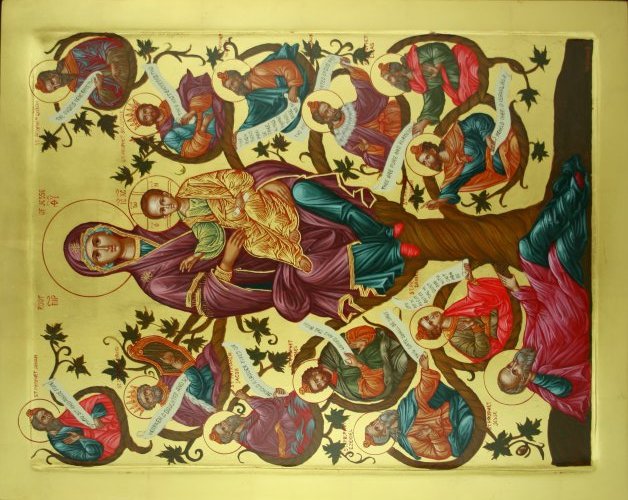
Tree of JesseThis is the Weekend of the Holy Fathers or Ancestors of Christ. On this weekend the Church honors all those who were well-pleasing to God from all ages, from Adam to Joseph the Betrothed of Mary and those who are mentioned in the   genealogy contained in Luke 3:23-38. Last weekend we remembered the Holy Forefathers, the righteous of the Old Testament who awaited the coming of Christ. This weekend we remember those who were related to Christ by blood and those who spoke of his birth as a man. To remember the family roots of Christ is to affirm His humanity. To remember the roots of Christ is an act of love.

The icon often used on this weekend represents the Holy Ancestors and is known in Greek as the Root of Jesse (Ρίζα Ιεσσαί) and in Old Slavonic as the Tree of Jesse (Древо Иессеево). It’s therefore unsurprising that most images of this type depict a large tree springing forth from Jesse, who is often shown reclining.

Jesse was the father of King David and, though we know little else about him, this fact alone is significant. We know that in Jewish history the Messiah was prophesied to be descended from David. In our church David himself is considered as a foreshadowing of the person of Jesus Christ and so Jesse is shown as the root of this line of descent which culminates in Christ, who is depicted centrally within the tree as a child, sitting on the lap of His mother.

The branches surrounding Jesus and His mother depict smaller images of Christ’s ancestors along with those who prophesied of His coming. These can be as simple or as complicated as individual iconographers wish, but traditionally must contain King David and his son Solomon along with a few of the prophets.

Each of these depicted predecessors of Christ is typically shown with a scroll containing the relevant prophecy. Our true belief is that God became incarnate as a man of a people who had the tradition that God had promised to send them one who was anointed to lead them.

The prophets brought together the various views concerning the Messiah. Isaiah’s proclamation, for one, was that the Messiah would be born of a virgin and be the wise, all-knowing ruling son of David and the fruitful branch who would bring redemption, restoration and blessings to Israel. It was he who         proclaimed that the Messiah was to be the light to the Gentiles and also the suffering, exalted One, the Messiah, the healer and bringer of joy.