Faith is confident assurance concerning what we hope for and conviction about things we do not see!

We celebrate today the memory of the Ancestors of Christ. Sing with fervor a hymn of praise to Christ the Savior who magnified them among all nations. He is the Lord who does wondrous deeds because He is powerful and mighty, and who shows us His strength through these Ancestors.
Lamp-Lighting Verses Of Vespers

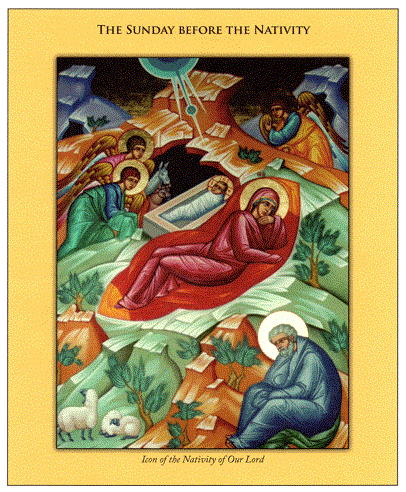
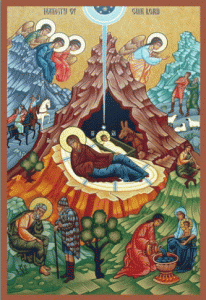
nativityIt is only by faith that we can truly celebrate the first manifestation of God to humankind, namely His birth as a Child. Our Church would have us, through this coming feast, recognize a very important belief of our faith, namely that God actually became a human being in the Person of Jesus Christ. This is one of the truly unique aspects of our Christian faith, namely that God Himself has taken on human flesh in order to reveal to us our true human nature and also show us how to live in order to derive the full benefit that has been given to us by earthly life.

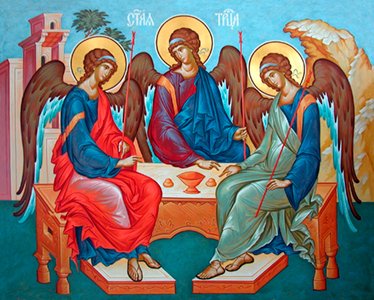
It is because of this belief that Christianity has come to believe that God is Triune in essence – He is Three Distinct Persons in One Godhead. Our Church came to this belief as it was guided by God’s Spirit to see Jesus as truly God and truly man. If Jesus is truly God, our Church has come to believe that God must have at least one other, distinct personality. Further He must be seen, because of His power, as also having a third Person, the Holy Spirit.

Christianity has come to see that our God is a Trinity of Persons because it believes that Jesus is God incarnate. All of His actions during His physical life on earth spoke to the fact of His unique power.

The event we are about to celebrate, namely God’s incarnation as a human being, connects us to Him in a unique manner. It tells us, first and foremost, that the life-force which animates us as human beings is, in truly some mysterious manner, also the same life-force which is God Himself. Because all humans are brought into existence by sharing in God’s own life-force, all humans also have the gift of immortality. All humans have been and will be a thought in the mind of God for all of eternity.

What an incredible and wondrous mystery! Let us truly prepare to celebrate it!

THE CELEBRATION OF GOD’S INCARNATION AS THE PERSON JESUS — 20151220

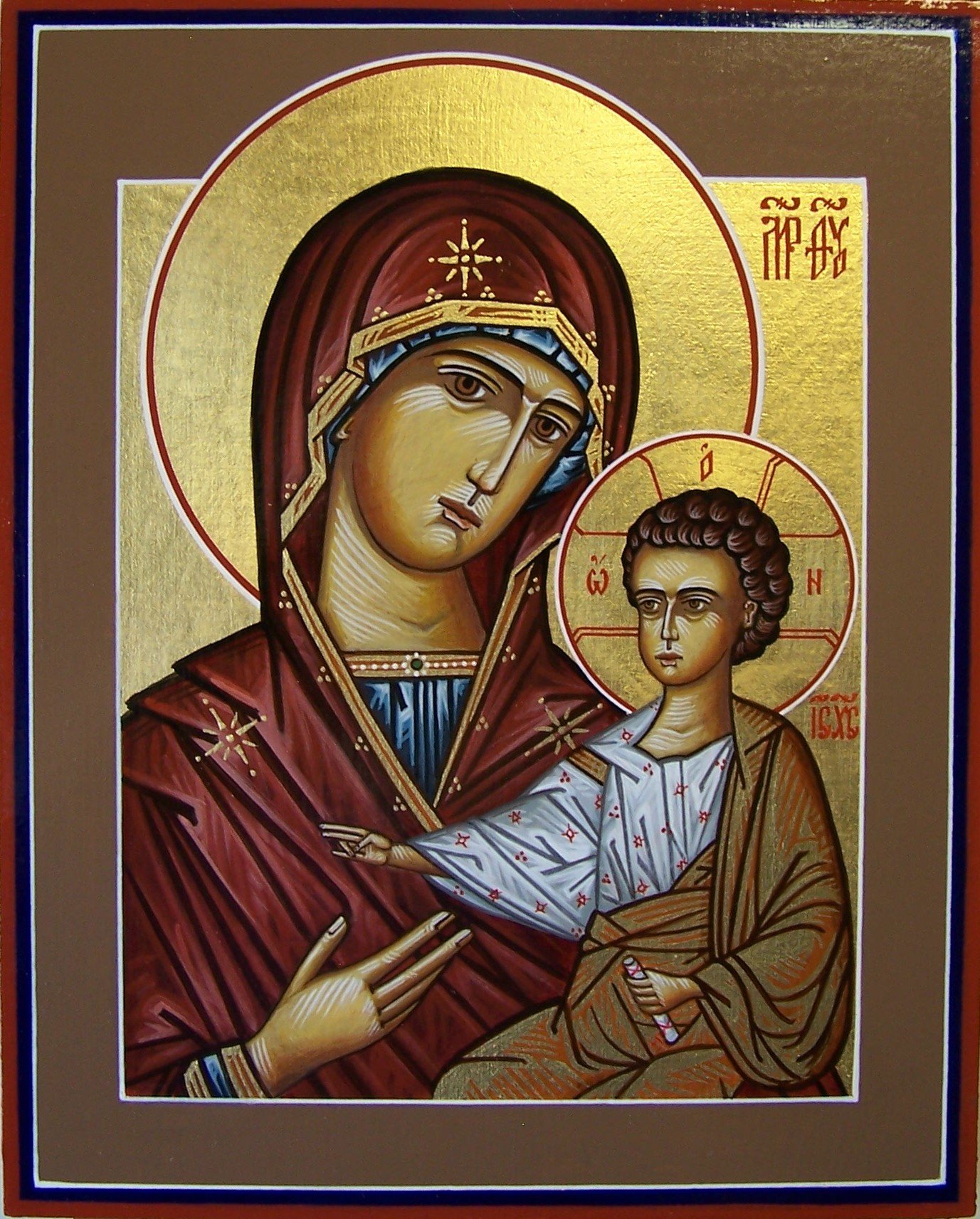
theotokosThe following is a long-standing tradition which does not purport to be actual history but captures so much about this marvelous event.

In the year 2015 BCE from the birth of Abraham, in the year 1510 BCE from the exodus of the people of Israel out of Egypt, in the year 1032 BCE from the enthronement of David the Prophet and King, in the sixtieth week of the prophecy of Daniel, in the forty-second year of the reign of Caesar Augustus, in the thirty-third year of the reign of Herod, when the staff had gone from Juda as had been prophesied by Jacob the Patriarch, at a time when the whole world was a peace, it pleased God to send his only-begotten Son and eternal Word to the world to become Man and to teach us God’s love, to suffer and die and rise from the dead for our salvation.

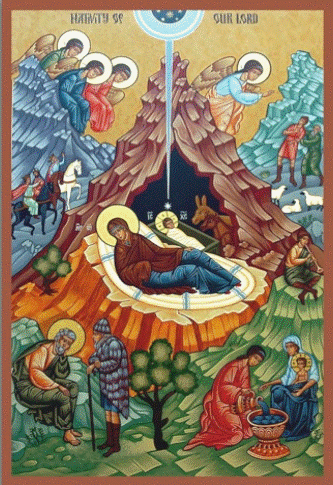
At that time, the Lord Jesus was born in a humble cave in Bethlehem of Juda, and no one knew of it but the Virgin Mary his Mother and Joseph her spouse. No one heard of this miracle surpassing all miracles but a few humble shepherds who had been told by angels in the sky that sang this hymn: Glory to God in the highest, on earth peace and good will towards men.” Then the Magi came from the East, led by a star in heaven: they found their way to where the Divine Infant rested, and they adored Him, and opening their treasures, they offered Him gifts of gold, incense and Myrrh.

To God Incarnate, to the suckling Infant who humbled Himself and took our form, becoming one of us in order to make us divine; to the One who later walked among us to teach us the way of salvation and who loved us so much as to give his life for it; to Him glory, honor and adoration for ever and ever. Amen.

Why did the evangelists have the Magi give the gifts they did?

  • Goldsignifies the royal majesty of Jesus, revealing Him as King.
  • Frankincenseis an incense used for worship, revealing Him as God.
  • Myrrhis used to prepare a body for burial, thus foreshadowing His Death.

The story of God’s incarnation in the Person of Jesus is OUR STORY – the story of a people who believe in Jesus Christ as God Himself. It is the story that should inform our way of thinking, behaving and living. This story confirms our belief that God so loves us that He came Himself to help us understand the meaning and purpose of life. He created us in His image and planted in us the potential to grow in His likeness. We are called to cooperate with life and work to grow in His likeness so that we might truly be His children.

CALLED TO HOLINESS — 20151220

Holy-Trinity-9In the last issue I began to present some general principles about freeing our true selves. The question is, How can we do this? The simple answer is that we   cannot do it unassisted. Unassisted we have no power to extract any images out of our own minds. Unassisted we are doomed either to repress or to think about any images that come to us. The answer to our dilemma, according to Paul, is in Jesus. “Let the peace of Christ rule in your hearts” – this is the only solution to our problem. Jesus’ approach must be ours if we are to be freed of the thoughts and feelings that we find in ourselves that keep us from growing.

How does Christ bring peace into our hearts? First He asks us to be open and honest about our thoughts. Whenever Jesus met evil and destructiveness He had the same approach: “Repent of your sin and I will forgive.” We cannot repent of our sin, of the evil of our false selves, if we do not acknowledge it is there. We cannot repent of our sin, similarly, if we only think about it and do not tell anyone of it. Repentance means honesty and confession.

So, rather than condemning ourselves for the bitter thought of revenge that we were thinking, Jesus calls us honestly and freely to bring it to Him to begin the process of spiritual growth. “There is now no condemnation for those who are in Christ Jesus”, Paul wrote. By entering relationship with Jesus, we can avoid condemning ourselves and being condemned. When we are honest with the Lord about our bitter thoughts we are giving Him the opportunity to cleanse our imaginations of the images of revenge that are controlling them, and so we have the opportunity to discover our true selves.

Jesus knows that we have thoughts of vengeance, violence, lust, pride; there is no sense in trying to hide from Him what He already knows. And yet that is what we try to do when we repress our evil thoughts – we are trying to hide them from Him and from ourselves.

The Divine Liturgy and Our Worship of God — 20151220

Mystical Supper

Mystical Supper

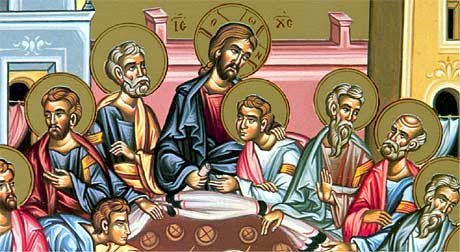
I suspect that many of my readers are wondering when I will ever finish with the topic of Anamnesis. It seems that I have been writing about this for weeks. I have purposely spent a lot of time on this idea since I believe it can make a great deal of difference to our worship if we truly understand this idea. And I would admit that it isn’t an easy idea to understand. How can it be that what we do together actually makes present what Jesus Christ did with His disciples thousands of years ago? How can it be that somehow Christ is truly present with us under the appearance of bread and wine? Many humans find it too hard to believe these things! They are ideas that can only be accepted by and with faith.

So why is it that some of us are able to accept the truth of these matters and others aren’t? The answer is that we are able to do so only because of the gift of faith that God has given us. Why has He given us this gift? We have been given this faith because He knows that it is important for us in order to achieve the goal of life, namely growing in His likeness.

I would ask your tolerance if still presenting more information about this very important idea.

In a fundamental sense worship is   a corporate activity; it is social in structure within which people are embedded into a particular kind of society. The opening words of the liturgy gather those present in the name of God: Father, Son and Holy Spirit. There is a corporate confession; the Gospel is proclaimed; the creed is recited; the congregation is led in an act of incorporating intercessions; the community shares in the Eucharist and is sent out in love and peace. Participation forms a corporate identity grounded in the remembrance of a particular story. To engage with the   concept of anamnesis is to understand more fully the nature of the relationship between the Church’s worship and its life and witness as the body of Christ in and for the world. It is the Eucharist that lies at the heart of the Church’s mission.

The Church is a community that gathers for anamnesis, and is in a profound sense formed and shaped by it. The sacraments form a focal point for this ongoing process: initiating new members into the Church and sustaining, challenging and nourishing them within it.                       (More to follow)

Learning Our Faith From the Greek Fathers of the Church — 20151220

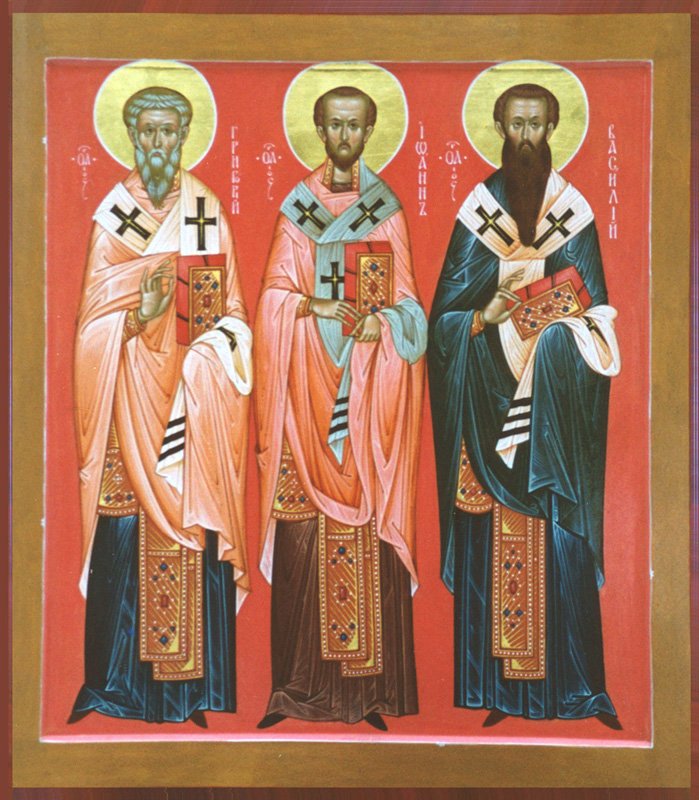
capadociosThe Cappadocian Fathers stressed the fact that in the economy of salvation (this is the typical way that the Fathers expressed the process of salvation), the Son and the Spirit are inseparable: “When the Word dwelt upon the holy Virgin Mary,” Athanasius writes, “the Spirit, together with the Word, entered her; in the Spirit, the Word fashioned a body for Himself, making it in conformity with Himself, in His will to bring all creation to the Father through Himself.”

I would ask my readers to stop and think about these words of Athanasius (he was not a Cappadocian Father but was together with them in thought). They are profound and give a clearer picture of how the Spirit works. It is the power of God that actually makes real what God intends.

The main argument, in favor of the consubstantiality of the Spirit with the Son and the Father, (you will note that the Church had to make arguments about each of the Three Persons of the Trinity since it is a very complex, religious concept) used by Athanasius and Cyril of Alexandria and by the Cappadocian Fathers, is the unity of the creative and redemptive action of God, which is always Trinitarian: “The Father does all things by the Word in the Holy Spirit” (this is the basic understanding of the working of the Trinity that was developed by the Eastern Fathers).

The essential difference between the action of the Word and that of the Spirit is that the Word, and not the Spirit, became man, and thus could be directly seen as the concrete person and hypostasis of Jesus Christ, while the personal existence of the Holy Spirit remained covered by divine incognoscibility. The Spirit, in His action, reveals not Himself but the Son; when He indwells in Mary, the Word is being conceived; when He reposes on the Son at the baptism in Jordan, He reveals the Father’s good will toward the Son. This is the Biblical and theological basis of the very current notion, found in the fathers and in the liturgical texts, of the Spirit as image of the Son, while the Son Himself is the image of the Father. In the context of a dynamic thought, the static Hellenic concept of image reflects a living relationship between the divine persons, into which, through the incarnation of the Son, mankind is introduced.

It is this understanding of the way that the Trinity works that has caused the Eastern Church to retain the original form of the Creed which states that the Spirit proceeds from the Father and not the Father and the Son.

Gaining a Deeper Understanding of the New Testament — 20151220

Saint PaulThe qualifications for bishop, according to 1 Timothy, begin with positives. A bishop must be above reproach, married only once, temperate, sensible, respectable, hospitable, and an apt teacher. They continue with negatives. A bishop cannot be a drunkard, violent, quarrelsome or a lover of money. He must not be a recent convert, or he may be puffed up with conceit and fall into the condemnation of the devil.

Who could disagree with either the positives or the negatives. But note also that he is to be married only once. We do not know if this was a prohibition or polygamy or of divorce and remarriage. The point is that a bishop, an overseer, was supposed to be married. As the qualifications continue, it is taken for granted that he is the head of a family, a household: “He must manage his own household well, keeping his children submissive and respectful in every way – for if someone does not know how to manage his own household, how can he take care of God’s Church?

Finally, “He must be well thought of by outsiders, so that he may not fall into disgrace and the snare of the devil.” To be well thought of by outsiders may in some circumstances be a virtue, but this sounds like accommodation to the dominant culture. The qualifications for deacons, though somewhat different, are consistent with the above. What we see in 1 Timothy is the process not only of institutionalization but also of cultural accommodation.

This letter also accommodates the institution of slavery. This sounds very different from the Paul of the seven letters, especial Galatians and Philemon. The radicalism of the early Paul is toned down, indeed eliminated.

Institutionalization is also reflected in the letter’s directives for deciding which widows qualify for financial support. The financial support of widows had become a burden for the community and so there was a need to define who the real widows are.

The letter is interesting for more than one reason. It illustrates not only the development of practical   regulations that are part of the process of institutionalization, but also a problem facing any movement that   emphasizes the sharing of the material basis of existence. The problem is generated by limits on the community’s resources and the issue of freeloaders, people who like the sharing aspect and take advantage of it. Hence the need to develop directives, rules for allocating the community’s resources.

Be sure to read 1 Timothy!

The Spirituality of the Christian East — 20151220

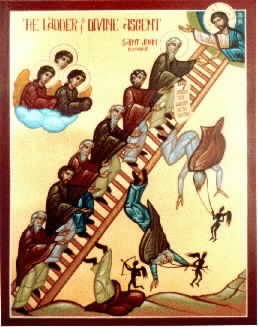
Ladder of Divine AccentAs we contemplate John’s 11th Step on the Ladder, we might ask, “Why is so much importance attached to silence in all forms of spirituality?” Because the more we speak, the less we listen; the more we hear the sound of our own voice, the more we drown out the silent voice of our conscience.

I am sure we have all experienced the harm one word too many can do. Consider how many times you, or someone you know, has made an off-the-cuff remark or bad joke that has caused someone to have hurt feelings or poisoned a friendship. Now consider how many times you have spent hours happily chatting to people and then walked away feeling empty insider or overloaded with pointless information, along with a sudden urge for peace and a burning need to just get away and to retreat into silence.

A fundamental principle of Christian spirituality is that our whole being – every part of us – is to be disciplined, purified and given to God. This applies also to the tongue. St. James writes in his Epistle: “If anyone does not stumble in word, he is a perfect man, able also to bridle the whole body”.

Eastern Christian spirituality is truly wholesome asceticism. By this I mean our focus is not on a particular sin or faculty. Many Christian groups seem to focus entirely on one particular sin or passion, be it premarital sex, drug addiction, alcoholism or abortion. The result is a fanatical obsession with one vice at the cost of all else.

The goal of Eastern spirituality is union with God and not merely avoiding sin, much less any one particular sin. It therefore stands to reason that talkativeness, which many may consider a very minor fault, is considered as much a passion and a tool of sin as any other vice. If we are to hear God speak, we must be silent.

PASTORAL MESSAGE OF THE UKRAINIAN CATHOLIC HIERARCHY OF THE U.S.A. TO OUR CLERGY, HIEROMONKS AND BROTHERS, RELIGIOUS SISTERS, SEMINARIANS AND BELOVED FAITHFUL CHRIST IS BORN!

nativThe Nativity of Our Lord and Savior Jesus Christ this year will be celebrated within a Holy Year announced by Pope Francis. This extraordinary jubilee is dedicated to Divine Mercy. It began on the Solemnity of the Immaculate Conception (December 8th) and will conclude on November 20th, 2016. Our Holy Father expressed the hope that the whole Church will find “the joy needed to rediscover and make fruitful the Mercy of God, with which all of us are called to give consolation to every man and woman of our time”. Pope Francis calls us to enter a journey that begins with a spiritual conversion. He calls all of us to live this year in the light of the Lord’s words: “Be merciful, just as your Father is merciful”. (Luke 6:36)

The story of the Nativity of Our Lord and Savior Jesus Christ gives us glaring hints at how we might accept God’s mercy, how we may live it and how we witness it to the world which surrounds us.

God’s mercy is evident in how he intervened with the birth of His only begotten Son, Jesus in a time equally difficult and challenging as today. Jesus was born in a stable because there was no room in the Inn. God’s love for humanity could not be curtailed by the busyness of that world. God’s mercy is not withheld. Is there room in our hearts for Jesus amidst the busyness of today’s demands and schedules? Are we aware of how much God’s mercy surrounds us?

We are struck with the obedience of the shepherds who respond to the angel instructing them to seek the newborn King. We witness the serenity and peace of seeking Jesus in their simplicity and obedience. The three kings or astrologers seek Jesus and are clever enough to deceive Herod in avoiding telling him of the whereabouts of the newborn Jesus. Dedication to seek the truth of the Gospel and avoiding those who might derail us

from meeting Jesus is exemplified. We come to understand what assists us in understanding and accepting God’s mercy.

God’s presence and mercy was not desired by the authorities in Jesus’ time. You will remember how Herod ordered the slaughter of all children under the age of two in his efforts to rid himself of Jesus’ presence. The world today is filled with incidents and societal efforts to rid our surroundings of God’s presence amidst us. Egoistic authorities attempt to exert domination over others to advance specific ideologies and the building of empires. We see this in our native Ukraine, in Syria and its neighboring countries, and in other parts of the world. We are humbled by today’s witnesses and martyrs of faith who defend the rights of believers. They reveal the heavenly Father’s mercy and summon our imitating them in our expression of mercy.

Joseph obediently listened to a warning given in a dream and protected Jesus and his mother Mary by fleeing into Egypt. We are called to understand the plight of today’s refugees in light of our witnessing God’s mercy showered upon Joseph, Mary and Jesus who themselves were refugees. Our response to the plight of refugees should be no less than that which our heavenly Father showered upon the Holy Family.

Pope Francis speaks to us of a journey leading to spiritual conversion. Recall Jesus as a boy becoming lost as the Holy Family made a journey through the desert. His parents found Jesus in the temple teaching others. When you and I lose sight of our purpose in life or lose our way in the busyness and temptations of the world, we can find Jesus Christ, in His Holy temple, His Holy Church. God’s mercy is present in and through His Holy Church and its ministers. Jesus is among us! God’s mercy awaits to be generously poured out upon you as you enter into a deeper journey of faith. That journey ought to begin with availing oneself of the Sacrament of Reconciliation often. God’s mercy is revealed as He listens to the outpouring of your sorrows and sins. In His love for you, expressed through His priest, God reveals His understanding and love for you. God directs you to renewed life in Him in the compassionate advice offered by the priest and in the penance given. God’s mercy is poured out upon you as you receive absolution of your sins.

Pope Francis asks that the door of every home become “the door of mercy”. Ensure that the door of your home, the door of your Church, and the door of your heart all richly reflect openness to reveal the mercy of your heavenly Father. Express God’s mercy by inviting and showing others whom you know, and strangers amidst you to God’s Holy Door, the door leading to God’s mercy.

We join our Holy Father in entrusting this Holy Year to the Mother of Mercy, “that she may turn her gaze upon us and watch over our journey”. The door of the hearts and minds of your bishops of our Ukrainian Catholic Church in USA are open widely, expressing our love and appreciation for all in our Church. We remember you in our prayers humbly offered to Jesus Christ, as together, we celebrate His birth. May each of us grow in our openness to receiving God’s mercy. May we embrace the challenge to be as merciful as our heavenly Father. May we rejoice in offering rich testimony and witness to God’s mercy in the life of the world.

We joyfully impart our episcopal blessings upon all as we celebrate the Nativity of Our Lord and Savior, Jesus Christ, and enter this jubilee year enthusiastically seeking our spiritual conversion.

Christ is Born!

+Stefan Soroka (author)
Archbishop of Philadelphia for Ukrainian
Metropolitan of Ukrainian Catholics in the United States

+Richard Seminack
Eparch of St. Nicholas in Chicago

+Paul Chomnycky, OSBM
Eparch of Stamford

+ Bohdan Danylo
Eparch of St. Josaphat in Parma

+John Bura
Auxiliary Bishop of Philadelphia

Christmas 2015

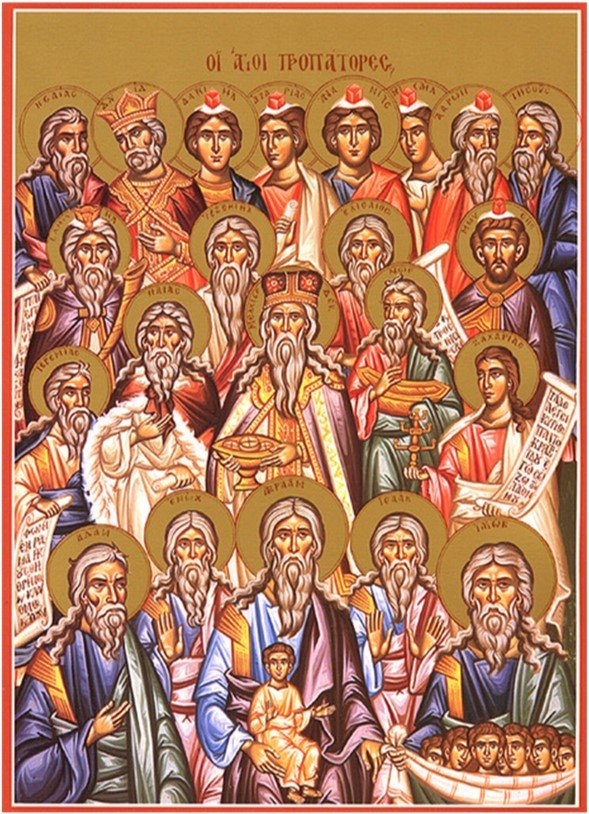
Forefathers of Jesus Christ – His Ancestors.

Through faith, You have justified Your Ancestors, O Christ our God, and through them You have espoused in advance the Church set apart from The Gentiles. The saints rejoice in glory because, from the seed of These Ancestors, has come fort the glorious fruit, who gave You birth without seed.  Through their intercession, O Christ God, save our souls. Tropar

forefathersThis weekend the Church begins to prepare us for the celebration of several feasts that recount God’s manifestation of Himself to humankind. She does this by first remembering the Forefathers of Jesus Christ – His Ancestors.

The Church intends, by this remembrance, to tell us that God has, since the very beginning of human creation, attempted to find ways to help men and women understand the meaning and purpose of earthly existence. He has constantly attempted to reveal to humanity what this life on earth is all about.

In today’s Epistle, which is taken from Paul’s Letter to the Colossians, we are reminded that this earthly life is all about putting on a new man, one who grows in knowledge as he is formed anew in the image of his Creator. Hopefully all who hear this sense the import of this statement.

Life on earth is meant to help us grow in the likeness of God – to come to an understanding of what it means to be the type of human being that God intended when He created us.

In order to have beings who voluntarily and freely return His love, God had to create us with a free will and the potential to grow in His likeness. Life here on earth provides us all the unique opportunities we need to become more like God, as seen in His human manifestation, the Person of Jesus Christ.

Salvation, which is the process of becoming a spiritual being in the likeness of Jesus, requires that we cooperate with God’s gift of life and all the challenges that it presents to us, so that we might actualize our lives as spiritual beings who are also physical.

Like Jesus Christ, we are spiritual and physical beings who need to learn, from the challenges of this life, how to be more like our God-Incarnate, Jesus Christ. We are called to freely embrace a life of personal transformation so that we might be all who we were created to be. Ask yourself: What is the meaning of my life?

Learning Our Faith From the Greek Fathers of the Church — 20151213

capadociosAs I have shared, the Cappadocian Fathers are greatly responsible for our understanding of God, the Holy Spirit. Their understanding truly influences our worship and the way that we celebrate various feasts. In the last issue I mentioned our Eastern Christian celebration of Pentecost. Their understanding of the Holy Spirit is deeply embedded in the feast of Theophany which we will be celebrating in the very near future. It is clearly seen in the Great Blessing of Water.

Water, which is the primeval cosmic substance that is symbolic of life, is sanctified by the power, effectual operation or energy, and descent of the Holy Spirit. The action of the Spirit has a purifying function. In essence the water is exorcised of any evil spirits.

The full significance of this rite of exorcism becomes evident when on recalls that, in Biblical categories, water is a source of life for the entire cosmos, over which man is called to rule. The Spirit liberates man from dependence upon nature. Nature receives “the grace of redemption, the blessing of Jordan,” and becomes a “fountain of immortality, a gift of sanctification, a remission of sins, a healing of infirmities, a destruction of demons.” Instead of dominating man, nature becomes his servant, since he is the image of God. The paradisiac relationship between God, man and the cosmos is proclaimed. The descent of the Spirit anticipates the ultimate fulfillment when God will be “all in all.”

This anticipation is not, however, some sort of magical operation that occurs in the material universe. The universe does not change in its empirical existence. The change is seen only by the eyes of faith – because man received in his heart the Spirit which cries: “Abba, Father”, he is able to experience, in the mystery of faith, the paradisiac reality of nature serving him and to recognize that this experience is not a subjective fancy, but one which reveals the ultimate truth about nature and creation as a whole. By the power of the Spirit, the true and natural relationship is proclaimed and made real between God, man and creation.

As we bless water on Theophany, we proclaim again and experience again the reality of our unity with God and nature. The Spirit of God is actively working at this very moment to bring us into union with God and nature. Our prayers over the water actually make real this union with God and nature.