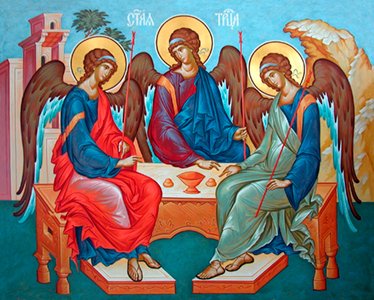
The Divine Liturgy and Our Worship of God — 20151206

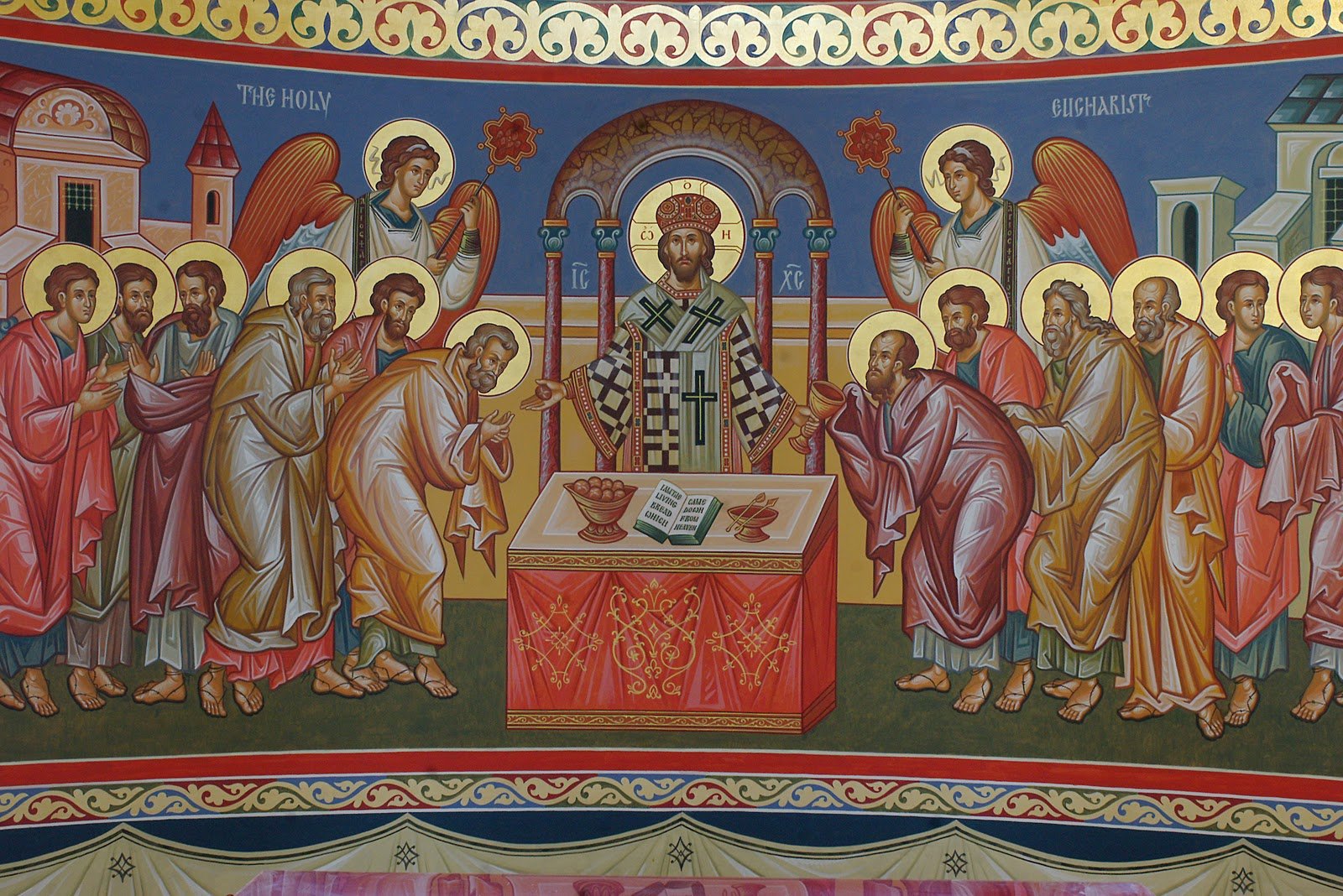
Holy Eucharist IconI have been asked how the anamnetic character of our Liturgy developed. Originally early Christians remembered what Jesus did on the night before He died as a way of having Him with them. They felt His presence. The actions brought back memories. There was no real concept of the bread and wine     actually being changed into the Body and Blood of Christ. It must also be   remembered that it took the Church more than 300 years to finally come to a firm belief that Jesus was actually God incarnate.

While there were some indications in two early documents of the Church, namely the Didache and the Apostolic Constitutions, that somehow continuing to do what Jesus did make Him present in a real way, no direct progression can be drawn from these two sources.

While both of these early sources link anamnesis with thanksgiving, only the Apostolic Constitutions correlate anamnesis with offering. This offering is, however, not ours but that of Jesus. These sources do acknowledge that the Eucharistic celebration is an antitype of Christ’s self-sacrifice, that is something that refers to Christ’s self-sacrifice. The relationship of anamnesis and sacrifice is truly unique to the Apostolic Constitutions.

Another very significant difference between the Didache and the Apostolic Constitutions is the reversal of the sequence of anamnetic thanksgiving over the Eucharistic species. In the Apostolic Constitutions, the bread is blessed first and then the wine. In the Didache the order is revered, with the wine (i.e., Kiddush Cup) blessed first, as in the traditional Sabbath meal.

The wine and bread in the Sabbath meal represented food, which is the true symbol of Life. It would seem that as the Church reflected on the reported words of Christ, namely that food truly represented Him, these elements took on the meaning of His Body and Blood.

Then, as the Church came to realize, under the inspiration of the Holy Spirit, that Jesus is truly God Incarnate, the sense of His presence in the blessed bread and wine truly took on a much more profound character. Christ is truly present with us in the transformed elements of bread and wine.

Once the Church understood that Jesus is truly God, then the possibility of Him being really present in the elements of food, took on a whole and new meaning for the Church.

Gaining a Deeper Understanding of the New Testament — 20151206

Saint PaulIn the canonical New Testament (NT), First Timothy is the first of three letters known as the “pastoral letters/epistles” of St. Paul. The other two are Second Timothy and Titus. They are called “pastoral” in part because they are addressed to two early Christian pastors, namely Timothy and Titus. Pastor did not yet refer to an official institutional role, but had its ancient meaning of shepherd, leader of the flock. Their themes are also pastoral, providing practical advice for ordering the community’s life.

According to the seven genuine letters of Paul, Timothy and Titus were his associates, perhaps his most important ones. Timothy is mentioned in five of the letters (1 and 2 Corinthians, Philippians, Philemon,
1 Thessalonians Colossians and 2 Thessalonians), and Titus, in two (Galatians and 2 Corinthians).

Though all three letters claim to be written by Paul, most modern scholars see them as written long after his death in the first decades of the second century. There is a consensus that they were all written by the same person. But was that person Paul? For more than one reason, authorship by Paul has been rejected: (1) the vocabulary and style are very different from those in the seven letters we are sure that Paul wrote; (2) the tone is very different. The passion that marks Paul’s genuine letters is absent. Not just the passion of conflict, but the passion of insight, brilliance and radiance. There are echoes of Paul’s language in the pastorals, but they are just echoes; and (3) the issues addressed in the pastorals seem to belong to a later generation of early Christianity, the beginning of the process of organization institutionalization.

Institutionalization was greatly to increase over the centuries, so we see it here in nascent form. This includes the delineation of leadership roles (such as the qualifications for bishops and deacons), and emphasis on official teacher (what 2 Timothy 4:3 calls sound doctrine), and even directives for discerning which widows deserved the financial support of the community. All of this suggests a later period of time.

There is yet another reason for thinking the pastorals are later than Paul – the role of women is very different from that in the genuine letter of Paul. There Paul pronounces the equality of male and female in Christ Jesus (Galatians 3:28), refers to Junia as a prominent apostle, and speaks of other women as early Christian leaders. Think about this in light of our modern experience!

Learning Our Faith From the Greek Fathers of the Church — 20151206

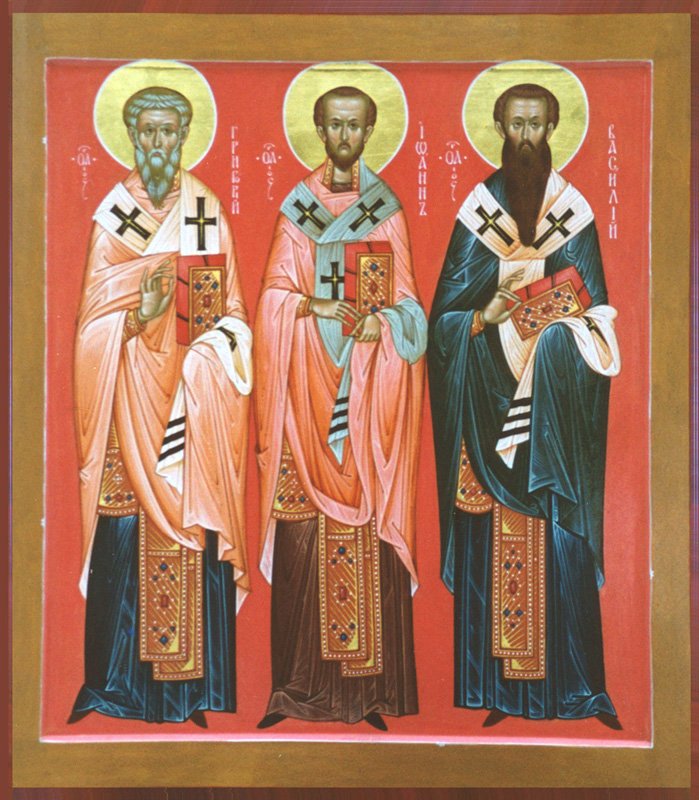
capadociosIn the last issue of this article I began sharing what the Cappadocian Fathers taught, especially about the Holy Spirit. The fact that man’s life is somehow connected with God’s breath, makes man to be God’s image. A being taken from the earth, writes Father Cyril of Alexandria, could not be seen as an image of the Most High, if he had not received this breath. Thus the perfecting action of the Spirit does not belong to the category of the miraculous, but forms a part of the original and natural plan of God. It should be remembered that in Genesis God first takes earth and forms man and then breathes into that which He formed from the earth.

God’s Spirit assumes, inspires and vivifies everything which is still fundamentally good and beautiful and maintains in creation the first fruits of the eschatological transfiguration – that is the Spirit maintains the potential in humankind that changes when humans undertake cooperating with God and bringing about the actualization of this potential. In this sense, the Spirit is the very content of the Kingdom of God. Gregory of Nyssa reports the ancient variant for the text of the Lord’s prayer, “Thy Kingdom come,” in Luke 11;2, as:” May Thy Holy Spirit come upon us and cleanse us.” The Byzantine liturgical tradition maintains the same tradition when it starts every single office with an eschatological invocation of the Spirit, addressing Him as “Heavenly King.” We also see in the Divine Liturgy that it is only after the Holy Spirit is   invoked that the bread and wine become the Body and Blood of Christ – that the symbols of life are really transformed into the very Body and Blood of our Incarnate God.

The liturgical office of Pentecost, centered mainly on the role of the Spirit in redemption and salvation, also glorifies the Spirit as “the One Who rules all things, Who is Lord of all, and Who preserves         creation from falling apart.” Our Greek Catholic customs associated with the feast of Pentecost suggest that the outpouring of the Spirit is indeed an anticipation of cosmic transfiguration. The traditional decoration of churches with greens and flowers on that day reflects the experience of new creation. This is one reason why we wear green vestments on Pentecost instead of red vestments as the Western Church does. Since our Church was developed in an agrarian society, the color green always           represented the newness of life springing forth from dormant plants.

MAKING THE WINTER FAST REAL

With so many people in our society homeless and hungry, find a way to provide some help and support for them. If you know of a program that feeds the homeless, make a contribution to their work. Then, in addition to this, give up a meal or two during the work to at least spiritually join with those who have less that you. Try to experience what they must be feeling as they struggle, especially in this winter days. As you feel the hunger they must feel, offer a prayer for all those who face life’s most difficult of all challenges, homelessness and poverty

PASTORAL LETTER on the occasion of the proclamation of the Holy Year of Mercy in the Ukrainian Greek Catholic Church

Dearly Beloved in Christ! Together with the Universal Church we are entering into a time of special grace -The Holy Year, which, according to the will of the Holy Father, Pope Francis, will last from 8th. December 2015 to 26th November 2016.

This year, which is also called an Extraordinary Jubilee Year, has been dedicated by the Pope to God’s mercy. This is a time of God’s special blessings, to undertake a pilgrimage to a Cathedral in our Local or Universal Church. This is a time for healing the wounds of body and soul, a return to God – a rediscovery of Mercy. Standing on the threshold of the Jubilee Year, let us reflect on how we accept God’s Mercy, how we live it and how we testify about it to ourselves, our neighbors and all people so that we may take advantage of the many spiritual fruits of this fertile time.

When God desired to reveal himself to man, to introduce us to Himself and reveal the truth about Himself, he described Himself, first of all, as The Merciful God. Revealing His glory to Moses at Sinai, the Lord said of himself: “a God merciful and gracious, slow to anger, and abounding in steadfast love and faithfulness” (Ex. 34: 6). God, the Father has poured upon us his merciful love in his Son Jesus Christ. This is what our Saviour taught when he said to his disciples, “For God so loved the world that he gave his only Son, that whoever believes in him shall not perish but have eternal life” (Jn. 3, 16). Being a Christian is to first of all believe in God’s mercy for ourselves,- to believe in God’s love. The Evangelist John emphasizes this sharing of faith saying, “So we know and believed the love that God has for us” (I Jn. 4, 16).

An important aspect of this Holy Year is an. invitation to everyone to receive God’s mercy. It is given to us, – the Church, by the Holy Spirit – the Spirit of God’s love. To personally accept and live this mercy we turn to the Holy Mystery of Penance or Reconciliation. Unfortunately, in many parts of the world this Sacrament is almost forgotten, rarely preached about and even more rarely gone to. The reasons for this sad state of affairs are many, but in the first place there is less knowledge and experience of God’s presence and as a consequence, a loss of a sense of sin. Our great desire is that the faithful of our Church use the Year of God’s Mercy to rediscover, appreciate and experience more frequently the Source of Mercy, which the Lord has revealed to us sinners in the Mystery of Penance. This appeal I direct to Pastors who have a duty to administer the Mystery to the faithful. I also appeal particularly to those baptized persons who call themselves Christians, but rarely confess and therefore have no ability to live God’s mercy and to receive God’s love.

A particular requirement of anyone who experiences this Holy Year is to share God’s mercy. Our motto this year will be the words “Merciful like the Father” that resonate from the call of our Lord Jesus to his disciples: “Be merciful, as your Father is merciful” (Lk. 6, 36). These words remind us that the gift of mercy that we ourselves receive from Our Lord requires us to be merciful to our neighbours. In this way we not only express our gratitude to God for His mercy on us, but reveal to our neighbours the face and gracious presence of God in this world, a world that is so frequently scarred by human suffering, loneliness, fear and hopelessness. Faithful of the Ukrainian Greek Catholic Church, no matter on which continent of globe they live, feel the suffering and pain of millions of citizens of Ukraine caused by an unjust war against us. Therefore, we must use every opportunity that presents itself to be merciful.

I call upon all our faithful to remember the Church’s teaching on specific works of mercy for the soul and the body, for individuals and for the wider community, showing all the love and creativity and drawing on our faith to implement them in everyday life. Mercy washes away our sins, transforms our hearts and our lives and brings us closer to God through a transformation – to become more like Him. Our mercy should primarily be directed to our family members and neighbours, so that in the words of, Pope Francis the door of every home becomes “the door of mercy”. Let us be attentive to the needy members of the parish community, which for us is the Family of God: there must never be people who feel forgotten, abandoned and overlooked in their needs. Since love has no boundaries, acts of mercy have to go out and meet poor people, regardless of their nationality, social status, religious affiliation or political preferences. Let all who meet us through our sincere interest in them, good words and effective help, feel the presence of the Merciful Father.

Another of our duties this year is to become witnesses of God’s mercy. Our faith teaches us to see the opportunity so that we may exercise our Evangelical vocation to witness the wonderful works of God’s mercy in the world. Our brothers and sisters in our native land have always remembered this vocation. We recall how they witnessed Christ before the torturers and unjust judges in difficult times of persecution. So today – when Ukrainian soldiers and those who support them physically and spiritually have become remarkable witnesses to the strength of love in the face of external aggression. All our faithful in Ukraine and throughout the World are called to become tireless evangelists of God’s mercy, which has so clearly and generously manifested itself in the history of our Church and people. Indeed, the experience of salvation in times of persecution and the power of God’s love that still animates and leads our people is given to us not only for ourselves, but also as a sign of hope for a lost and fearful world. This sign, which is our history, speaks more with God’s than human words: “Those who trust in the Lord are like Mount Zion, which cannot be shaken but endures forever” (Ps. 125: 1) and “But I will sing of your might; I will sing aloud of your steadfast love in the morning. For you have been a fortress for me and a refuge in the day of my distress. O my strength, I will sing praises to you, for you, O God, are my fortress, the God who shows me steadfast love “(Ps. 59, 17-18). So do not be silent about God’s great works, the works of the Lord’s mercy on us, so that all people, among whom we live, know that – He is our God, our salvation, and having recognised this, they will come closer to God in their hearts and in their works.

In this Holy Year let us place ourselves and the world under the Protection of Mary the Mother of Mercy. “God is in its midst, it will not be shaken” (Ps. 46, 6) – these words of the psalmist are found in Saint Sophia – Holy Wisdom Cathedral in Kyiv, from which flows the spring of our forefather’s faith. They express the abiding confidence of our people in God’s mighty protection for the city and the country through the unstoppable prayers to our Heavenly Intercessor depicted on the “Indestructible wall”, The Kyiv Oranta.

Our people in different parts of Ukraine and the world venerate the Virgin and beg her help through miracle-working icons. This year, with much love let us focus our thoughts and our pilgrim steps to the princely city of Yaroslav, a city, near the western border of Ukraine and Poland, where in the territory of the Przemysl – Warsaw Archeparchy we find our ancient and miraculous Icon of the Virgin – “Doors of Mercy”. God in His providence has chosen the Most Holy Virgin as the “door” through which He came to mankind in His Only Begotten Son, incarnate through the power and action of the Holy Spirit.

May this same Spirit may fill our hearts with God’s love and mercy. May it transform our lives, making us a images of the presence and work of our merciful Father in the world. May we be accompanied this year by The Most Holy Virgin – Mother of Mercy, and all the saints and righteous of the Ukrainian land – faithful witnesses of God’s mercy and God’s love!

The blessing of the Lord be upon you!
+Sviatoslav

Given in Kyiv
At the Patriarchal Sobor of the Resurrection of Christ
On the feast of the Priest-Martyr Josephat, archbishop of Polotsk
25 November 2015

 We oblige all Pastors to read this Pastoral Letter to the faithful after every Divine Liturgy
on Sunday 13 December 2015

Reflections on the Scriptural Readings for this Weekend — 20151129

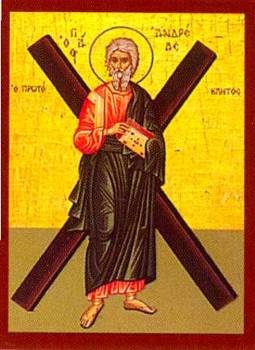
Saint Andrew the First CalledOur Gospel reading for this weekend relates the story of Jesus curing a badly stooped woman who had been suffering for 18 years. He cured her on a Sabbath and in a synagogue. In the Hebrew system of the numerical value of words, the Hebrew word for life (chai) has the value of 18. This, then, makes 18 a favorable number as it indicates hopes for a long life. Likewise, the Shemoneh Esrei, the consummate Hebrew prayer, literally means eighteen (8+10). It has this meaning because it originally contained 18 blessings divided into three distinct types of prayer: Praise, Petitions and Thanks. A 19th blessing was later added. (You will note that we Christians also have these same three types of prayers).

This story is unique to Luke’s Gospel and attests to Jesus’ kindly regard for the unfortunate and for women. Jesus always had an eye for the needy.

Luke expresses the fact that Jesus revealed that it is more important that we live in accord with God’s Spirit of kindness and love for others rather than observing laws and judging others who do not agree with our beliefs. The chief of the synagogue, obviously, judged Jesus because He did not observe the Jewish Law the way that the synagogue leader believed it should be observed.

Our Epistle reading, which is taken from Paul’s Letter to the Ephesians, says at one point that we must have zeal to propagate the gospel of peace. The gospel of peace, as you will recall, is best summarized by the following:

  • The Golden Rule: Do unto others as you would have them do unto you;
  • The Judgment Rule: Don’t judge others if you don’t want to be judged;
  • The Love Rule: Love others as you love yourself; and
  • The Forgiveness Rule: Forgive others if you want to be forgiven.

What God revealed in the Person of Jesus is that it is important how we treat others since God is the life-force within all humans and therefore how we treat our neighbors who we can see is, in reality, how we treat our God Whom we cannot see. God revealed through Jesus that our neighbors, that is other human beings, are the real opportunities that life presents to us to grow in our likeness of Jesus, Who is God in human form.

Indeed there is no argument we can make which can justify us treating badly our neighbor. We can, as one lawyer did in the New Testament, pretend we don’t know who our neighbors are, but in reality we are only fooling ourselves. We all know who Jesus meant when He taught us to love our neighbors. Our neighbors are all other humans, regardless of how they treat us. This is the challenge of Christianity.

MAKING THE WINTER FAST REAL — 20151129

cross_vineDo you know someone who might be in a nursing home or shut-in? This week you could try to actually visit a person who is in such a condition. In addition to your visit, why not bring them something that you think might bring them some joy. Flowers? Candy? A Book? Some Fruit?

While you are making your visit, why not ask them if there is something you can do for them or get them. While you may not have a lot of time to do something before Christmas, tell them you will come back.

Learning Our Faith From the Greek Fathers of the Church — 20151129

capadociosSt. Basil writes that the function of the Holy Spirit is not to reveal Himself, but to reveal the Son “through whom all things were made” and who is also personally known in His humanity as Jesus Christ. He also writes that “it is impossible to give a precise definition of the person or hypostasis of the Holy Spirit and we must simply resist errors concerning Him which come from various sides.” The personal existence of the Holy Spirit thus remains a mystery. It is an existence whose fulfillment consists in manifesting the kingship of the Logos (Word) in creation and in salvation history.

For the Cappadocian Fathers, the Trinitarian interpretation of all the acts of God implies the participation of the Spirit in the act of creation. When Genesis mentions “the Spirit of God moving upon the face of the waters”, patristic tradition interprets the passage in the sense of a primeval maintenance of all things by the Spirit, which made possible the subsequent appearance of a created logical order through the Word of God. Absolutely no chronological sequence is implied here, of course; and the action of the Spirit is part of the continuous creative action of God in the world. “The principle of all things is one,” writes Basil, “which creates through the Son and perfects in the Spirit.”

This is, of course, can be a very difficult thing for us to understand. What Basil is attempting to say is that God, as Trinity, calls all things into existence. The Father has the intention to create, the Son truly expresses the intention to create specific things and the Spirit actualizes that which is intended.

Basil identifies this function of perfecting or actualizing creation as sanctification, and implies that not only man, but nature as a whole, is perfectly itself only when it is in communion with God and when it is filled with the Spirit. The secular is always imperfect, or rather it exists only as a fallen and defective state of creation. This is particularly true of man, whose nature consists precisely in his being theocentric. Man received this theocentricity, which the Greek Fathers always understood as a real participation in the life of God, when he was created and when God breathed into his nostrils the breath of life. This breath of God’s life, identified with the Holy Spirit on the basis of the Septuagint version, is what made man to be God’s image.”

Our Greek-based Christianity stresses that we share in God’s own life.

Understanding Our Ukrainian Greek-Catholic Church — 20151129

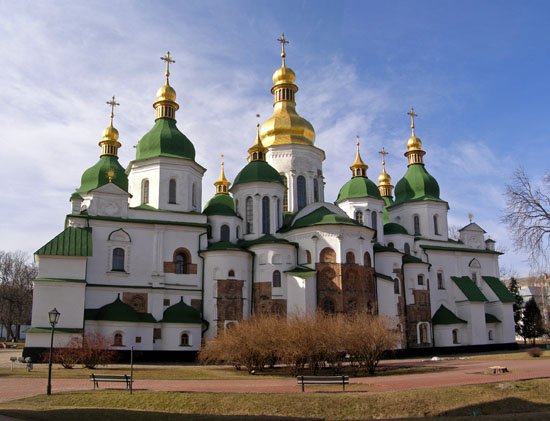
St. Sophia’s Ukrainian Greek-Catholic Church in Kiev, Ukraine

St. Sophia’s Ukrainian Greek-Catholic Church in Kiev, Ukraine

I have been sharing ideas about how our Eastern Christianity differs from Western Christianity. This is true of Eastern Catholicism and Western Catholicism. One is not right and the other wrong. They are both equally true, albeit, different in a number of ways.

Eastern Christianity sees our Faith as relational, personal and experiential. Christianity is chiefly a relationship with the Persons of God (Father, Son and Holy Spirit), with and among the people of God (brothers and sisters in Christ); together this communion is the Church. No Creed or set of doctrines, no matter how comprehensive, can ever fully explain the life in Christ. The faith is   revealed only when one is in union with Christ and His brethren, not by naked intellect alone. Doctrine can be a “symbol” which points to Him Who is the Way, but it is not the way; it is a “vessel”, but it is not the Water which that vessel contains.

To the Eastern Christian, theology is a means toward communion with God and others, never the end. Theology, whose essence lies in the search for “words appropriate to God,” fulfills its mission not with the help of definitions, not through “words about words,” but words that bring life and love.

Faith is not a logical certainty but a relationship. It is to know God not as a theory or an abstract principle, but as a person. To know a person is far more than to know facts about that person. To know a person is essentially to love him or her; there can be no true awareness of other persons without mutual love.

This is one of the reasons why our Church strongly stresses the anamentic character of our worship (a word my readers should be acquainted from my article on the Liturgy). Relationships exist in the present moment. Like all human relationships, our relationship with God must be in the present moment. Our past relationship with God no longer exists. Our future relationship with God is not real. The only truly real relationship we can have with God is in the present moment.

Think about it! At the very moment you are reading this you must ask: Do I have a relationship with God? Neither the past or the future are important.

Do you know God right now as real? Can you sense His presence in your life right now? These are the important questions that we must ask ourselves and are the questions that our Church is constantly directing to ask.

For example, in our Liturgy the priest turns and says: Peace be with all! This is not something in the past but something real in the present moment.

CALLED TO HOLINESS — 20151129

The call to holiness is a call to imitate the way that Jesus Christ thought and lived. He is God’s revelation to us on how best to use the years we have of life on earth. It is important to realize that we are here for the given years that are ours for a definite reason and purpose. The reason we are here is to learn how to freely return God’s love. The purpose we are here is to spiritually grow, using the challenges that life presents to us to transform our natural thinking, attitudes, and behaviors so that they are more like those of Jesus Christ. We are here to grow in the likeness of Jesus Who is God incarnate.

While I am sure that to some this may seem like an impossible task, I do believe that God has assured us that it is not. What it does require, however, is that we freely desire to grow spiritually, honestly assess how our thinking and behaviors have to change, conscientiously develop a plan to facilitate these changes, and then religiously implement the plan. Change never happens by accident or osmosis. We have to know what needs changing and then develop a plan to bring about those changes.

This might mean, for example, that we have to assess when and under what circumstances we find ourselves manifesting prejudice or bias against others; or, when and under what circumstances we judge others; or, when and under what circumstances we refuse to forgive others. It means that we have to actually do a real examination of conscience and sincerely assess our ability to unconditionally love others. It means being thoughtful about ourselves and our attitudes and behaviors.

People don’t always find it easy to look at their lives and honestly assess these things. The motivation to do this, however, is that God has called us to do it through the person of Jesus. Ask yourself, Do I really want to do everything in my power to be God’s child?

Holy-Trinity-9