Understanding Our Ukrainian Greek-Catholic Church — 20151108

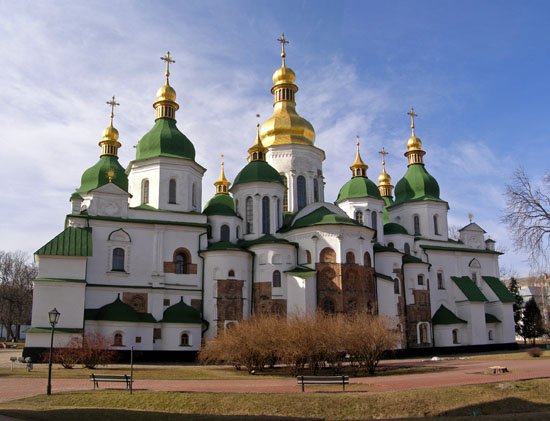
St. Sophia’s Ukrainian Greek-Catholic Church in Kiev, Ukraine

St. Sophia’s Ukrainian Greek-Catholic Church in Kiev, Ukraine

There are at least six very distinct characteristics of our Eastern Christianity. The first is that it is communal. The Eastern Christian perspective sees the individual in relation to others; he is never alone. This is because Eastern Christianity views the Church and the individual as a reflection of the life-giving relationships which exist among the Persons of the Holy Trinity. This is one of the primary reasons why all of our prayers end with rendering glory to the Father, Son and Holy Spirit. This act emphasizes that the model for living this earthly life is the Trinity. Just as each Divine Person could not exist without the other, so each human person cannot be defined as an isolated individual. The bond which unites and sustains the Persons of God is to be the same bond which unities and sustains those within the Church – namely love. Where there is love, there is self-discovery and union. Where there is selfishness and pride, there is deceit and division.

Think about the way that we worship. Our prayer is dialogic, that is a dialogue between priest and people, symbolizing that life must be a dialogue between God and us. We must be constantly speaking with Him. His response is always found in the new ideas and inspirations that we have about how to deal with a particular situation.

Our worship is also communal. Unlike the Western Church, a priest cannot celebrate the Divine Liturgy without at least one other person being present. The Divine Liturgy is not just the prayer of the priest. It is the prayer of the community.

By making the Trinity the focus of our worship, we are reminded that we are called to be life-giving, through the power of love, to one another. This means that we make every effort to be concerned about others, especially those in our community, because we know that we must emulate the Trinity in our human relations.

I think that this characteristic of our Eastern Christianity cannot be stressed too much. The power of love is the very source of the Trinity’s existence. Love is life-giving. We should hold this idea in the front of our minds when we deal with others. We must be life-giving instead of death-giving. We are death-giving when we ignore someone, offend someone, judge someone or speak badly about them. Humankind, led by God’s Spirit, formed into communities and societies. Why? So that we humans might learn how to love others as we love ourselves. Think about this! It is the basis of our religion.

CALLED TO HOLINESS — 20151101

CaptureThe call to holiness, as I have tried to indicate, is a call to accept and understand our true selves. Through inner healing we discovers our true selves. Unfortunately, many Christians misinterpret Jesus’ call for “death to self”. We hear this frequently in Christian literature. The death that Jesus calls for is death to the false self, not the true self. Our true self, however, cannot be found without Jesus as a part of the equation. We discover our true self when we take into consideration that Jesus is God’s revelation about who we are as   human beings, as God’s children. Jesus surely didn’t put His true self to death. He did, by His attitudes and behaviors, put to death any false understanding of Himself. He first and foremost saw Himself as a Son of God. We are called to adopt this same understanding of ourselves. We are sons and daughters of God. That is how God created us.

I think that most people would agree with me when I say that if and when we come to an understanding of ourselves as children of God, we change and the whole world changes.

All through the ages, the great saints who have gone before us, our spiritual parents, have witnessed to the biblical truth that God has made us to give Him praise by being the persons we are. As St. Irenaeus said, “The glory of God is a human being fully alive.”

Again, we see the difference between that to which Jesus calls us and that to which totally humanistic self-realization calls us. Inner healing and spiritual growth are not self-realization: they are not self-finding self, for that is an impossibility. Inner healing is Jesus finding our true selves; it is Jesus-centered.

The call to holiness is to see ourselves in the same way that Jesus did, namely as children of God. This means we incorporate the Jesus way of living.

Reflections on the Scriptural Readings for this Weekend — 20151101

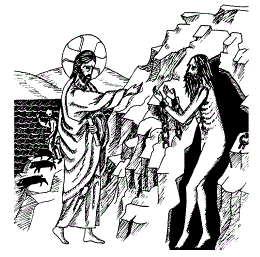
CaptureOf all the various miracles stories in the canonical Gospels, the one we hear today, the curing of the Gergesene Demoniac, this one that comes closest to the type found in the apocryphal Gospels (i.e., those not in the New Testament). It is one of the stories that appears in all three of the Synoptic Gospels, albeit each Gospel presents a slightly different version. In both Mark and Luke there is only one demoniac. Matthew’s story has two men. Mark’s story contains many more details. In both Luke and Mark, Jesus asks the name of the demons and is given the name Legion, which infers that there were many demons present. It suggests an understanding the people at the time of Jesus had, namely that knowledge of someone’s name grants power over that person.

The accounts of both Mark and Luke end by having the cured man become the first person that Jesus sends to the Gentiles as a disciple. This tells us that this version of the story was developed after Jesus’ death and when the Early Church began to embrace the Gentiles and include them in the Jesus WAY.

How can we understand this story, especially when it is paired with Paul’s words to the Ephesians where he states: We are truly his handiwork, created in Christ Jesus to lead the life of good deeds which God prepared for us in advance.

This is the message I gleaned from the two readings we hear today. God came into our world in the Person of   Jesus to reveal to us that our life has meaning and purpose. Our life is the way that it is because God has prepared things for us to accomplish not only for our own salvation but also for the good of others. It is craziness if we believe our lives have been given to us without any meaning or purpose.

One of the purposes that God has infused into our lives is the mission to witness to His goodness and to build His Kingdom here and now. The challenges that come to us are meant to not only help us place our hope and trust in God but to gain a deeper understanding of life so that we can proclaim Jesus as the Son of God. When we make this proclamation, we also simultaneously proclaim that we are children of God since Jesus is the true revelation of what we human beings are in God’s creation. It is only when we allow negative attitudes (i.e., demons) to cloud our minds that we fail to realize the meaning and purpose of life. As I think about it, many of the ideas and attitudes of our modern world are like demons that distract us from the true meaning and purpose of our lives.

Smart and Stupid Ways to Think About God — 20151101

As I indicated in the last Bulletin, the ninth smart way to think about God, that is GOD IS FOREVER, is so important that I thought I would continue to comment on it in this Bulletin.

God says we are immortal, because we are created from His Immortal Spirit. That is our true nature. And although we may not be aware of it, we have always been immortal.

Eternal life will not be “added” by God to our lives. Eternal life is our gift of life, though we may still be a   little too stupid to appreciate it. Although we are making a passageway between two realities, and it can seem dark, God tells us we will not at all cease to be. We will not fade to black like the end of a movie.

On the contrary, God says our consciousness lives on. It will retain its integrity through the passage of death and we will continue our purpose in life. We will continue to grow spiritual toward greater perfection and love.

There are various and different ideas about our eternal life, none of which have been proven to be true or false. Some believe this requires a cleansing period, a self-critical honesty that burns in our consciousness. Others believe it involves other bodies, other physically real opportunities to continue our spiritual growth. And still others speak of resurrection into a new and different kind of body, a spiritual body, which enters some alternate reality of pure Goodness that we call heaven. We don’t know which is true and we can debate the afterlife experience all we want and never really know what happens. Reincarnation, resurrection or all the heavens, purgatories and hells of our own imagination are but personal images that affirm one essential truth: God is Forever.

Death is not at all final. If we think it is, that is just incomplete knowledge on our part, just like any doubt. The real issue is not death at all, nor past lives, nor future lives, but how we live this life. It is truly only our worldly accomplishments that really die. Acts of kindness, charity and love live on within us and in the lives we’ve touched, long after we pass on.

There need be no deathbed or moral remorse or missed opportunity to a person who has lived life in a personal relationship with God, expanding and growing in love of Him, love of neighbor, love of self. To one for whom God has become real, the passage through death need not be terrifying or empty. It can simply feel like a continuation. Just one more step in becoming smarter, in experiencing the wholeness of Divine Love. To this person, any victory death has is at best temporary, dwarfed by the overpowering promise of Eternal Life. What more beautiful way for a life to draw to a close.
What do you believe?

The Divine Liturgy and Our Worship of God — 20151101

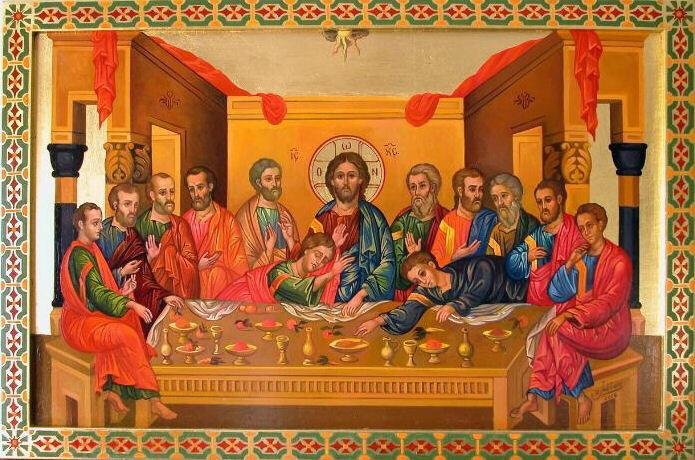
Mystical Supper

Mystical Supper

I have been attempting to explain our understanding of anamensis in regard to the Divine Liturgy. One scholar, Arnesen, presented an understanding of the concept which many scholars have found flawed in three ways. First, where ἀνάμνησις appears in Scripture, the meaning of the term is restricted to “personal, mental remembrance”. This interpretation is based on limited data. Arnesen quotes D.R. Jones, who writes that “too many ambiguities” exist in the meaning of ἀνάμνησις in the Septuagint in order to provide authority for any particular interpretation. Such ambiguities are unsurprising, owing to the semantic range of the word. Scholars maintain that, statistically, Arnesen’s approach is poor and his sample size is too small to establish the true meaning of this term in the Bible.

A second flaw in his reasoning is that he links too closely the Christian notion of anamnesis with the doctrine of transubstantiation of the Eucharistic species promoted by Roman Catholics and some Anglicans. The concept of transubstantiation of the bread and wine into Christ fully present in the sacramental species cannot and ought not to be localized to a single point in the Divine Liturgy, since the Eucharistic celebration as a whole is, in essence, transubstantiative. Similarly, the entire Eucharistic celebration is anamnetic although, unlike transubstantiation, anamnesis may refer to a particular   sequence of the Eucharistic prayer. In continuation of his misleading parallel between the Roman Catholic idea of transubstantiation and anamnesis, he claims that, like the Western doctrine of transubstantiation, anamnesis in its Christian sense denigrates the sacramentality of the Eucharist. “The theory of anamnesis,” says Arnesen, “has a subversive effect to the theory of transubstantiation in that it undermines faith in the living Lord who is always there before us and calls us to worship.” On the contrary, if the Lord is understood to be “living” and “always before us” in worship, then the Eastern Christian concept of anamnesis does not obscure the sacramentality of the Eucharist but supports it, as long as the entire sacramental celebration, as an encounter with the transcendent God in signs accessible to the senses, is understood as anamnetic.

This, hopefully, highlights one of the differences between Eastern and Western Christianity and Catholicism.

Gaining a Deeper Understanding of the New Testament — 20151101

2-thessololiansThe next book after Luke-Acts in a chronologically ordered New Testament (NT), is second Thessalonians. Paul’s first letter to the Christ-community in Thessalonica in northern Greece is the earliest document in the NT, but this letter is one of the disputed letters of Paul. The majority of mainstream scholars do not think it was written by Paul, but by someone writing in his name some three to four decades after his death in the 60s.

Because this letter echoes the structure and language of the first letter, a minority of scholars think this suggests that Paul wrote it down soon after his first letter. But a majority of scholars think that the       similarities are a conscious and deliberate imitation the first letter by an author writing in Paul’s name around the year 100 or soon thereafter. The letter addresses two questions that belong to a time period later than Paul: the delay of the second coming of Jesus and the issue of “freeloaders” – people who became part of the Christ-community not because they were passionate about Jesus, but in order to receive free food.

After an opening greeting and thanksgiving similar to those in the first letter, it continues with an explanation of why the second coming of Jesus has not yet happened. Recall that Paul in his first letter expected Jesus to return soon. But this letter affirms that there are events that must happen first: the “rebellion,” and the revelation of the “lawless one” who “opposes and exalts himself above every so-call god” and “takes his seat in the temple of God, declaring himself to be God.” Though the recipients of the letter most likely understood what the author was writing about, we do not. Was he writing about Roman soldiers offering sacrifices to the emperor in the temple after they had conquered Jerusalem in the year 70? Or about an event that had not happened yet? In either case, the situation reflects a time after Paul’s death. The broader point is that there are still things that must happen before the second coming.

The issue of the freeloaders is addressed in the last chapter of this letter. The issue arises in any religious movement that is made up of “share communities,” those that provide the material basis of existence for its members.

The problem of the authorship of this letter has not disproved the authenticity of its content. The letter has great doctrinal value, revealing as it does the faith of the community. It’s short, only three chapters long.

Further Thoughts About the WAY of Jesus — 20151101

4Ev-MariaLaachThe Jesus of WAY is a way revealed to us by God to achieve personal salvation. The problem is that many people are unsure of what salvation really is. Too many, I think, believe that it means   gaining heaven but aren’t really sure what or where heaven is.

Webster’s dictionary provides six   different definitions for salvation. They are: (1) the saving of man from the power and effects of sin; (2) liberation from clinging to the phenomenal world of appearance and final union with ultimate reality; (3) the realization of the supremacy of infinite Mind over all bringing with it the destruction of the illusion of sin, sickness and death; (4) preservation from destruction or failure; (5) the agent or means of the course of spiritual experiences determine the soul’s  redemption; and (6) something that saves from danger or difficulty: a source, cause, or means of preservation. I think that the definition are tell-tale. None of them have anything to do with heaven.

The Catholic Catechism for adults doesn’t even present a definition. Although it has no definition, it uses the word in 58 different contexts. It is one of those words which we always hear but seldom understand what it really refers to. Is salvation the same as eternal life?

Recently Susan Kotlinski sent me this quote from Meister Eckhart: This, then is salvation, when we marvel at the beauty of created things and praise the beautiful providence of their Creator or when we purchase heavenly goods by our compassion for the works of creation.

The Eastern Church’s teaching on salvation cannot be reduced to a set of quotes for the Scriptures or the Fathers that we just happen to read in a certain way. Our teaching on salvation can be traced back to the early Church through the uninterrupted continuity of worship and practice. In other words, our doctrine of salvation is embodied by the life that the Church has lived since the times of Christ and the Apostles.

This doctrine is multi-dimensional, and involves dogmatic, historical, Scriptural, ecclesiological, and other aspects. Likewise, the criticism of non-Eastern doctrines of personal salvation can also be offered from multiple points of view.

The WAY of Jesus leads to salvation. I would like in the next several issues to more fully explore the idea of salvation.   I think that it is critical for us to understand that it really doesn’t mean gaining heaven and avoiding hell.

The Spirituality of the Christian East — 20151101

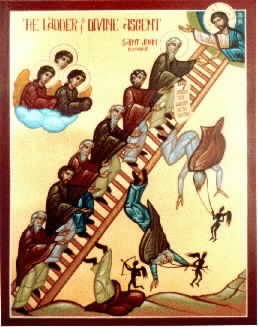
Ladder of Divine AccentThe ninth step on John’s Ladder, that is Remembrance of Wrongs, is one that truly elicits many comments. It seems that the natural tendency in humans is to remember wrongs, whether real or perceived. The greatest cure for the sickness that is the remembrance of wrongs is the remembrance of what Christ endured for sinners, ourselves included. When we contemplate God – the only Good One, the only Holy One, the Almighty Who created all things – suffering on the Cross in love and humility and saying, Father forgive them for they do not know what they do, how can we continue to bear a grudge? But all too often, we seek to justify our anger. People often say, but this person knows what he does! Do you think that makes any difference? If the Pharisees, many of whom did know better, had repented and asked Christ to forgive them from the foot of the Cross, would our Lord have refused?

Devout Christians will often use the Scriptures, the Church Fathers, and examples from the lives of the saints to make their unhealed passion appear to be righteousness. Indeed, malice is an exponent of Scripture which twists the words of the Spirit to suit itself. Such self-justification puts an end to repentance and makes all our human passions incurable. Indeed, God‘s forgiveness knows no bounds, and so, if we truly want to be worthy of the name ”Christian,” we must strive to forgive with the same boundless forgiveness, that is to forgive not “up to seven times, but up to seventy times seven.

Forgiveness is both the response of God’s love and, at the same time, the ultimate precondition for receiving God’s forgiveness for our own sins. John says: Forgive quickly and you will be abundantly forgiven. To forget wrongs is to prove oneself truly repentant.

Think about this!

Understanding Our Ukrainian Greek-Catholic Church — 20151101

hagiasophialastI have been exploring the roots of our Eastern Christianity. Although Christianity seems very familiar to us and our culture, in actuality it is a foreigner from a different land. Christianity emerged from a history and culture that in many respects is un-familiar to our own. When we treat the Christian faith as though it originated within our culture, we erase the significance of its own   culture, perspective and psychology.

It is important, I believe, that we take time to become re-acquainted with the Christianity we profess and the reality is that we profess an Eastern Christianity. We need to ask the right questions, questions about: the history of Christianity; the cultural womb from which Christianity was born; the fiery faith which fueled our first century brethren; a practical and living our faith. Only this kind of inquiry will give us insight into the Eastern Christian mind.

The Eastern Christian mind refers to the mindset of the early Christians in the Middle East – the home of Jesus and His Jewish Disciples.

The Eastern Christian mind cannot be confined to a specific geographic area. For although Christianity arose in the East, the “Eastern Christian mind” has been enriched by the cultures in which it was planted and grew. Thus it also means understanding how the Slavs incorporated this Eastern mind-set into their culture.

The Eastern Christian mind is an outlook and way of thinking which can exist among any people and within any locale.

God calls us to be “rooted” in Christ, and an aspect of being so rooted demands an understanding of His     revelation – the revelation delivered within an Eastern context. In order to live in the light of this revelation, we must be willing to enter into its frame of reference. Have no doubt, the Eastern Christian way of thinking IS different from the Western way. One is not more Catholic or Christian. But they are different.

A very important point of difference between the Eastern and Western mind is in the way each tends to analyze a subject. The West typically studies a subject by dissecting it into smaller units and then classifying each unit by a set of definitions. The East, on the other hand, studies a matter by observing how the entire subject relates to each of its parts. With this latter approach, a Christian adopting an Eastern perspective would seek to understand a particular Christian teaching from within the context of all Christian doctrine, not as an isolated unit. This is the approach of our Church.
More to come!


Learning Our Faith From the Greek Fathers of the Church — 20151101

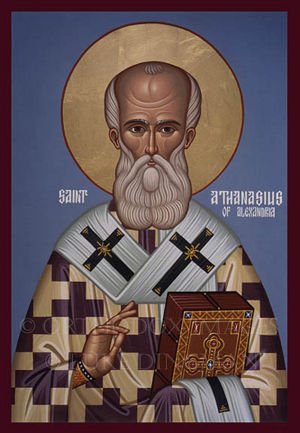
Athanasius the Great

Athanasius the Great

In the last issue I introduced some thoughts on the theology of Athanasius the Great. He truly stood out as a prominent figure in the early church. Athanasius’ theological style was deeply philosophical. In furtherance of this cause, Athanasius employed the categories of middle Platonism and, through the ‘interlocking’ of history and salvation with ontology, he was able to present a coherent account of the Christian life. Athanasius states, ‘reality is the good, unreality is the evil. I call reality the good because it has its exemplar in God who is real; and I call unreality the evil because what has no real existence has been invented by the conceits of men.’ The evils invented by human conceits are chiefly the false gods who litter a false universe.

Athanasius is chiefly remembered for his contributions to our Eastern Christian understanding of Christ. Although he contributed to several other key areas as well, he dedicated most of his considerable talent to defending the divinity of Christ. It was left to three of Athanasius’ younger contemporaries – Basil the Great his brother Gregory of Nyssa and their friend Gregory of Nazianzus – to apply the same care and diligence to defending the Holy Spirit. The three hailed from Cappadocia in Asia Minor and, as Gregory of Nazianzus proudly claimed, of all men in the world, the special qualities of the Cappadocians are firmness in the faith and loyal devotion to the Trinity. Motivated by this loyal devotion, these three Fathers contributed to the development of patristic theology ‘a full-scale doctrine of the Trinity’, in which both the unity and the diversity could be precisely formulated within systematic theory and with a   technical terminology adequate to obviate any real misunderstanding or equivocation. To appreciate this accomplishment, we need to consider the terminological problems that they faced. The divinity of the Father was axiomatic and the council of Nicaea asserted the divinity of the Son. But the place of the Spirit was still obscure. Theologians such as Athanasius were happy to appeal to the Holy Spirit in their writings and to even offer analogies in support of the divinity of the Holy Spirit.

It is important for us to remember that the Church went through years, even centuries, developing what we now believe about God, Jesus and the Holy Spirit. Jesus didn’t reveal all of the doctrine that we have. The Spirit guided the Church in developing it.