Learning Our Faith From the Greek Fathers of the Church — 20150628

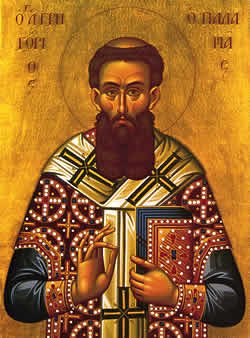
saint_gregoryThe teaching of St. Gregory Palamas was based on the understanding that man, the greatest of all God’s creatures, had been called to enter into direct and unmediated communion with God even from this present life. The chief manner by which this is achieved is through the grace of God and noetic prayer, that is, through the Prayer of the Heart, also known as the Jesus Prayer: Lord Jesus Christ, Son of God, have mercy upon me. For Gregory and his fellow Hesychasts, true theology, true knowledge of God, is given not to those whose minds have been exercised in lofty concepts about God, but to those who, through prayer and ascetic striving in accordance with the commandments of Christ, have been made worthy to behold the vision of Christ in glory, to those who have seen God face to face and who share in His very life.

St. Gregory is, above all, the theologian of the Transfiguration: the great New Testament Theophany, which gives us, in a graphic and concrete manner, the vision of God’s purpose in creating man. In Christ’s resplendent form, as it appeared before the three chosen disciples on Mount Tabor not long before His crucifixion, we see our future hope: Human nature filled with divine glory; human nature suffused with the grace of God, the very Life of the Most Holy Trinity.

But in the vision of Christ Transfigured, Peter, James and John first and foremost, behold Christ as God, consubstantial and equal in every respect with God the Father, Whose exact image He is.

St. John wrote: No man has seen God at any time; the only begotten Son, which is in the bosom of the Father, has declared him.

Our Lord, God and Savior Jesus Christ teaches us that He is the image of the Father: He that has seen me has seen the Father, and that No man comes to the Father but by me. This has tremendous consequences for our understanding of the divine economy, and for our reading of Holy Scripture.

So the Eastern Church sees Christ as God’s revelation to us about our own humanity. Because God is joined, through Jesus, to human nature, so we are joined to God. This is how He chose to create us. It is not something that we can merit or to which we are entitled. God chose to infuse His life into all creation and then also create a portion of His creation, humanity, in His own   image and unto His likeness.
The Spirituality of the Christian East — 20150628

I have been sharing thoughts about St. John’s fifth step on the Ladder of Divine Ascent, which is Repentance. St. John wrote: Repentance is the daughter of hope and the refusal to despair.

Repentance is not mere contrition, not a life of endless regret for every wrong we commit or for our every real imperfection. Rather, it is a war against the passions.

When we are occupied with our own faults, we do not concern ourselves with the faults of others. He who weeps for himself will not be wrapped up in the grief, reproach or lapse of someone else. When we are penitent, anger disappears and all the silly things we spend so much time worrying about suddenly seem small and insignificant, because our only concern now is our salvation. At the same time, whatever external afflictions have vexed us appear now not unjust, but warranted. St. John writes: A sign of true repentance is the admission that all our troubles and more besides, whether visible or not, were richly deserved.

Repentance truly liberates us. It brings us back to what really matters. All the stresses and strains of life, all the little annoyances, all the unfairness we experience disappear in repentance, setting us free and giving us peace.

Thus repentance is not passive but active. It kindles diligence and courage and it is the fruit of hope. For repentance has no purpose if we do not have hope that God will accept us no matter what evil we have done, no matter how many times we fall.

And let us not forget that repentance ends not in guilt, but in thankfulness. We praise and thank the Lord always, because we never forget His love: A proof of our having been delivered from our failings is the unceasing acknowledgement of our indebtedness.

The Spirituality of the Christian East — 20150621

As I shared in the last issue of this article, the fifth step on John’s Ladder is Repentance and that it is rooted in true humility. True humility, however, is not mere modesty. Modesty is to be found in people of all faiths and of none. Humility is different. It sees the truth because it beholds Christ Himself in awe and reverence. When we are humble, we compare ourselves not to others but to God alone, before whom no one can be proud. This is why the saints are so humble. Saints keep repenting because they kept comparing themselves to the infinite holiness of God. The holier we become, the more sinful we feel – we more clearly recognize our short-comings and this gives us impetus to continue growing in our understanding of ourselves so that we may bring about ongoing personal transformation.

Many people express disapproval at the notion of religious guilt and penitence. They think it unhealthy and masochistic. That is because they forget that guilt is the beginning of repentance, not the end of it. The reason I often suggest that feelings of guilt are totally worthless is because most people don’t seem to be able to get beyond the guilt. To feel guilty and not decide to change is worthless. We must always keep this double character of repentance in mind: on the one hand, it means to grieve and mourn for our sins and shortcomings; on the other, it finds comfort and joy in God’s mercy and love and gives us an opportunity to more seriously apply ourselves to personal change. The end of repentance is to behold the face of God and to hear Him say, Your sins are forgiven. Go and sin no more. Your faith has saved you. God in peace.

Repentance springs from humility and humility makes us free. Repentance fuels personal transformation

CALLED TO HOLINESS — 20150621

As you will recall, when I started this article it was about the characteristics of a Vibrant Parish. Our Patriarch and Synod of Bishops have called our entire Church to think about what it means to be people who are excited about our faith and feel called to bear witness to God’s revelation about human life through the Person of Jesus, the Christ. To this end I continue to present ideas in the bulletin about certain things: Spirituality, Worship, Scripture, Doctrine, the WAY, and the meaning and purpose of human life. All of these are a part of what I have termed our Call to Holiness. I believe that people who understand that they are called to holiness, will bear witness to God and work to make His Kingdom real here and now.

All the things I have shared so far have meant to help people become aware of their vocation to bear witness to God’s presence in our world. We cannot do this if we haven’t realized that we are called to holiness, that is a personal relationship with our God which is built on a real and personal relationship with others who are, in God’s Kingdom, our brothers and sisters. We learn this, in the beginning, within the context of our family.

We continue this growth, hopefully, in the context of our parish family. And then finally, we learn this in the context of the society in which we live. Each on the contexts in which we learn how to be God’s children provide us with certain challenges. Remember, it seems that human growth is only brought about when we effectively learn how to manage the challenges that life presents.

God’s call to holiness must, eventually, result in our involvement in the broader context of the society in which we live. Now one of the problems we face as an Eastern Church is that while our worship space is       located in one community, most of our members reside in different communities. This is our challenge.

Further Thoughts About the WAY of Jesus — 20150621

As I indicated in my sermon this past week, I shall be continuing my thoughts in the Bulletin about the WAY of living that Jesus taught. To quickly review, I indicated that Jesus taught us how to (1) personalize our worship of God and (2) be mindful. I first shared with you my thoughts on how to personalize worship. There were seven points: (1) come disposed to worship; (2) open your heart and mind to the message God wants to share with you; (3) desire to join yourself with Jesus in worship of God; (4) envision being represented by the symbols of life, that is bread and wine; (5) offer your life to God, as Jesus did, in thanksgiving for the gift of life;  (6) believe that God enriches your life by receiving the transformed symbols of life; and (7) leave church determined to try to live more like Jesus.

The second aspect of the WAY I shared was being MINDFUL, that is trying to develop the ATTITUDES that Jesus had. This means transforming our attitudes in seven basic areas: (1) God; (2) Life; (3) Nature/Creation; (4) Religion; (5) Society; (6) Others; and (7) Self.

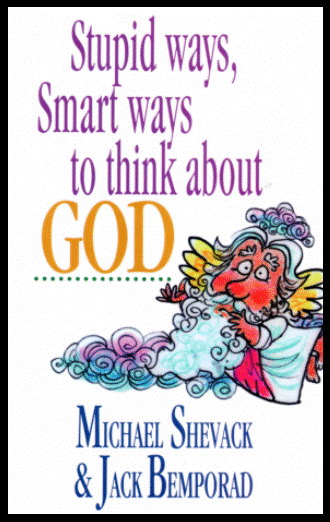
I would encourage you to read about the stupid and smart ways of thinking about God that I’m sharing in a different article in the Bulletin. A truly stupid way to think about God is that He is about the business of punishing and rewarding the beings that He created in His image and likeness. Why would He do this? Life is not a test to prove that you are worthy to receive a reward! Think about it!

The second set of attitudes that we must think about are those that we have about LIFE. What is life all about? Life is truly not about gaining heaven and avoiding hell! Life is about growing as a spiritual person! The way to discover what your attitudes are about life is to ask yourself this question: What is the meaning and purpose of life? Another stupid attitude about LIFE is that it is UNFAIR. Life is not unfair! We humans are not the ones who have determined the meaning and purpose of life! So why should life conform to our vision of how life should be. Sure we don’t like to be disappointed when life doesn’t turn out the way we would like it to be! Sure we don’t like suffering! If, however, we believe that life delivers the challenges that will help us to spiritually grow, then all that comes in life is good and fair!

One of the big problems, I think, is that we realize, at some basic level, that we don’t have any control over the events of life and we desire control! Solution? Give up desiring to control life and to accept life as it comes to you!

Think about what your attitudes are about life? Challenge yourself!

10 stupid and 10 smart ways to think about God — 20150621

Picture1Why do humans question the very existence of God at difficult moments in their life? Shouldn’t we instead question our stupid ways of thinking about God? Is the problem God? Or are we humans the real problem? Maybe what we really need is a smart way to think about God. Some idea less fragile, less silly, more complete. Some idea that’s strong enough to withstand reality, because it’s flexible enough to grow as we need to grow.

But where do we find one?

Religions contain many wonderful ways to think about God. But all too often these wonderful ways are so buried under a morass of superstition that it’s hard to find what we’re looking for. Original meanings have been blurred by mistranslation and misinterpretation. The significance of rituals has been lost. Ideas that once served crucial social and political functions are now irrelevant.

Religions, too, have often made the task of finding a smart way to think about God more difficult. In an attempt to insulate their traditions, they’ve often made human inquiry a sin. Intelligent questions are frequently greeted with suspicion.

In an age in which science has stolen the stage from religion, where only the truths gleaned from controlled experiments are valid, where only the practical, material results are valued, any search for God is denigrated as a remnant of more primitive times.   Indeed, a smart way to think about God is perceived as a contradiction in terms.

So what’s a searcher to do?

These days, this question is more important than ever. The baby boomers have grown up. They’re booming with babies of their own. They’re searching for meaning, trying to give their children a sense of values. Religious affiliation is reaching at all-time high.

People who left their faith in rebellion are returning in droves. They will be forced, once again, to confront some of the stupid ways of thinking that drove them away to begin with. They will be put in the precarious situation of having to teach them to their children.

More than ever, we need smart ways to think about God. Ways that are worth passing on to a new generation.

Certainly, we can’t provide all answers for all people but we can begin to clear some of the cobwebs. We can begin to strip away, one at a time, some of the stupid ways of thinking about God that have caused so many problems. We can separate the “wheat from the chaff” and take a fresh look at God. And, hopefully, you will have one way of thinking about God that is smart.

People do not like to have their beliefs challenges. No doubt, for many, the process will be downright painful. So I hope that a little touch of humor will be appreciated, especially for a subject that has become a little too serious.

I hope my readers will find this enjoyable!

Understanding The Theology of Our Ukrainian Greek-Catholic Faith — 20150621

O Prophet and Forerunner of the Coming of Christ, in spite of our honor and devotion, we are unable to give you worthy praise. Through your glorious and noble birth your mother’s childlessness was ended, your father’s tongue was freed, and the Incarnation of the Son of God was proclaimed to the world

baptist_001

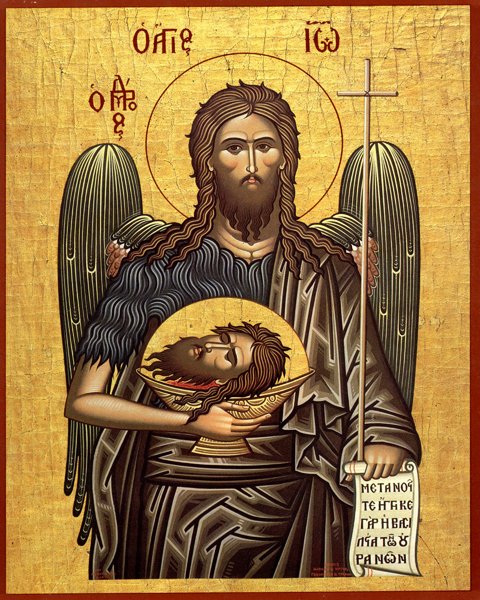
Among all the saints whom our Church venerates, St. John the Baptizer holds a unique place. Besides Jesus, only John and the Mother of God have separate feasts that honor their conception and nativity. The great esteem he enjoys in the Eastern Church is very evident from the fact that during the Church Year as many as six feasts are celebrated in his honor. They include his Conception and Nativity, his Beheading and First, Second and Third Findings of his Head, and then the Synaxis following the feast of Theophany. We will celebrate his birth this Wednesday, June 24th.

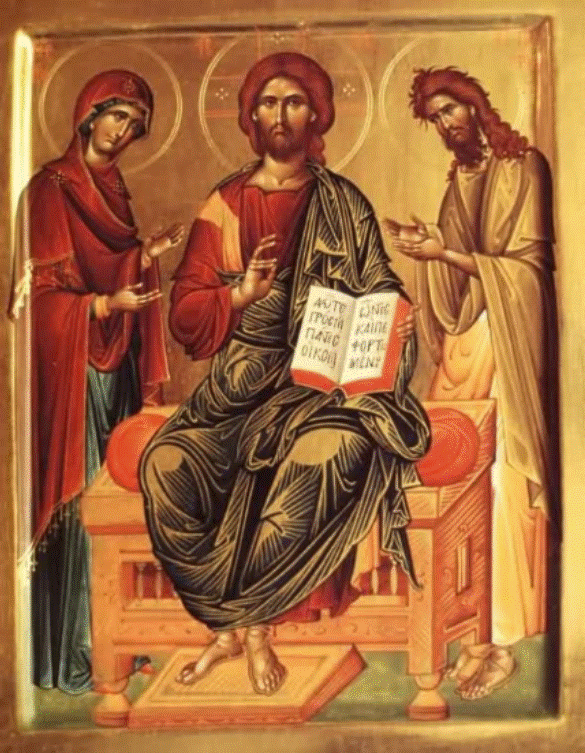
John is outstanding in several different ways: (1) he stands on the border of two testaments, Old and New; (2) he closes the doors on the prophets and opens them to the Apostles; and (3) he is not only a prophet, but alsoa precursor of Christ, a baptizer and a martyr. He is always pictured with the Mother of God in the Deisis Icon which has both of them pointing to Jesus enthroned (i.e., the icon I have   embedded in the first article).

The life of John was an unbroken chain of sacrifice and penance. He preached new doctrines never heard before in Israel, namely a baptism of repentance, the nearness of the Kingdom of God, and the presence of Jesus, the Messiah and Savior.

Like John, Jesus taught people the importance of living in a manner that made God’s Kingdom real. They did not teach about some future Kingdom but about the necessity to make the Kingdom of God real, right now. They taught the importance of being a child of God in the present moment, not in a future kingdom to come.

The message of Jesus and John is all about being engaged in the process of personal transformation. This is what this earthly life is all about. The future or the past do not matter. The present does and we are called to make the present a time of trying our very best to be engaged in living like a child of God – living the Way that both John and Jesus lived. How did they live? They lived totally focused on witnessing to God’s presence in the world.

The Task In Life: Make Known The Kingdom Of God — 20150621

deisisDo you believe that the Kingdom of God is real? This is the first question that I believe we must answer if we are to be true followers of Jesus Christ. I believe that some may not find this question simple to answer only because of the chaotic world in which we live. If our world is God’s Kingdom, how is it that there is so much evil and suffering in our world? Should not our world be much more peaceful? It is hard to believe that God reigns in our world!

Many of the spiritual fathers of the Eastern Church, confronted with these same facts, stated quite emphatically that the Kingdom of God IS WITHIN each of us. It is only within our own hearts and minds that we can make sure that God’s Kingdom is real!

Luke’s Gospel quotes Jesus saying, in response to a question put to Him by a Pharisee about when the reign of God would come: “The kingdom of God does not come with observation; nor will they say, ‘See here!’ or ‘See there!’ For indeed, the kingdom of God is within you” (Царство Божие внутри вас [Tsarstvo Bozhiye   vnutri vas])

Believe it or not, Leo Tolstoy wrote a non-fiction book which he entitled: The Kingdom of God is Within You. It was his philosophical treatise on non-violent resistance as a means of bringing about political change.

While the teachings of Jesus were not necessarily directed toward bringing about political change, they were about personal change and transformation.  To be a child of God we have to put on the mind of Jesus! This means that we have to embrace His attitudes about God, life, others and ourselves. It truly means developing mindfulness and not just reacting to the events of life without thoughtfulness. It means becoming a thoughtful or mindful person. It means knowing and believing that our attitudes of mind determine how we live. It means allowing God to reign in your life.

So the Kingdom of God is either within us or not within us, depending on our attitudes. We are called to develop those attitudes which Jesus had. If we do, then we will find the Kingdom of God within us – He will reign in our lives.

One of the first attitudes that Jesus stressed was being non-judgmental. We are called not to judge others, knowing that if we judge others, we will be judged. Only God is the judge.

Perhaps the greatest problem that we face in our modern society is people’s willingness to judge others. Think about this! It’s the basis of most conflicts

Gaining a Deeper Understanding of the New Testament — 20150621

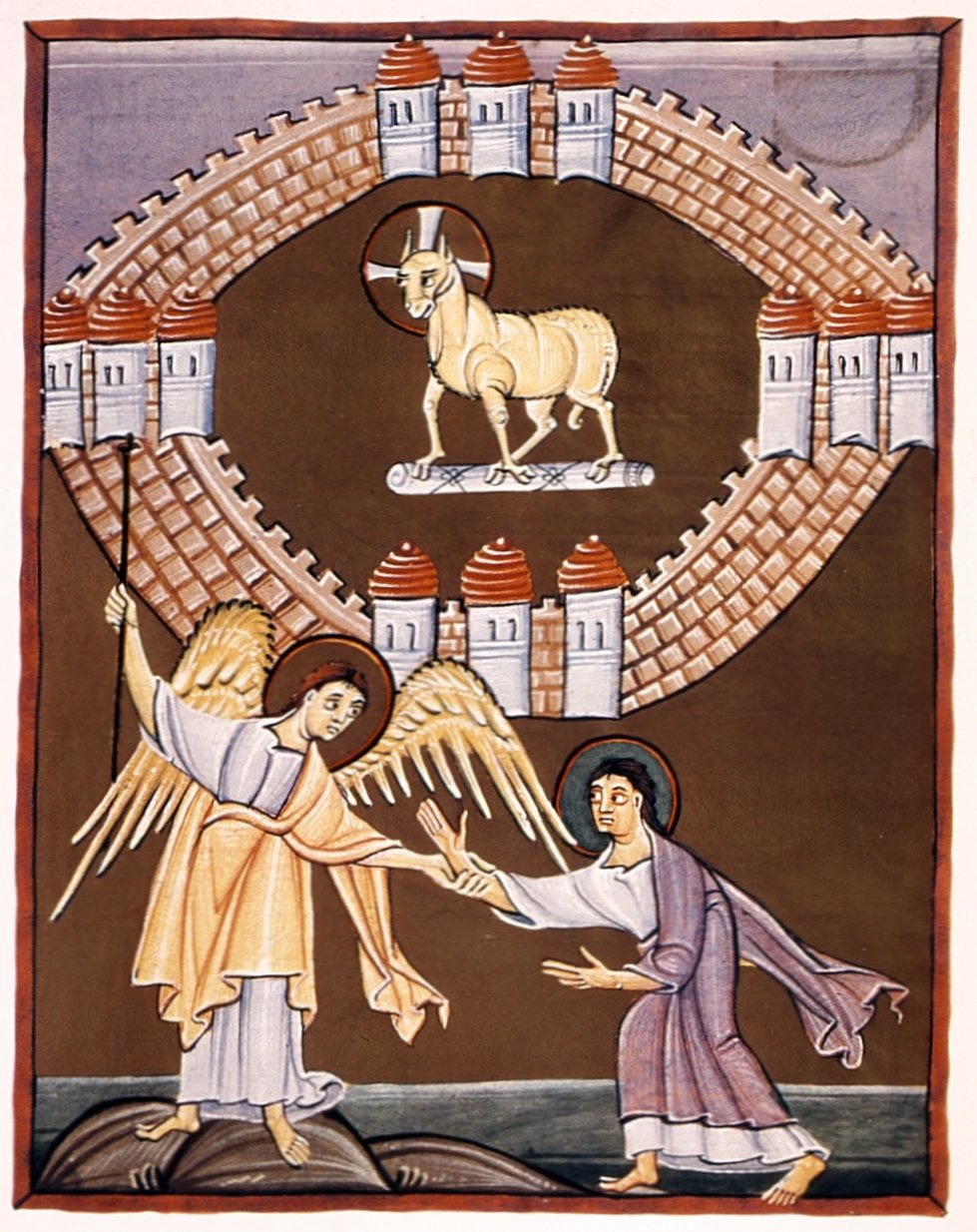
BambergApocalypseFolioIn dating the writing of Revelation, we look closely at the seven letters that are within the book. I have already reviewed the first letter in the last issue. The second letter, that to Pergamum, names one Christian who has already been killed. One of the visions refers to “those who had been slaughtered for the word of God and for the testimony they had given” and to future persecution of “their brothers and sisters, who were soon to be killed”. But the massive persecution of which it warns is still future from when the book was written.

Thus most contemporary scholars affirm that the persecutions in Revelation were unofficial, sporadic and local and not official Roman persecutions. With the link to Roman persecution severed, the primary reason for dating it in the 60s or the 90s is gone. Most scholars date it no earlier than the 90s, in part because its criticism of Christians in the seven communities sounds as though it is directed to second or third-generation followers of Jesus who have begun to accommodate themselves to the norms and values of dominant culture. But it is also possible that it was written in the early decades of the second century.

After the introduction and inaugural vision in chapter 1, chapters 2-3 are letters to Christian communities in seven cities in Asia Minor. Two – Ephesus and Laodicea – are referred to in letters attributed to Paul. Acts refers to Thyatira, but only in the context of identifying Lydia as a native of that city. The others, Smyrna (i.e.,modern Izmir), Philadelphia, Pergamum and Sardis, are not mentioned elsewhere in the New Testament. We do not know who founded the Christian communities there. Perhaps John of Patmos did.

The letters include an evaluation of each community, which was either condemnation, commendation or promise. Nothing bad is said about Smyrna and Philadelphia; nothing good is said about Sardis and Laodicea. Ephesus, Pergamum and Thyatria received mixed verdicts.

The rest of the document until its closing greetings is filled with various visions. I shall present a synopsis of the visions, beginning in this issue. The first two are:

Worship in heaven and the Lamb with the scroll.

The Lamb opening the seven seals. War, famine, plague, death and earthquake   ensue. The sun become black, the moon blood red; stars fall from the sky; the rulers of this world call on the mountains to fall on them to protect them from the wrath of God and the Lamb.

Although Revelation is difficult to read and understand, you should try it once

Learning Our Faith From the Greek Fathers of the Church — 20150621

I would continue sharing thoughts from the Greek Fathers about our faith. They have told us that just as Christ became the New Adam in order to save the whole Adam, that is to say, to save all humankind, so too do we, by becoming Christlike – through the purification of the passions and the cultivation of the virtues by living according to the commandments of Christ – embrace, as does Christ, the whole Adam in our personal efforts at transformation or change. So the true goal of earthly life   is to change – is to learn how to be spiritual beings. We have an example in the Person of Jesus, the Christ who has within Himself both heaven and earth – full and perfect divinity and full and perfect humanity.

The great and wonderful mystery here is that when a person reaches out and embraces the whole Adam, he finds himself, by the grace of the Holy Spirit, actually living the spiritual state or condition of the whole human race – even that of the most sinful man – and in this way such a person truly prays for his neighbor as for himself.

So think about this. We are called to personal change. When we voluntarily elect to engage ourselves in a process of personal change, we are doing what all of humankind is called to do while living here on earth.

If human beings are immortal, that is that the life they enjoy is without end, then there is some reason for this earthly existence. Why would our Creator put us here on earth, give us free will, and have life deliver all sorts of real challenges? Earthly life is all about providing us with unique challenges needed to become spiritually changed people.  This present earthly existence is only a small portion of an eternity of real opportunities which God gives us to be His true children – to become the persons God intended when He created us. His love for us demands that He allow life to provide us with the opportunities that can will help us become spiritual people. It is God’s desire that all of His creation will be joined, ultimately, with Him. That will, of course, take an eternity. But He has set in place the means to ultimately make this a reality. We are a part of Him and He is a part of us. We are given multiple opportunities to develop our relationship with Him and truly be in His image and likeness.