Understanding Our Ukrainian Greek-Catholic Faith — 20150426

Someone once asked me why we sing so much in our Church. This is to distinguish our conversation with God from our other conversations with other humans. Truly, the ability to sing is a very special gift from God. Think about birds. The only way that they communicate with one another is through song. They don’t just make noise, but, rather, they have a melody. Singing adds a certain join to our worship. Most people sing when they are happy.

The problem is, I guess, that some find it more difficult to carry a melody. That doesn’t really matter. Making the effort, however, to sing does remind us that we are talking to God and not just another person.hagiasophialast

Some have asked me, after telling them this, why we recite, for example, the Creed. Many churches sing it. I have always felt that the Creed is truly one of those prayers that we all should be able to say without worrying how we sound. It is a declaration of the major beliefs of our religion. Likewise, I believe that there are several other prayers which can be recited in order that everyone clearly understands them or can fully participate. The prayer before Communion is another prayer that all should be able to say together. So, we recite it.

Before I get too far from the subject, I would like to make another important observation. The entire format of our Liturgy is meant to be dialogic – is meant to be like a back-and-forth dialogue between the congregation and the celebrant, who is supposed to be the spokesman for the Community and, at times, represent Christ. When a deacon serves the Divine Liturgy, he becomes the spokesman for the congregation and the role of the priest as representing Christ becomes clearer.

This also highlights another important idea that the Eastern Church has about our worship. We worship God WITH Christ. He worshipped the Father through the power of the Spirit – we join Jesus in doing the same. Since bread and wine (i.e., food) represent human life, we offer, together with Jesus, our life to God and ask Him to transform us into Christ, the anointed of God. Jesus, as we know, offered His life back to the Father in thanksgiving for the gift of life. So too are we called to do the same, together with Jesus. This act brings us into communion with God in Christ through the power of the Holy Spirit.

I believe that it is essential that we see ourselves as worshipping God together with Jesus through the power of the Holy Spirit. This involves us in the act of worship in a totally different way. Our worship must be an offering of our very lives to God in thanksgiving for the gift of life He has given us.

Think about this!

Learning Our Faith From the Greek Fathers of the Church — 20150426

holy fathers iconIf it is true that Christ is the Son of Man, consubstantial with us, then it follows that everything that He accomplished in His earthly life must likewise be possible for the rest of the sons of man. I truly believe that this thought is essential to our true understanding of the Incarnation and is the basis for our thoughts about salvation.

One Father states, if we confess His   (i.e., Christ) full and perfect theosis, it behooves us also to hope for the same degree of theosis for the saints in the age to come. The Greek Fathers felt that it was absolutely essential for a correct understanding of salvation that they find ways to express that Jesus was truly man as well as truly God. While there is only one Person in Jesus, we believe He has two   distinct natures – divine and human – and that His divine nature did not control His human nature. Of course the problem is that we cannot conceive how this is really possible. It is a mystery! But a very important belief if we are to believe that He is our model for how to live this human life. The simple fact is that we cannot live with Christ if we are not like Him in all respects. As the great Apostle John the Theologian and Evangelist proclaims: We know that, when he shall appear, we shall be like him; for we shall see him as he is. And every man that has this hope in him purifies himself even as he is pure. So if we wish to be eternally with Christ, we must become like Him; and this process of becoming Christlike, this purification, invariably involves repentance – which is a fundamental change in our whole way of life, in our very mode of being. Metanoia, which is the original Greek word used in the Scriptures and in English represented by the word repentance, means changing the way that we think (our attitudes) and the way that we behave.

St. Symeon the New Theologian reiterates this point in the following way:

The Master is in no way envious of mortal men that they should appear equal to Him by divine grace, neither does He deem His servants unworthy to be like unto Him, but rather does He delight and rejoice to see us who were made men such as to become by grace what He is by nature. And He is so beneficent that He wills us to become even as He is. For if we be not as He is, exactly like unto Him in every way, how could we be united to Him? How could we dwell in Him, as He said, without being like unto Him, and how could He dwell in is, if we be not as He is?

It is my hope that my readers are beginning to see the real difference between Eastern and Western theology!

The Divine Liturgy and Our Worship of God — 20150426

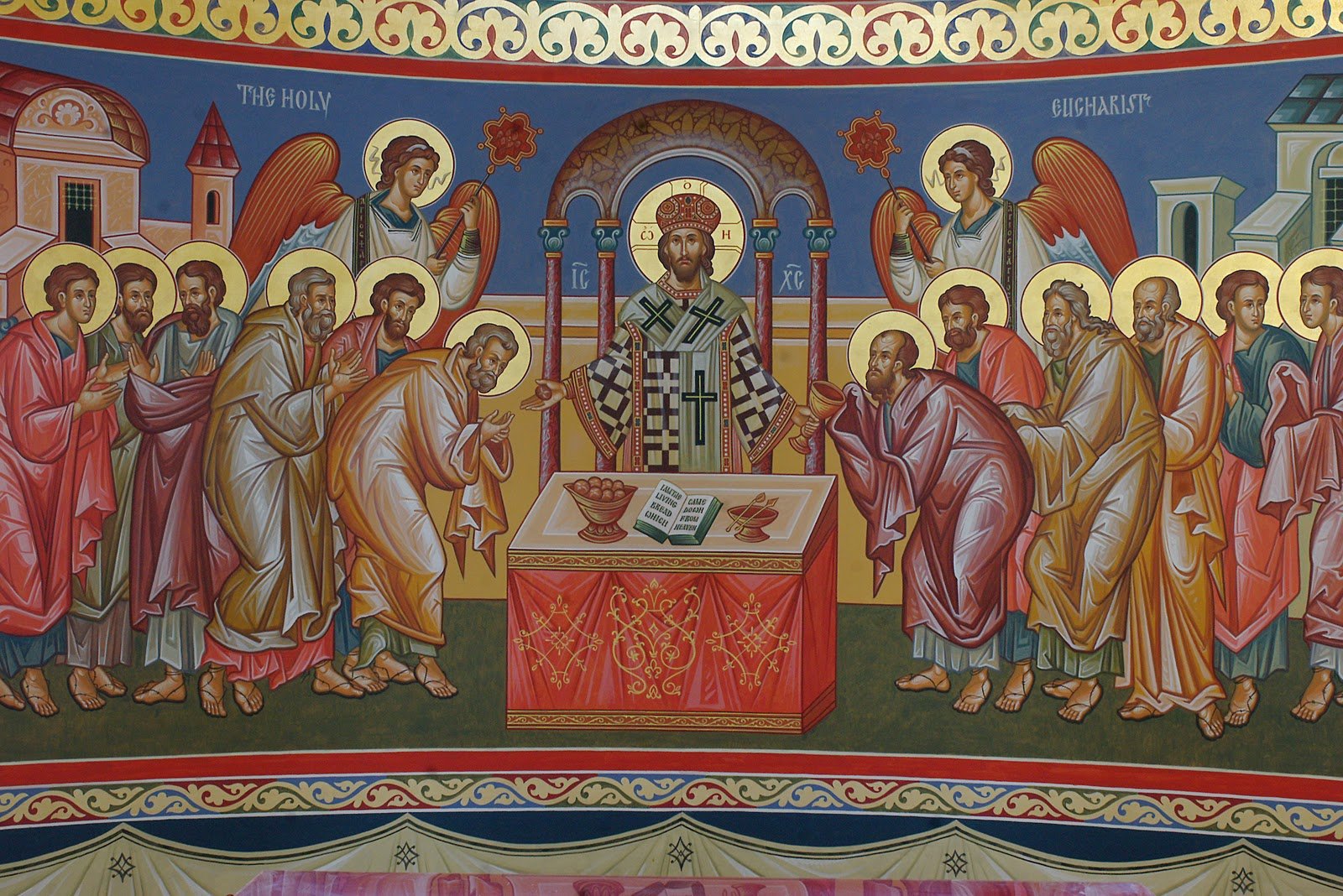
Holy Eucharist IconIn this article I have begun to take us through the Divine Liturgy, commenting on each section. The Liturgy begins with the Great Incensation, that is welcoming all, both those present and the saints whose images (icons) we have in our worship space. The icons represent those special persons that we have called upon to be with us as we worship. The two main icons, of course, are those of Christ the Teacher and Mary, His Mother.

After the Incensation, the very first proclamation the priest makes is to declare that God’s Kingdom is blessed. He sings: Blessed is the Kingdom of the Father and the Son and the Holy Spirit, now and ever and   forever. All present declare that they agree with this – they respond: AMEN. This word, AMEN, is a     Hebrew word which means it is true, and expresses acceptance of what has just been said. So, in our hearts we must agree that God’s Kingdom is blessed, namely that it is good.

Having expressed this, we first pray the Litany of Peace, the Great Litany. Almost all major services in our Church begin with this Litany. It declares and exhorts us to be at peace when we pray. It is an invitation to truly forget all of those things that we tend to worry about. In order to truly worship God we have to be at peace with ourselves, our lives, and with others.

The very second petition is For peace from on high and for the salvation of our souls. Think about this. It states that we realize that the only way we can truly achieve internal peace is with the help of God and that the peace that God grants to us is our salvation. Truly salvation is a state of being at peace with life and understanding its purpose and meaning.

The Great Litany then continues, asking God to grant peace to our whole world, our Church leaders, our civil authorities and others, including those in the city in which we worship. Knowing that peace is essential for a good life, we beg God to grant it to us.

The priestly prayer that concludes this Litany begins with declaring how we see our God. For example, we declare that He is beyond description, surpasses all understanding and that His mercy is without limits. This approach to praying to God mirrors how people used to address the Emperor. Any petition to the Emperor was first prefaced with declaring how magnificent he was. After that is accomplished, the petition is uttered: look down upon us and bestow Your abundant mercies and benefits upon us. Then, like all of our prayers, it ends with giving honor to the Holy Trinity, Father, Son and Holy Spirit

The Spirituality of the Christian East — 20150426

In this article I would continue sharing thoughts about spirituality as found in St. John Climacus’ Ladder of Divine Ascent. As I shared in the last issue, John saw the first rung on the ladder of our spiritual journey to be renunciation of the things of this world. He asserted that there can be no real spirituality without a true willingness to break with the world in terms of what we hold dear and what constitutes the center and focus of our lives. The goal of any true spirituality is   to become God-Centered instead of self-centered or other-centered.

St. John mentions three fundamental virtues that form the foundation of the spiritual life and liberate us from slavery to the things of this world. He wrote this:

Innocence, abstinence, temperance – these make a fine thrice-firm foundation. Let all infants in Christ begin with these, taking real infants as their example; for among children no evil is found, nothing deceitful, insatiable greed or gluttony, no flaming lust. They are the basis for renunciation.

The spiritual quest is not for something unknown. We all began life as perfect and sinless infants. What we seek is what we once were, something we all know and have tasted: innocence.

So renunciation of the things of this world is meant to bring back to a state of innocence. I know that life, with all of the   influences and pressures that we must face as adults, can make us quite jaded about life. We no longer are innocent like infants and learn how to mistrust and fear others and be filled with anxieties of all kinds. When we renounce the things of this world, we regain a certain degree of innocence and begin to look at life through the eyes of an infant. Just think about how trusting an infant is. We need to regain this type of trust.

We are called to live in the world. We must learn how to deal with the things of this world and not allow them to bring about a loss of innocence

CALLED TO HOLINESS — 20150426

The call to holiness was given to each of us at the time of our initiation into the Church. We are called to a deeper understanding of life and our relationship with God. We are called to understand that not only does God communicate to His creation a sharing in His life, but He is a sustaining, directing God, leading us through levels of evolution as we cooperate with Him, the Giver of Life, toward greater life. And so John tells us that God’s Logos possesses life. And He comes to give us this life: I have come that they may have life and have it in abundance.

All life on any level of human existence is a sharing of divine life through a participation in God’s creative Word. We, like fish, swim in God’s ocean of illimitable life. John tells us that God’s creative Word is the bridge over which God’s shared life passes to us at every moment and in each human situation.

easter1God’s fullest revelation of life-sharing is made in His incarnate Word, Jesus Christ. For in Him we have not only words which communicate truths about God in His living relationships to His creatures but in the Divine Word made flesh we have the dynamism of the Hebrew concept of Word, Dabar. Besides concepts about God as life-giving, God’s Dabar is the dynamic power that the Word releases in the receiver of the Word. The Word is charged with creative power and energy which flow from the Word into the receiver, transforming him/her – according to one’s cooperation – into the Word and the Mind that speaks the Word.

Jesus is the fullness of God’s life and He alone can give it to us. This is the message found repeated over and over in John’s Gospel and in his First Epistle: …those the power over all mankind that you have given him, let him give eternal life to all those you have entrusted to him. And eternal life is this: to know you, the only true God, and Jesus Christ whom you have sent.

Knowing God is to enter into a whole way of life. This is the call to holiness.
Think about this!

Gaining a Deeper Understanding of the New Testament — 20150426

In a chronologically ordered New Testament, the next writing that must be considered after the Gospel of John is Paul’s Letter to the Ephesians. Like the Letter to the Colossians, Ephesians is one of the disputed letters of Paul – there is some thought among scholars that Paul did not actually write this letter but that it was penned by one of his disciples.

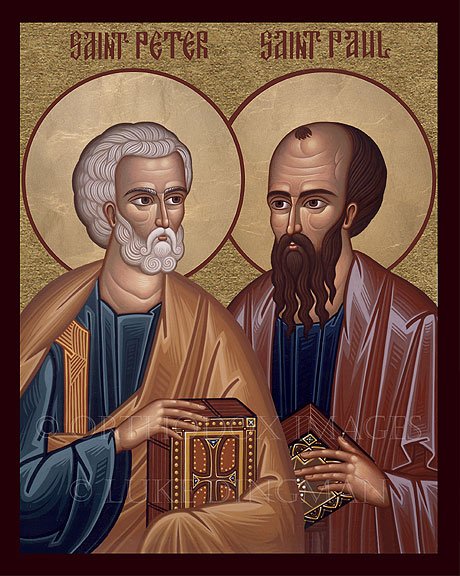
sts-peter-and-paulEarly Christian tradition, beginning with Irenaeus and Clement of Alexandria in the late second century, unhesitatingly ascribed, however, this epistle to St. Paul. Since the early nineteenth century critical scholarship has considered the word-usage, style, comparison with Colossians, the epistle’s concept of the church, as well as the doctrine put forward by the writer, to be the basis for strong doubts about its Pauline authorship. This divergence between the two capital sources of opinion on the origin of Ephesians makes it impossible to give a categorical pronouncement for or against authorship by Paul. He was probably not the author of Ephesians in the same sense as of other epistles such as Romans, Galatians, 1 and 2 Corinthians. Whatever the epistle’s literary origin, however, the author considered its teachings to be in the Pauline tradition and for purposes of interpreting the text itself, it is practical to adopt the clear implication therein that Paul is its author. If Ephesians is analyzed within the context of Pauline writings, the question of its relationship to the thought of Colossians and other letters of Paul may be fruitfully studied. Though it has the typical form of a Pauline letter and echoes some very important themes from the seven genuine letters of Paul, it also differs in a number of ways.

The differences include, as said, style and subject matter. In Ephesians, as in Colossians, many of the sentences are very long, unlike the commonly short and energized sentences of Paul’s genuine letters. Differences in subject matter include the emphasis of Ephesians on the Church and its extended household codes, something which I will refer to later.

It seems certain that this epistle was not specifically addressed to the Christians of Ephesus. Paul had labored there for well over two years and would hardly have written so impersonally to a community with which he was intimately acquainted. If Ephesians is the letter referred to in Colossians (4:16), it may well have been addressed to a number of Christian communities, thereby accounting for the more impersonal tone.

CONGRATULATIONS

CONGRATULATIONS
Congratulations and Best Wishes are extended to

GEORGE & IRENE DURISIN

on the occasion of

their 60th Wedding Anniversary

the_wedding_at_cana

Многая літа — Mnohaya lita

God Grant Them Many Years


April 19, 20105

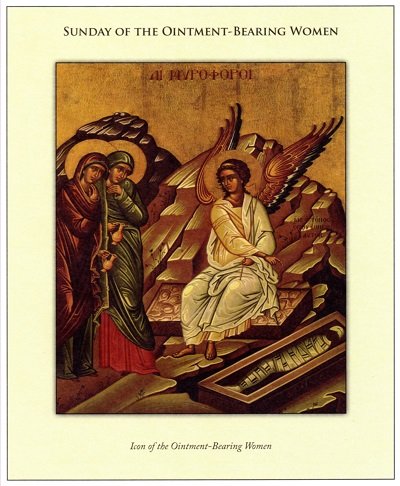
By Your resurrection, O Christ our God, You told the women bringing ointment to rejoice;
and You stilled the weeping of Eve, the first mother.
You instructed the women to announce to Your Apostles:
“The Savior has risen from the tomb”.

onintmentbearersOn the second weekend of our forty-day celebration of the Resurrection of Christ, the Church would have us remember the story of the Myrrh-Bearers, those women who came to Jesus’ tomb to complete the burial ritual for Him. The burial ritual had not been completed since it was the Sabbath. There was, and still is, an elaborate ritual which can be carried out for the burial of devout Jewish people.

It is obvious from the fact that the women went to complete the burial ritual that they did not   expect Him to be raised from the dead. In all four Gospel accounts, it is obvious that the women had no real expectation that Jesus would rise from the dead. All four accounts, however, indicate that it was the women followers of Jesus who first discovered His resurrection. In fact, Mary Magdalene is the one woman who is consistently mentioned in all of the accounts.

The resurrection narratives in the gospels do not derive directly from the early stage when the apostolic testimony was as yet unchallenged by unbelievers. They reflect a somewhat later period, when the average Christian was aware of the principal counter-arguments of   unbelievers against the doctrine of the resurrection; namely, that Jesus’ disciples had removed his body from the tomb, or that they were victims of visionary or other objectively unreal experiences. The gospels and the tradition that preceded them carefully interwove the data of the resurrection with the replies to these arguments so that Christians might remain in possession of their faith.

The narratives then, begin with the account of the women’s visit to the tomb – no doubt to make clear that up to this point the male disciples of Jesus had not come near the tomb. The reaction of the disciples to the women’s report reveals that they did not anticipate Jesus’ immediate resurrection, much less think of creating a resurrection myth by removal of the body. The stress on the incredulity of the disciples depicts them as men not easily convinced of the resurrection event. They thought, at first, that they were seeing a ghost. The greater problem of the disciples in accepting the fact of the resurrection was, no doubt, its messianic implications. I wonder how we would act if we had been there?

Understanding Our Ukrainian Greek-Catholic Faith — 20150419

brightweekI believe that one of the very important things to understand about our Church and its worship is that it appeals to all of our senses. In our worship, the Church   attempts to engage the entire person in the worship of God. There are sights, images, sounds, fragrances and bodily movements which all are meant to bring us into a deeper union with God and others.

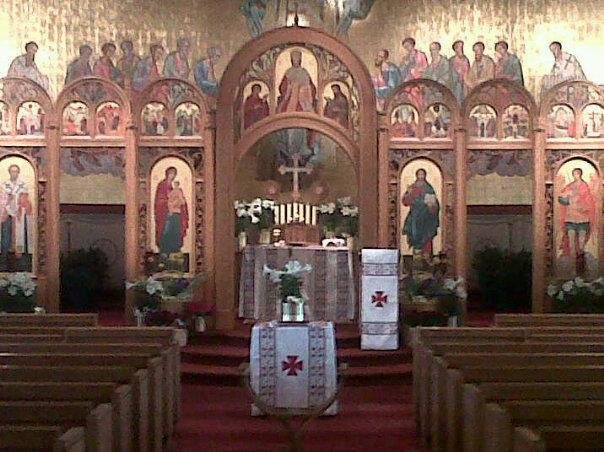
For example, the iconastasis is one of the important parts of any Byzantine Church. This structure defines an area of the building which is meant to represent the next dimension of God’s Kingdom, namely that which is to come. It is like the Holy of Holies that we hear about in the Jewish Temple in Jerusalem, that place where the people believed God dwelled in a very special manner.

The nave of the church building is meant to represent God’s Kingdom on earth for those who believe. The vestibule represents the outside world which may not be a place of faith. When we come to church we pass through that portion of our world which is without faith and enter into the earthly kingdom of God. We see, however, that there is a world yet to come which we are currently separated from by the wall of images (icons) that represent the fact that we must go through a process of personal transformation before we can enter into the next dimension of God’s Kingdom. There are, however, doors on the iconastasis which tell us that we do have access to the next dimension if only we choose to embrace a life of personal transformation and change.

What is wonderful about this church structure is that on the Great Day – Easter – and throughout Bright Week and on St. Thomas Day all the doors are open to the altar area, that is the world to come. This should teach us a very important thing, namely that God, in the Person of Christ, has Himself shown us how to enter into this next dimension. God, out of His deep love for us, took the initiative to come and show us how to live so that we might be able to enter into the fullness of the Kingdom of God.

We must allow ourselves, however, to respond to fully to the experience of going to church. We must allow ourselves to   experience not just the verbal prayers of our services, but also the place where these prayers are offered.

Our worship is truly sensual in the very best sense of this word. We can become, if we allow ourselves to, totally engaged – body, mind and spirit – in our worship. When we allow ourselves to do this, we begin to experience God and also begin to experience what it means to be a human being. God created us with senses. These are the means that we have to learn about life, others and our God. Allow yourself to truly experience our worship.

The Divine Liturgy and Our Worship of God — 20150419

Holy Eucharist IconThe ritual (i.e., sequence of actions) which is a part of the Divine Liturgy, is meant to draw us into the entire mystery of God’s incarnation as a human in the Person of Jesus and the impact that this action has upon humanity. It is designed to give us a deeper understanding of the communion that exists between us, God and others. The sequence of actions in the Liturgy is meant to lead us to the high point which is the distribution of Holy Communion, the ultimate experience of Christ’s presence with us and our union with God in Him through the Holy Spirit. This union, we must remember, only can take place and experienced in union with others who also believe.

Of course before this union can take place, we must know that human life is a sharing in Divine Life. This becomes real by saying those prayers that bring about the change of the Gifts, bread and wine, into the Body and Blood of Christ. The bread and wine represent life since they are food.

This experience becomes another focal point of our worship with the ritual enactment of offering our very lives to God as Jesus did. Our worship of God is experienced in this offering of ourselves to God in thanksgiving for everything that He has done for us. I would encourage you to reread this last paragraph again and think about it. It says something that is truly essential for worship, namely our real personal willingness to offer our very lives to God in thanksgiving.

Before I continue I would offer this one note. One of the basic understandings about the Divine Liturgy in the Eastern Church is that it has to be a community experience. And although I have said this before, I repeat it again: a priest cannot serve the Divine Liturgy all by himself. There must be at least one other person present to celebrate the Divine Liturgy. The power to change the gifts is given to the Church that is a group of believers who join together in prayer.

But I get ahead of myself. Let us begin at the very beginning and consider all the various actions that are performed.

What is the great and first incensation all about? It is a greeting! In the time of Jesus, the way someone was welcomed into a home was by presenting them with water to wash their hands, face and feet. Then some perfumed oil was given to take away the stench of the road. The way that we are welcomed to the Liturgy is now ceremonial. We offer incense. If you think about it in this manner, then it becomes an action which makes sense and is meaningful. We also sing at this time because we’re happy to be here.