CALLED TO HOLINESS — 20150412

One of the things that became abundantly clear to me as we celebrated Pascha, was that the call to holiness is the call to live life in a certain manner right now. The call is not to a life after death but to life here and now. Jesus modeled a way of living that changes life here on earth. He truly stressed, I believe, that how we live is what is most important. It is important to live as people who actually believe that we share life with God Himself. This sharing in God’s life calls us to live in a manner which clearly demonstrates that we have been created in His image and likeness. Jesus truly lived in a manner which reflected God’s likeness.

All of human beings have a built-in hunger and passion to possess more of life, more of being through a life of love for God, the Absolute Beauty, and for all human beings. We frenetically seek the Fountain of Youth which will conquer all death and corruption. We seek elixirs that will give us more vitality which is always connected with possessing more of life.

St. John has given us his view of reality, but it is seen from the perspective of Jesus Christ, the glorified God-Man. In this view God communicates His uncreated energies of love to us through His Word, the Logos. He speaks to us through the Logos and in the Speech we have our being. The abyss between God and nothingness is spanned through the Logos. We find our whole reason for being, in and through God’s Word.

When we reflect upon the life of Jesus, we see that He lived not for the world to come but was focused on His present world and helping others to find the meaning and purpose of life.

When we live in the present moment we encounter God because that is the only place where God is for us. He is neither in the past nor in the future because they do not exist in reality.       What do you make of this?

Gaining a Deeper Understanding of the New Testament — 20150412

During the past number of weeks, I have been sharing ideas about the Gospel of St. John. On the Great Day, Easter, we heard the opening verses of His Gospel. It so very many ways these opening verses are the New Genesis. They tell us that God created all things through the power or the Spirit of His Word, His Son. The Eastern Church chose, centuries ago, to read this Prologue on Easter to symbolize our belief that truly the Lord’s resurrection from the dead has brought about a whole new creation.

This, I believe, is also very closely connected to certain phrases, words and images that John uses in his Gospel. For example, John is especially fond of a phrase translated into English as eternal life or everlasting life. Though the phrase appears a few times in the other gospels, John uses it seventeen times. In truth I believe that it is commonly misunderstood. It suggests to most people an afterlife – going to heaven and living forever. John’s frequent use of the term has contributed to the widespread Christian notion that Jesus and Christianity arte primarily about life after death.

This is unfortunate. Jesus and early Christianity were primarily focused on the transformation of lives and the world this side of death. Of course, Jesus, Paul and other early Christians believed in an afterlife – that death was not the end. But that was not the heart of their message. Rather, it was about the kingdom of God on earth and what the world would be like under thelordship of God rather than the lords of this world. In fact as Jews they would have never thought about life after death. The basis of religion is all about how we live this present life.

image269

This understanding was shared by John. The Greek phrase translated into English as eternal or everlasting life is better translated the life of the age to come, the Jewish hope for the transformation of life on earth in the here and now. The life of the age to come is roughly equivalent to the kingdom of God. And for John, this life is not just a future hope, but a present reality. John speaks of eternal life in the present tense and names its content: This is eternal life, that they may know you, the only true God, and Jesus Christ whom You have sent. To know God as known in Jesus is to enter the life of the age to come now, in the present, this side of death. Is there also confidence that death is not the end? Yes. But the message is not primarily about the promise of life after death and how to enter it.
Think about this!

April 12, 2015

You became a believer because you saw me.
Blest are they who have not seen and have believed.

thomassundayOn this day of renewal of the Resurrection of Christ, we recall the doubt of Thomas, the apostle, and the reaction of the risen Christ to his doubt. The story tells us that Jesus simply presented Himself to Thomas and offered to have Thomas place his hand in his side and in the wounds in His hands. Thomas’ response to the Lord’s action is one of the most profound acts of   belief. Thomas simply says, My Lord and my God. Jesus responds to Thomas’ act of belief by saying: Blest are they who have not seen and have believed. This is truly one of the most profound statements that we find in the Gospels. Why? Because it really directly encourages us to be people of faith even though we haven’t seen the risen Christ and to rely on the witness of others who have gone before us.

Thinking about this caused me to ask myself, and hopefully it will cause you to ask yourself: Why do I believe in what the Church says happened? Why do I think that God actually became a human being in order to reveal to me and all mankind how to live this present life?

I believe this because I think it makes a lot of sense and helps me to understand the real meaning and purpose of life! It helps me answer these questions: Why am I here on this earth? Why is my life the way that it is? Why does life present the challenges that I must deal with?

The teachings of the Church about God and Jesus provide, I believe, a great deal of hope. This teaching is based on our sacred story which, I think, truly provides a reasonable explanation of life. I must admit that I cannot accept the idea that life and creation are only an accident. I also cannot accept the idea that life has no real meaning or purpose. This vision of life robs me of hope and doesn’t give me any incentive to endure the challenges of life. Why go through all the struggles of life if life has no purpose?

While I have not seen the risen Christ, I believe there is life after this life because of the witnesses who have gone before me. I cannot believe that so many people in history have been duped and fooled into thinking our sacred story true. This is one of the reasons why I embrace our sacred story.

I would exhort all of my readers to think about why they believe what our sacred story tells us. While there is nothing wrong about doubting, the greater joy comes from believing that our God loves us.

April 5, 2015 — PASCHA

In the flesh You fell asleep as a mere mortal,
O King and Lord! But on the third day You arose,
lifting Adam from corruption, abolishing death!
O Pasch of incorruption! O salvation of the world!

Exapostolarion

20150405
My Dearest Brothers and Sisters,

Christ IS Risen! Indeed He IS Risen

Хрїстóсъ воскрéсе! Воистину воскресе! (Old Slavonic)
Christos voskrese! Voistinu voskrese (Transliteration)

Христос воскрес! Воістину воскрес! (Ukrainian)
Chrystos voskres! Voistynu voskres! (Transliteration)

Χριστός ἀνέστη! Ἀληθῶς ανέστη! (Greek)
Khristós Anésti! Alithós Anésti! (Transliteration)

Christus resurrexit! Resurrexit vere! (Latin)

المسيح قام! حقا قام!‎ ; المسيح قام! بالحقيقة قام!‎ (Arabic)
al-Masīḥ qām! Belḥāqiqāti qām! (Transliteration)

Today I would greet you with great joy and a sacred kiss as we celebrate God’s revelation to us: Life is immortal! The Resurrection of Jesus gives proof to this truth. Truly there is great reason for us to rejoice. Death no longer can contain us!

It is truly my hope that all who join with me in worshipping our Loving God will hear these words and find reason to rejoice with me. It is my hope that our religion might bring joy to all who join with me. The story of Jesus, I believe, IS a revelation made to us by our God about human life. It seems so very clear in our tradition! God became man so that we might truly understand the meaning and purpose of life and know that He has created us, out of love, to share in His Kingdom. We are heirs to His Kingdom. We are His sons and daughters! How do I dare to say this? I say this because our Church proclaims this. Our understanding of God’s incarnation as a human being tells us that He has created us in His image and likeness. He chose, from all eternity, to make us sharers in His Divine Life. Why? Because He is love and love can only desire what is good for the one loved. I exhort you this day to dare to believe that you are loved by our God and, in thanksgiving, love Him in return by the way you choose to live.

Truly salvation means to know that we share in God’s own life and that, because He is the source of our life, we share in His immortality.

Father Wayne

The Spirituality of the Christian East — 20150405

As we joyously celebrate the Great Feast of Pascha, I realize that the spirituality of our Church is focused on helping us to experience the reality of God’s Kingdom right now! Our Church calls us to experience God as He presents Himself to us in the world in which we live, not in some future state of life. When He came into our world in the Person of Jesus, He reminded us that the Kingdom of God IS at hand – that it is in the present moment that we can experience God. It is for us to learn how to experience His presence right now and not be deceived into thinking that we have to wait until some future date to experience His presence.

cross_vineSt. John Climacus says: God is the life of all free beings. He is the salvation of all, of believers or unbelievers, of the just or the unjust, of the pious or the impious, of those freed from the passions or caught up in them, of monks or those living in the world, of the educated or the illiterate, of the healthy or the sick, of the young or the very old. St. John clearly tells us that we must attempt to experience our God at this present moment since that is truly the only time He can be real to us.

It seems to me that one of the unfortunate developments that took place in Christendom was an approach to our spiritual life which is all future oriented and not focused on helping us truly experience God in the present moment. I believe this happened when the Church was split in two, separating the Eastern Church from that of the West. This separation impacted, I believe, how many Christians began to look at life.

Our Church has never ceased to proclaim the great events of our faith as happening right now at the present moment. We must learn how to recognize Christ, RISEN FROM THE DEAD, right now!

Think about this!

Learning Our Faith From the Greek Fathers of the Church — 20150405

The Fathers of our Church tell us that Christ is the measure of all things, both divine and human. Since the divine Ascension, our human nature has been raised up to the right hand of God the Father. In His divine Person, the Son and Word of God was of course always seated on the right hand of the Father, being consubstantial with Him. The divine purpose for the human race, however, is seen in the union of our human nature to the divine Person of Christ, the Second Person of the Holy Trinity, in its being raised to the right hand of the Father.

St. Paul, the great Apostle of the Word of God made flesh, identifies the divine purpose of the Incarnation without adoption as sons of God: But when the fullness of the time was come, God sent forth his Son, made of a woman, made under the law, to redeem them that were under the law, that we might receive the adoption of sons. And because you are sons, God has sent forth the Spirit of his Son into your hearts, crying, Abba, Father. Wherefore you are no more a servant but a son: and if a son, then an heir of God through Christ (Galatians 4: 4-7).

easter1

In Christ Jesus we encounter true and perfect God and true and perfect man. In order words, we see in Him not only the great God and Savior, but also what or who we have been called to become – sons and daughters and heirs of God the Father. In fact, the Lord Himself, quoting the Psalmist in response to the Jews’ objection that Jesus was making Himself equal to God, says, Is it not written in your law, I said, You are gods. And St. Paul, pointing to the great mystery of the communion of all the members of the Body of Christ with one another, explains that when one member is glorified, all the members rejoice with it.

St. Irenaeus of Lyons, in refuting the heresy of the Gnostics of the second century, described the divine purpose thus: If the Word is made man, it is that men might become gods. And the champion of   Nicaea, Athanasius the Great, who gives us the New Testament canon, reaffirms the Biblical and Irenaean position: God became man that we might be made gods.

What a daring statement! But what exactly does it mean for us to become gods? Can we created mortals become uncreated and immortal? Is this not an impossibility? An impiety? Or even a blasphemy? In what, then, does our becoming gods, our deification or divinization – our theosis – consist?

Since theosis is such an important part of our Eastern spirituality, I will again share more information about this very important idea. Ask yourself,

What does this mean to me?

The Divine Liturgy and Our Worship of God — 20150405

Think about the worship of our Church during the Easter period. She has us declare over and over again that Christ IS Risen! In fact, it seems that our Church tells us that we cannot declare this belief too often! In fact during a regular Liturgy after Easter we sing the Easter Tropar more than twenty times. Why? Because the Church knows that as humans the news about our immortality is probably the best news that our God could have ever shared with us.

holy-cross-justice-icon-of-the-resurrectionIn addition to declaring this great news over and over again during our communal worship, we also stand in prayer. Hopefully this act does not go unnoticed by any who pray with us. To actually think about what we are doing, that is standing in God’s presence, is part of our worship. Why? Because it declares our belief that we are truly His children and heirs, by His choice, to His Kingdom. The very act of standing calls us to believe in our relationship with our God. It has nothing to do with what we deserve or have earned. It has to do with His loving kindness and His great gift to us. Remember, we cannot do anything to make Him love us more than He does right now. All we can do is express our thankfulness for the love that He has extended to us.

One of the beautiful prayers that we say during the period of Easter is part of the Hymn to the Mother of God. Again it takes some reflection in order to truly understand what the prayer says. We sing:

Shine in splendor, O new Jerusalem, for the glory of the Lord is risen upon you, O Sion. Sing with joy and rejoice.

Hopefully those who sing this prayer understand what it truly means. This prayer, says our Church, declares that we are the Israel – truly the new chosen people of God which has its foundation on the God of all ages, Yahweh, the King of Glory Who has chosen to reveal Himself to us as Father, Son and Holy Spirit. Again, our prayer is a prayer which declares our faith that God, when He created us     humans, shared His very life-force with us. He is our God and we are His people.

It is my hope and prayer that, as we declare these truths together, each of you may experience to the very depths of our hearts and bodies, the joy of being God’s child. May you know and feel that God’s life – the life-force that pervades the entire universe – is calling you into existence at every moment with true and absolute love.

Gaining a Deeper Understanding of the New Testament — 20150405

In the last installment of this article, I began sharing thoughts about the Prologue of the Gospel John that we heard proclaimed today on Pascha. As it continues, it announces more major themes of John’s Gospel: life, light and enlightenment. The Word is the life of the world and the light of all people, the true light that enlightens everyone. John declares: He became flesh and lived among us. He is, of course referring to Jesus. Jesus is the Word of God become flesh, the real incarnation of the Word, of God Himself.

pascha

What John says about Jesus and the Word of God is sometimes truly misunderstood. For many Christians, Jesus and the Word of God have become interchangeable and identical terms. Thus they understand John’s opening words to mean, In the beginning was Jesus, and Jesus was with God, and Jesus was God. But that is not what John says. What was in the beginning with God was the Word/Wisdom of God. But Jesus wasn’t there in the beginning; that which became flesh in him was. Jesus is the embodiment and revelation of what can be seen of the Word/Wisdom of God in a human life.

While this may seem to be just an equivocation, the distinction is very, very important for our understanding of Who Jesus is.

John’s use of symbolic language is extraordinarily powerful. His images are often archetypal (literally, imprinted in human psyches from the beginning). They flow out of the depths of human longing and experience. We see this with great clarity in the I am statements that he attributes to Jesus. John’s symbolic use of language is magnificently signaled in his inaugural story of Jesus’ public activity. At a wedding in Cana, Jesus changed a very large amount of water into wine. (150 gallons – 750 bottles in modern terms). The story in John 2 begins: On the third day, but John provides no chronological context for the phrase. Rather, its meaning is symbolic. Beg things happen in the Bible on the third day, and in particular the phrase points forward to the resurrection of Jesus on the third day.

The next phrase is there was a wedding. Just as the third day has symbolic meaning in the Bible, so also does marriage imagery. For God’s relationship to Israel, the union between heaven and earth, the divine-human union. This, John is saying, is what the story of Jesus is about – the marriage between heaven and earth.

Understanding Our Ukrainian Greek-Catholic Faith — 20150405

easter2I wonder whether you think about why it is that we, as a Church, put so very much energy into our celebration of Pascha. The length of our service, if you participate in the entire Easter Service, is long and involved. We do everything to make it special. In addition, we sing the Easter Tropar over and over again. Why? Many modern people question all of the repetition.

Can we understand the meaning of the feast that we celebrate, help ourselves from   doing otherwise? Think about it! On Easter our Church declares her firm belief that God, out of love for us, became a human being so that He might reveal to us the true meaning and purpose of life and, in doing that, reveal to us that life is truly immortal! He knew, from His experience as a human being, that the one greatest fear we humans have is the fear of death. And why do we fear it? Because we don’t really know what will come   after death.

So God, in His great love for us, decided, from all eternity, to reveal that life is immortal so that we might be able to live this life with less fear. Knowing that life is immortal, we can begin to concentrate on making the most of this present life – we can experience God and His Kingdom as it is in our world right now.

Our Church exhorts us to become thoroughly engaged during this lifetime in learning how to be spiritual beings. She does everything in her power to make God real to us. She does this through her rituals and prayers. She   proclaims the truth of God’s love for us so that we might come to see that the meaning and purpose of life is to grow in our union with Him.

While I know that most of my readers are aware of what we must do to become spiritual beings, I repeat them only as a reminder.

We must learn how to love and forgive others unconditionally. Learning how to do this requires that we also learn how to treat others as we want to be treated and not judge then. When we judge others, it is impossible to unconditionally love them. One of the easiest things for humans to do is to judge others. This may be the result of our natural desire to always be right and to enhance ourselves by depreciating others. This may be the true meaning of what we call human sinfulness.

CALLED TO HOLINESS — 20150405

As we celebrate Pascha, the call to holiness takes on yet another meaning. The call to holiness issued by Pascha is one to put our whole hope and trust in the truth of that which is revealed, namely that life is immortal and we are the heirs to God’s Kingdom. Hopefully this truth has an impact on the way that we think and life.

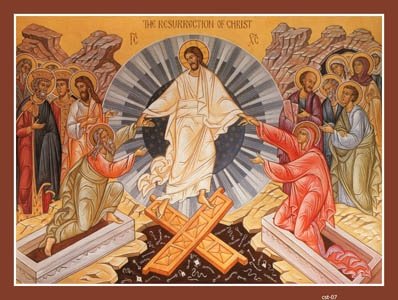
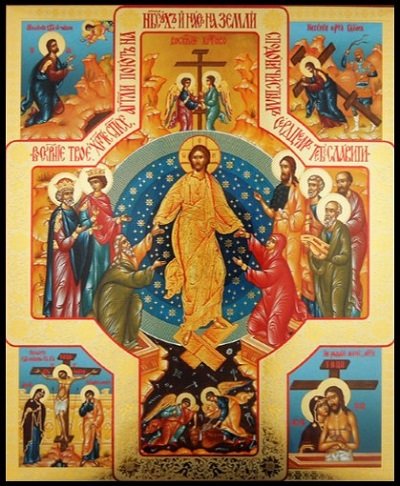
easter4The truth of this revelation is presented to us by our Church today not only in the Icon of the Lord’s Descent into Hades but also in the prayers that we use to worship God. Our Church presents God’s revelation in a very   direct manner. Consider the traditional Easter Icon of our Church. It does not represent Christ coming out of the grave but His destruction of Death – it represents what the Lord’s resurrection accomplished, that is giving immortality back to us, represented by Adam and Eve. Death is destroyed! It no longer has claim over us humans.

Likewise we sing during Easter Matins: I day of Resurrection! Let us beam with festive joy! O Pasch! O Pasch of the Lord, for from death to life, from earth to heaven, Christ our God has led us who sing the hymn of victory. These are not just poetic words! They are an expression of our faith. They tell us what we believe!

Again we sing during Matins: You have descended into the world beneath and shattered the everlasting chains which held the prisoners captive, O Christ. And again we sing: And when You rose from the grave You also raised up Adam the father of our race.

These are not just pretty words that have no meaning! They are words that capture our belief that the Lords resurrection has revealed to us the truth about human life and the truth revealed should give all of us a reason to rejoice.

Again another Matins prayer should fill us with joy: Although You descended into the grave, O immortal One, You destroyed the power of hell… You gave resurrection to the fallen.