The Divine Liturgy and Our Worship of God — 20151115

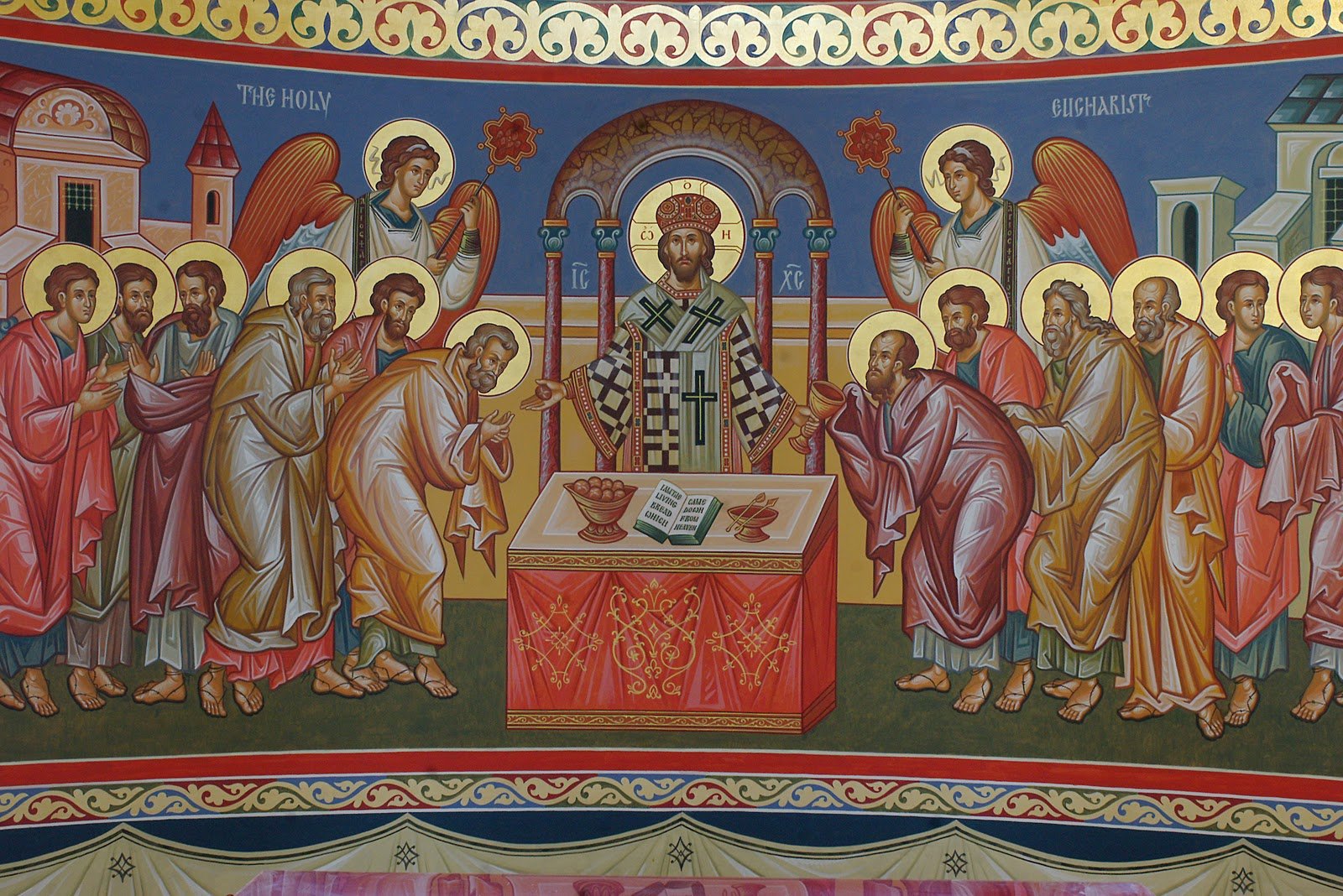
Holy Eucharist IconAs I tried to state in the last issue of this article, the Divine Liturgy can be defined as an encounter between the faithful and God – a real encounter that takes place in the present moment. In the Divine Liturgy we are transported, if we allow ourselves to be, into the very presence of our Triune God. The act of being transported into God’s presence, taking us beyond space and time, is what is meant by the anamnetic nature of the Divine Liturgy.

Liturgical scholars have traced the development of the anamnesis in the Eucharistic Prayer back to the ninth and tenth chapters of the Didache, which was written in the late and early second century of the common era. These two chapters focus on the Eucharist, yet they do not mention the command of Jesus through Paul found in first Corinthians (11:24-25): Do this in remembrance of me. In the Didache, the Eucharist is understood primarily as an act of thanksgiving. Chapter 9 of this document directs partakers in the Eucharist to “give thanks…First, concerning the cup…and [then] concerning the broken bread.” This prayer, one scholar argues, is a more likely origin of the Eucharistic Prayers of the current Roman Rite than the   Jewish Seder prayers. The Didache’s prayer of thanksgiving more closely   parallels the Eucharistic Prayer as one to be recited before the Eucharist, whereas the prayers over food in Judaism were to be said after the Seder meal. Chapter 10 contains a prayer of thanksgiving for God’s presence in salvation history. for making our hearts His tabernacle; for giving us knowledge, faith and immortality; l for creation, and for food and drink both earthly and spiritual. This is then interspersed with a doxology and ends with a prayer for the Church’s deliverance from evil and for God to gather it into His kingdom and for the Lord’s second coming: “Maranatha. Amen.” This 10th chapter includes no explicit reference to remembrance and the exclamation, “Hosanna to the God (Son) of David”. Scholars debate whether this alludes specifically to the Son of God or simply to God as the “vine of David.” The latter interpretation, namely that it refers to God and not Christ, is advanced by a majority of scholars.

So where and when did the notion of the Eucharist take on this anamnetic character? I will continue to explore this with you, my readers.

PYLYPIVKA (ADVENT) PASTORAL OF THE UKRAINIAN CATHOLIC HIERARCHY OF THE U. S. A.

TO OUR CLERGY, HIEROMONKS AND BROTHERS, RELIGIOUS SISTERS,
SEMINARIANS AND BELOVED FAITHFUL

Praise be Jesus Christ!

Depending on which calendar is designated for your parish, you need to circle one of two dates: Gregorian calendar folks need to circle November 14th, while the Julian calendar folks get to wait thirteen days, focusing rather on the 27th. In either case, the red-letter day marks a double commemoration: on the one hand, it is the feast of the Apostle Philip; on the other hand, that date marks the beginning of the pre-Christmas fast, thus appropriately referred to as the Philip’s Fast. Some of you, especially those born before the Second Vatican Council, may not have grown up with this tradition; nevertheless, faithful to Vatican II which called us to return to our genuine tradition, we bishops seek to recover this richness, and we urge all our people to embrace it.

If all are to do this, we need first to understand what the Philip’s Fast is. In fact, it is one of four periods of fast which precede four great feasts of our liturgical calendar. Like the Great Fast which precedes the Great Paschal Feast of Easter, the Philip’s Fast lasts forty days; other, shorter fasts precede the feasts of SS. Peter and Paul (June 29th / July 12th) and the Dormition of the Mother of God (August 15th / 28th). The idea behind all these fasts is simple: they are times of spiritual preparation for the feasts which they precede. In a sense, it is the spiritual equivalent of what wise people likely do before Thanksgiving Dinner: they limit their food intake in the hours and days beforehand so as to take full advantage of the rich abundance of the feast itself; our four fasts are similar.

Obviously, this fast has a dietary component which is not an end in itself, but rather could serve as a meditation for everyone, especially for Ukrainians. After all, is it not during the month of November that we generally commemorate the Holodomor when millions of our brothers and sisters in Ukraine starved to death? An experience of hunger might make us more appreciative of the overabundance which is available to us in the United States, a wealth which both the fast and Thanksgiving Day seek to prevent us from taking for granted; they might even inspire us to take positive steps to alleviate the hunger which is visible all around us.

As we move toward Christmas, we think of the Holy Family and their own preparations. They were homeless, wandering through Bethlehem seeking a place for the birth of the One Who would later remark that “Foxes have dens and birds have nests, but the Son of Man has no place to lay his head.” (Matthew 8:20, Luke 9:58). Their age-old story is reflected in tragedies which sometimes make the headlines but which, alas, often do not: refugees from war-torn Ukraine have been joined by others from Syria, from the Fertile Crescent, and from Africa; their numbers are swelled by many in our own hemisphere fleeing grinding poverty and hopelessness. It is due to the welcome once offered to such as these that the words of Emma Lazarus now grace the Statue of Liberty “Give me your tired, your poor, your huddled masses yearning to breathe free, the wretched refuse of your teaming shores”. In our own day, urban professionals step over the homeless whose makeshift beds block their way, while shelters and food banks struggle to care for misfits in a relentlessly consumer-driven society. As Christmas parties all around us merrily entice us to forget our problems and theirs, the Philip’s Fast urges us rather to follow the example of Pope Francis, paying attention and tending to those seeds which God has planted in our consciences, urging us to follow the example of the Samaritan who, unlike the ostensibly righteous, proved himself truly to be the neighbor of the wounded man lying by the side of the road.

Obviously, the dietary considerations are not the only ones which the Philip’s Fast places before us. In making our daily food and drink more sparing, we might also consider what other daily habits we would do well to discontinue. Indifference should certainly be high on the list. We each have our own list; may the Philip’s Fast encourage us to take our own spiritual inventory!

As we prepare to celebrate the first coming of Christ at His birth in Bethlehem, we would do well likewise to prepare for His Second Coming at the end of the world. In this regard, St. Luke poses an unsettling question: “When the Son of Man comes, will he find faith on earth?” (18: 8). Before giving too hasty an affirmative answer, we would do well to reflect on the words of the Apostle St. James: “What good is it, my brothers, if someone says he has faith but does not have works? Can that faith save him? If a brother or sister is poorly clothed and lacking in daily food, and one of you says to them, ‘Go in peace, be warmed and filled,’ without giving them the things needed for the body, what good is that? So also faith by itself, if it does not have works, is dead.” (2:14).

“But someone will say, ‘You have faith and I have works.’ Show me your faith apart from your works, and I will show you my faith by my works. You believe that God is one; you do well. Even the demons believe—and shudder! Do you want to be shown, you foolish person, that faith apart from works is useless?” (James 2: 14-20). Jesus Himself answers those who need to be shown: “Truly, I say to you, as you did not do it to one of the least of these, you did not do it to me.” (Matthew 25:45). May these words serve as an examination of conscience for all of us!

We prepare for the Christ who comes as light for our darkness, as warmth for our winter. During this season of hopeful preparation, may we learn how better to become the instruments of the Divine Love which our world so desperately needs.

+Stefan Soroka
Archbishop of Philadelphia for Ukrainians
Metropolitan of Ukrainian Catholics in the United States

+Richard Seminack (author)
Eparch of St. Nicholas in Chicago

+Paul Chomnycky, OSBM
Eparch of Stamford

+ Bohdan Danylo
Eparch of St. Josaphat in Parma

+John Bura
Auxiliary Bishop of Philadelphia

Friday, 06 November 2015,

Reflections on the Scriptural Readings for this Weekend — 20151108

Jairus Daughter

Jairus Daughter

The Gospel miracle-story assigned to be read this weekend is found in all three Synoptic Gospels. It is the story of how a woman, sick for 12 years with a hemorrhage, was cured and how a twelve-year-old girl, the daughter of a synagogue ruler, was rescued from death by Jesus. It is the only story where two miracles are told in a single account. This was due to the fact that they either happened that way or the number 12, the age of the girl and the number of years of the woman’s sickness, served as a literary link to bring these two stories together.

It is interesting to note that tradition holds that Jesus worked His first miracle in the synagogue where Jarius was ruler – the cure of a demoniac. This was probably the reason why Jarius had the courage to approach Jesus. He was desperate, as shown by the fact that he fell on his knees before Jesus. The girl was his only child and, despite the fact that many of the religious rulers spurned Jesus, Jarius believed that Jesus had the power to cure his daughter.

The story also conveys several other important facts, especially the cure of the hemorrhaging woman. Jesus is shown to have obeyed the Law by wearing the prayer shawl that has tassels on its four corners. He went beyond the Law, however, by allowing an unclean woman to touch Him and later touching the dead body of the young girl. He did not allow the Law to stop Him from extending kindness to others and healing those who came to Him.

This in itself is a great teaching. When we allow our beliefs – our laws, so to speak – to keep us from acts of kindness and unconditional love, we are not following the WAY of Jesus. The things that we believe should lead   us to be unconditionally loving and accepting of others even though they may not believe as we do or live as we do. Our first response to others must always be to love them as brothers and sisters.

Jesus says to the woman after she is cured: “Daughter, it is your faith that has cured you. Now go in peace.” Believing in the goodness of God is essential if we are to spiritually grow into God’s children. Believing in Him, however, must not be conditional, that is only believing in Him if we get what we want in prayer. If we truly believe in God, then we truly believe that He unconditionally loves us and that there is nothing we can do that will change His love. We are called to a deeper realization of how very much He loves us!

Gaining a Deeper Understanding of the New Testament — 20151108

2-thessololiansI have been sharing information in this article about second Thessalonians, a letter which is attributed to St. Paul but probably written by someone else.

The author warns his recipients about “believers” who live in “idleness and not according to the tradition that they received.” According to him, they are “mere busybodies, not doing any work”. One passage (3:6) commands: “anyone unwilling to work should not eat”. Unless people are willing to work and seeking work, they do not deserve to be financially supported by those in the community who do work.

I’m sure that most modern Christians probably are surprised by this. This attitude doesn’t seem to jive with what we usually think. Perhaps that is because too often we have a mistaken notion of the true attitudes that the early Christians had.

This same issue is also addressed in 1 Timothy, one of the other letters attributed to Paul, but written around the same time as 2 Thessalonians, perhaps a decade or so later.

Second Thessalonians concludes with the theme of peace: “Now may the Lord of peace himself give you peace at all times in all ways. The Lord be with all of you”. It, like a few other letters in the New Testament, is a “slight” letter – a minor one that would not be missed if it were not included. But it is a window into a Pauline community around the year 100.

When Christians of Thessalonica were going through their time of trouble, many of them thought they were in that time of tribulation. It was to respond to this question that this second letter was written. In the first letter, Paul wrote to comfort them in their distress over their loved ones who had died, but this second letter is written to correct certain misunderstandings they had about the “Day of the Lord,” and this time of trouble.

There are only three chapters in this little letter, and each one is a correction of a very common attitude that many people still had about disturbing times. The first chapter is devoted to a correction of the attitude of discouragement in the face of difficulty. The Christian community in Thessalonica was undergoing persecutions and, although they were dealing with this, many of them were getting discouraged. To counteract this attitude, the author reminds them that the day when God would repay them for the difficulties they were going through was coming. They, like Paul who wrote the first letter, found out that Christ was not coming in their lifetime.

Further Thoughts About the WAY of Jesus — 20151108

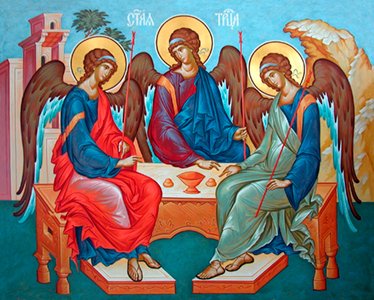
Holy-Trinity-9The dogma of salvation in Christ is the central dogma of Christianity, the heart of our Christian faith. We call Christ Himself our “Savior” and in our Symbol of Faith we confess our belief in the One Lord Jesus Christ Who became man for the sake of our salvation. By these words the Eastern Church teaches that the salvation of the human race is achieved by the Son of God, Lord Jesus Christ, Who said about Himself, “the Son of man came not to be ministered unto, but to minister, and to give his life a ransom for many” (Matthew 20:28, Mark 10:45).

Why do we call Christ “the Savior”? We can also ask: what is salvation? Salvation from what? If we are talking about salvation, someone must be in danger. The answers that the Eastern Church gives to these questions are tied to its teaching on Theosis, the process of personal transformation that helps humans actualize their ability to be more like God.

The truth of the matter is that it is beyond the ability of humans to come to this understanding of life by themselves. History bears witness to the fact that although God has constantly attempted to communicate this idea to humans, it seems that humans were unable to come to this conclusion by themselves. So God came in the Person of Jesus in human history to actually serve as a model for humans. What did God come to model? How to live this earthly life so that we might develop our ability to be more like Him, like His children.

God knew that only through personal change could humans come to freely know, love and serve Him. God does not want from us “forced” love – love that is expressed in obedience to a set of laws out of fear of punishment. God freely loves us. He calls us to freely return His love, knowing that in that process we will begin to truly understand the great love He has for us.

Although there are many aspects and ideas about salvation, it can be seen as the help that God actually gives humankind by having come into our world and being a model for us with respect living this present earthly life. Further, salvation also involves the fact that He found a way to actually continue His presence in our world in the Eucharist. His support for us is ongoing and current. It is not just something that He gave in the past. Rather, He is with us, as He said, until the end of time, supporting and helping us bring about personal transformation. Salvation, in my humble estimation, is something that we can and are really experiencing right now and not something in a time to come!

The Spirituality of the Christian East — 20151108

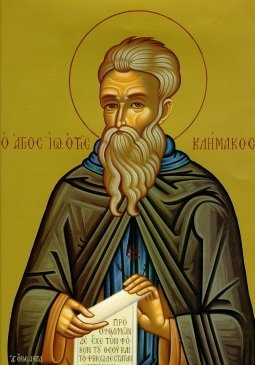
st_john_of_theladderI would share just a few more thoughts on the ninth step: Remembrance of Wrongs. The remembrance of wrongs is not a minor imperfection, however natural being permanently angry with those who have done us ill may seem to be. Furthermore, being a spiritual sin (and, therefore, a sin easy to disguise and ignore), the refusal to forgive is no less common in religious people than in anyone else. St. John says: “Never imagine that this dark vice is a passion of no importance, for it often reaches out even to spiritual men and women”.

Even the most devout Christians can be brutally unforgiving. For though we may know the Gospel like the back of our hand, we yet manage “to make excuses in sins,” even to the point of applying wishful hermeneutics (ways of interpreting) to the Scriptures in order to justify our own weakness. We often hear people attempt to argue away the words of Jesus which deal with the love of one’s enemies and those who hate us. Forgiveness is something the majority of Christians struggle with, whether they care to admit it or not. I suspect that all of us have struggled with forgiving those who we feel have hurt us, unjustly accused us of wrong, or have spoken ill of us.

But while we must always be compassionate to human weaknesses and not condemn Christians for being nothing more than human, we should at the very least learn to ask God to help us and have pity on us for being unforgiving. That would be a start! Alas, too many of us refuse to even admit that we should forgive, and we fail to see how hypocritical we are for not doing so. Thus we turn Christ’s commandment to forgive into a naïve platitude, rather than a very real and stern commandment by which we shall all be judged. Let us pray thus: Lord, I believe I should forgive, help me to really believe it. This 9th step is critical in our development.

Smart and Stupid Ways to Think About God — 20151108

The tenth and final stupid way to think about God is GOD THE MASTER OF CEREMONIES. Of all the stupid ways of thinking about God, this is by far the   stupidest. So stupid it deserves to be last. Because absolutely no thought whatsoever goes into this notion.

You’ve got a wedding? A confirmation? A christening? A funeral? God the Master of Ceremonies is the ultimate party dude. It makes no difference the last time you stepped into a church. It doesn’t matter when you last prayed. Or even whether you believe. Because God the M.C. can be hired by anyone, for any occasion. He’s Rent-a-God.

God the M.C. is invoked with all the pomp and circumstance, all the apparent reverence and rites befitting the worship of a true God. He may appear holy. But he is hollow.

Because God the M.C. is just a sham, His ceremonies are shows. And often, the more money you donate to your church, the better the seats.

God is being exploited to provide an illusion, the security of tradition. He is used to bolster intergenerational family ties, to force bonding between infants and society, between men and women. Other people will always think better of you if you employ God the M.C. He helps people maintain nominal religious affiliation, with no relation to spirituality and without real faith, strong personal commitment and sincere religious motivation. God is reduced to a viewer spectacle, a façade. God the M.C. comes out, does his act, then retires offstage.

The meaning and relevance of the idea of One God is lost. Devotion is dead. What is important is that the correct words are spoken, the right rituals are performed, the necessary prayers offered, the traditional vows taken.

God the M.C. is rendered a spiritless ceremonialist – a show-biz god. All that remains is a shell of faith that in the absence of sentimentality would crumble to dust.

Indeed, God the M.C. is even more empty of spirituality than atheism is. At least it is honest.

For many, the sheer hypocrisy of this begins very early. A child is born and his parents suddenly feel the urge to drop things and get in some old-time religion. This may be done unconsciously out of deep guilt, with considerable social and family pressure.

As noble as their desires sound, frequently parents are not so emphatic about the importance of God in their own lives. And their religion is seldom practiced at home.

Just imagine how it looks to a young child when his mother and father themselves do not take seriously the faith they are force-feeding. It is enough to make any god unworthy of belief.

God is not just an M.C.!

CALLED TO HOLINESS — 20151108

As I compose this article this week, I think about all the twists and turns it has taken since I began it. It began with thought on the initiative that our Synod of Bishop devised called Vibrant Parishes. It quickly turned into the sharing of my thoughts on how we can know if we are a vibrant parish. Then it morphed into a series of my thoughts about how to know if our parish is vibrant. It is my contention that a parish is vibrant when the whole community and its individual members understand that God is calling us to be holy people. Thus the title, Called to Holiness. I have attempted to share the idea that I   believe, and I think this is also the belief of Eastern Christianity, that personal holiness can only be acquired through personal transformation (i.e., metanoia). That seems to have been Jesus’ major teaching and it was also the teaching of John the Baptizer. Hopefully my readers have gleaned this message from my ramblings.

Personal Transformation encompasses many different things. It means discovering our true selves, that is the persons that God intended when He created us. It involves integrating the attitudes of Jesus into our lives. It means attempting to imitate the behaviors of Jesus. Holiness, in my estimation, means having some sense of the meaning and purpose of life and attempting to change your life, to the best of your ability, to sufficiently make your life like Jesus. It means growing in your likeness of God as manifest in the Person of Jesus.

I believe growing in holiness is a life-long process which we never totally achieve but in which we are totally engaged during this lifetime. If a person is engaged in Theosis, then a person is responding to the call to holiness. Why? Because Theosis is working, with the help of God, to grow in our likeness of Jesus. It means learning how to unconditionally love others, to genuinely forgive others and not to judge others!

Learning Our Faith From the Greek Fathers of the Church — 20151108

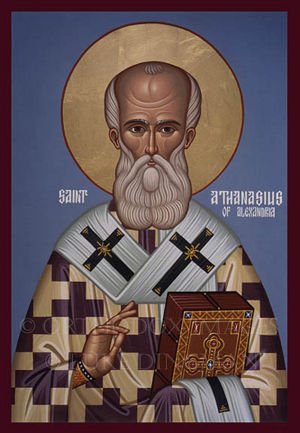
Athanasius the Great

Athanasius the Great

In the last issue of the Bulletin, I began sharing should thoughts about one of the greatest Eastern Fathers of the Church, St. Athanasius. Outside the pages of the New Testament itself, Athanasius is probably the man to whom we chiefly owe the preservation of the Christian faith. He was born around AD 298, and lived in Alexandria, Egypt, the chief center of learning of the Roman Empire.

In 313 the Emperor Constantine issued the Edict of Milan, which changed Christianity from a persecuted to an officially favored religion. About six years later, a presbyter (elder, priest) Arius of Alexandria began to teach concerning the Word of God, Jesus, that God begot him, and before he was begotten, he did not exist. Athanasius was at that time a newly ordained deacon, secretary to Bishop Alexander of Alexandria, and a member of his household. His reply to Arius was that the begetting, or uttering, of the Word by the Father is an eternal relation between Them, and not a temporal event. Arius was condemned by the bishops of Egypt (with the exceptions of Secundus of Ptolemais and Theonas of Marmorica), and went to Nicomedia, from which he wrote letters to bishops throughout the world, stating his position.

The Emperor Constantine undertook to resolve the dispute by calling a council of bishops from all over the Christian world. This council met in Nicea, just across the straits from what is now Istanbul, in the year 325, and consisted of 317 bishops. Athanasius accompanied his bishop to the council, and became recognized as a chief spokesman for the view that the Son was fully God, co-equal and co-eternal with the Father.

The party of Athanasius was overwhelmingly in the majority. (The western, or Latin, half of the Empire was sparsely represented, but it was solidly Athanasian, so that if its bishops had attended in force, the vote would have been still more lopsided.) It remained to formulate a creedal statement to express the consensus. The initial effort was to find a formula from Holy Scripture that would express the full deity of the Son, equally with the Father. However, the Arians cheerfully agreed to all such formulations, having interpreted them already to fit their own views. Finally, the Greek word “homo-ousios” (meaning “of the same substance, or nature, or essence“) was introduced, chiefly because it was one word that could not be understood to mean what the Arians meant.

The Divine Liturgy and Our Worship of God — 20151108

Mystical Supper

Mystical Supper

The ultimate aim of the Divine liturgy and all the liturgies of the Church is the perfect glorification of God and the sanctification of those who celebrate them. This is signified and brought about “by means of signs perceptible to the senses.” Signs or symbols, words and gestures, give our various liturgies a sacramental dimension, that is, they contain and reveal the presence of Christ and of the mystery which the Church celebrates.

In all the Mysteries, the Divine Liturgy included, the signs or symbols consist of words that serve as sacramental formularies, that are joined with specific gestures and material elements like water, bread, wine, oil, crowns and laying on of hands. The difference that exists among signs gives rise to the different forms of liturgical celebrations and thus to the various ways whereby our sanctification is realized.

The seven rituals that form the foundation of the liturgical life of our Church deal with seven of life’s true mysteries: life, death, commitment, love, reconciliation, the courage to live a truly Christian life and God’s gift of spiritual nourishment to promote and to sustain our spiritual lives

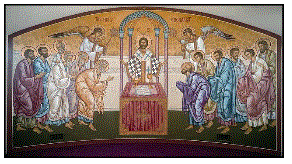
The Divine Liturgy can be defined as an encounter between the faithful and God. This implies that through the Church’s worship the faithful, both as a body and as individuals, enter into the presence of Our Triune God. In the liturgy the Church offers worship to the Father, through Jesus Christ, in the unity of the Holy Spirit. The ancient doxological formulary expresses this succinctly. The formulary is patterned after the Trinitarian activity in the history of salvation. The Father is the origin and hence the end of all creation and salvation. Jesus Christ is the sacrament who reveals the Father and the mediator who reconciles humankind with God. The Holy Spirit is the power whereby Christ lifts up the fallen and leads them to the Father.

In our Church, this is clearly seen by the way that we worship. We join with Jesus in worshipping the Father, as He taught us to do, and this worship is made real and our lives are sanctified by the power of the Holy Spirit. Even our worship is structured to represent our interaction with God as Father, Son and Holy Spirit. It is important that we think about this when we join together to celebrate the Divine Liturgy.