The Spirituality of the Christian East — 20151004

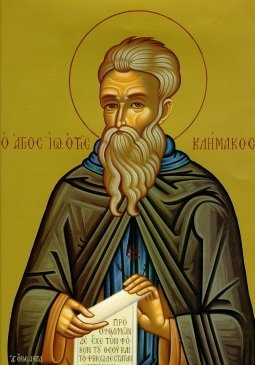
st_john_of_theladderThe second stage of blessed patience is to be free from pain amid all such things. This is similar to the third stage of freedom from anger, that is to be untroubled by dishonor. The Ladder does not give us an equivalent to the second stage of freedom from anger, but the third stage of patience is even higher than the third stage of freedom from anger. It is to think of dishonor as praise. This takes a lot of courage. It does work, however, if you can manage to do it.

Just imagine how life-changing it would be to rejoice in what others think of you and not as causes for sorrow and   anger. To find joy in what is otherwise a cause of so much sin and misery. Even the saints were not loved and   honored by everyone. Even they had enemies and were hated by some.

To be holy is to transform our response to that hatred of others into love and joy. If all were saints, we would be living in a perfect world, for it would be a world in which sorrow is joy and a cause of thanksgiving.

Although St. John does not come out and clearly state this, I believe he would agree with the statement that we, and we alone, are the masters of our feelings. We can choose to respond even to insults with grace and poise, not allowing the ignorance of others to upset us. We must always remember that our feelings are our own and no one, despite what we may think, can actually cause us to feel what we feel. Others can do horrible things to us, but we can choose how we respond to their lack of love. It is essential that we learn how to think this way if we truly want to develop patience. I am also sure that we will have ample opportunities to learn this.

O God, make me the master of my own life of feelings and emotions and never blame others for my feelings.
Learning Our Faith From the Greek Fathers of the Church – 20151004

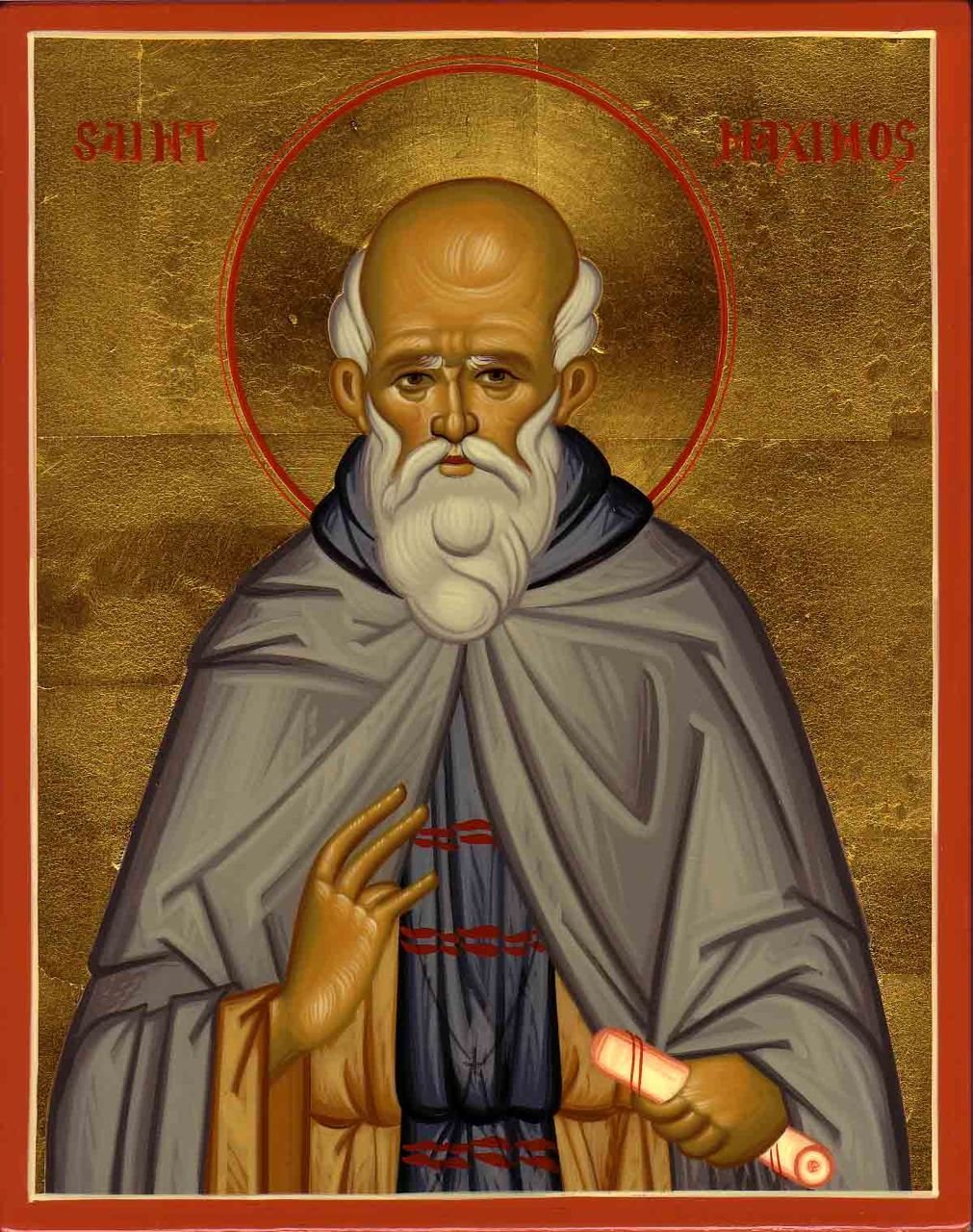
As you read Maximus, his holistic view of the human person is more than evident. In a more explicit way than his predecessor, Maximus shows that the human intellect is not unaffected by man’s corrupt and mortal nature. For while it is certainly true, as St. Cyril demonstrated, that it is the body which actually suffers corruption and which is consequently in need of resurrection, it is also equally true that man’s corrupt and mortal state affects the operation of the whole person, the soul, that is, as well as the body. Hence, the intellect, understood as the deepest and most responsive part of the soul, shares in and so also suffers from the present corruptibility of the human body.

Saint Maximos the Confessor

Saint Maximos the Confessor

Maximus’ emphasis on the future incorruptibility of the intellect may perhaps be traced back to a reference to the Transfiguration in Gregory of Nyssa, who expressed the view that the soul, when united with Christ, shines with the same incorruptibility as was revealed on Tabor. Corruptibility, then, even if only implicitly, is ascribed by Gregory also to the human soul before its deification.

Hopefully this is beginning to make sense. Humans are composed of both a corruptible nature, the body, and an   incorruptible nature, the soul. So, technically, one would deduce that the body is what needs to be made incorruptible and not the soul. But we also know that a person is composed of a soul and a body. That is what makes us who we are. So the Fathers had to find some way to express what happens to a person when they die, given that our belief is that Jesus’   resurrection from the dead foretells our resurrection from the dead.

Maximus’ reference to the intelligible Theophany of Christ, therefore, should be understood primarily as a comment on the present state of man, on his corrupt and mortal nature, which obstructs his intended intelligible participation in the Divine Life.

Again we have to remember that the Eastern Fathers set forth that the primary task during this early life is to actualize the potential God has given to humans to become more fully in His likeness – life’s primary goal is Theosis.

Maximus notes that God, even in the life to come, will always remain beyond the capacity of the created human intellect. Maximus states, God surpasses every power and operation of the intellect and man’s participation in divine glory leaves no impression whatever on the intellect of the one attempting to comprehend.

The Divine Liturgy and Our Worship of God — 20151004

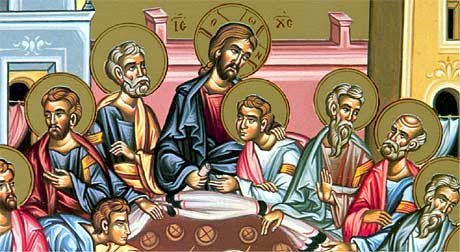
Mystical Supper

Mystical Supper

As I indicated in the last issue of this article, Anamnesis is a central notion in our Liturgy. Liturgical remembrance of God’s action on behalf of and in relationship with humankind in history is both a starting point for worship and flows from worship. Therefore, worship is intrinsically linked with anamnesis (ἀνάμνησις). This Greek noun, in its  New Testament context, is commonly translated in English as remembrance or commemoration. One author contends that Christian worship is fundamentally an anamnesis.

It must be pointed out, however, that it is an active remembrance of the paschal mystery – of our salvation through Christ’s death and His holy resurrection. Christian worship is fundamentally anamnetic, that is it is an act in which the present is brought into intimate contact with the past and vice-versa. This particular description of anamnesis is more akin to actualizing remembrance than merely active remembrance.

To understand this concept of actualizing remembrance, we need to know something about the actual development of the Christian notion. This notion is meant to move worshipers beyond liturgy, so that liturgy has an effect on society in which it is set.

The semantic range of the term anamnesis in Greek is wide and has undergone historical evolution in     meaning. For instance, in the Attic Greek of Plato, ἀνάμνησις was used as an equivalent to recollection. In Plato’s Meno, Socrates argues that one either has in mind a prior concept of a subject or one has no prior notion of the subject. No learning takes place without prior anamnesis of a subject.

Plotinus, a contemporary of early-Christians, developed Plato’s doctrine of anamnesis further. Plotinus held that anamnesis must derive from intelligible matter, from something experienced.

None of these historical examples of the evolution of the meaning of anamnesis correspond fully with the Christian usage of this term or its significance for Christian worship, although the French postmodern literary notion of anamnesis correlates most closely with the Christian sense of remembrance that brings past action into the present.

All this will become clear as we continue to think about this idea the Liturgy as Anamnesis.  

Further Thoughts About the WAY of Jesus — 20151004

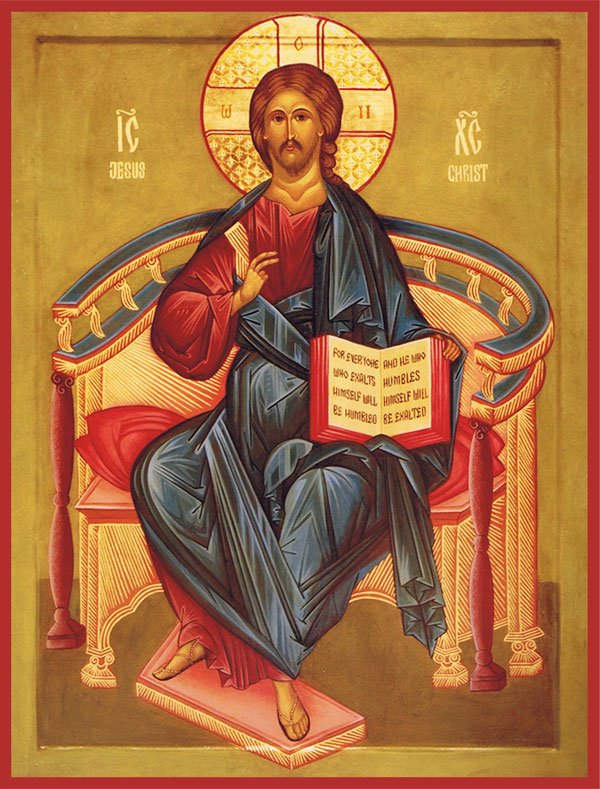
pantocratorThe WAY of Jesus is not about keeping a lot of rules and regulations and living in fear that you might, if you offend God, get zapped. It is also not about doing whatever you want and then feel that you can just run to confession and get rid of all guilt and potential punishment. The WAY of Jesus involves authentic   living – living like the people that God created us to be. What God wants for us is that we be intelligent people, who freely embrace a WAY of living that can bring about personal transformation.

The WAY of Jesus is such as way of living. If we embrace His way of living, we learn how to unconditionally love and forgive others, which, as you might guess, is truly transformative. Why do I say that it is transformative? I say this because this   way of living is not typically supported by our society and humans tend to be more influenced by society’s mores than they even realize. Our modern society seems to promote and encourage self-centered, independent persons who seem to take quick offense and feel that perceived injustices must be countered with force and violence. Justice before compassion seems to be the rule.

We see this even in the image of God which predominates much of our Christian world. God truly has been made in the image and likeness of man instead of vice-versa. Of course God is going to punish all those who do not live up to our values and beliefs. He has to. It is only fair!

The WAY of Jesus turns this kind of thinking totally upside-down. He lived in a manner totally opposite of this way of living, which is, most assuredly, based on a way of thinking. When you think of people in terms of enemies and sinners, you cannot think in terms of love and forgiveness. When you also think in terms of   rigid absolutes, you cannot imagine how a person could live like Jesus lived. We know that if a person cannot even imagine living like Jesus lived, then they will never embrace the WAY of Jesus.

What must happen, if we are to spiritually grow, is that we believe with our whole mind that the WAY of Jesus is the true way of living – that the WAY of Jesus is the way that God intends us to live in order to possess the fullness of life and to come to have a real and true relationship with Him.

This, of course, scares many people. Of course none of us want to be taken advantage of or subject ourselves to injustices. We have fragile self-images! Despite all of this, the WAY of Jesus is the way to live!   Do you believe this?

Smart and Stupid Ways to Think About God — 20151004

The eighth stupid way to think about God is very apropos given the current activities in these United States. It is GOD THE POLITICAL CANDIDATE. God the Political Candidate’s platform is simple. This is the God of the majority, or the imagined moral majority. He is out to convert – or eradicate – sinners who lead our country astray. His tactics are anything but morally pure, let alone   consonant with our national values. He is a demagogue of the worst kind. He does not persuade, he condemns. He doesn’t respect your freedom to disagree or your right to believe something different. He displays a total disregard for freedom of conscience, a total disrespect for individual choice and a complete abhorrence for religious     beliefs that differ from his.

What’s so bad about God as a Political Candidate? He seems the model God for the model citizen,         embodying the model faith!

The problem is the very nature of faith. What makes it faith. Faith, to be faith, must be more than the blind adherence to any one belief. It must be more than the dogmatic acceptance of a party line. To be truly faithful, an individual must choose to believe. Faith can come only after deep introspection and self-reflection. It is a delicate, precious gift that must be cherished and respected because it comes from deep within the individual’s soul. Therefore, there can be no faith without freedom. Which is why this particular type of God is actually undermining faith rather than upholding it. He has violated freedom of conscience, the very basis of the faith experience.

This is abuse of power – plain and simple. And this god leads people like sheep to the slaughter. No one stops to question his authority. No one asks his qualifications. This god rallies people with a high-minded, know-it-all attitude that presumes complete personal knowledge of God’s will. In essence this god is a cult leader. He has substituted his version of earthly authority for God’s authority. He has made his word equivalent to God’s Holy Word.

Can any leader ever take the place of God? Should we ever trust any individual so much that we sacrifice freedom of choice and individual conscience in the act of worship?

What is the borderline between divine authority and mortal authority? How can we fuse them in principle, without confusing them in practice? These are the issues that God the Political Candidate really speaks to.

But we won’t face them honestly until we stop casting our ballots for this political sham of a deity.

This god is the god that results when politicians manipulate the idea of God, forcing their values on God instead of accepting God’s values.

Understanding Our Ukrainian Greek-Catholic Church — 20151004

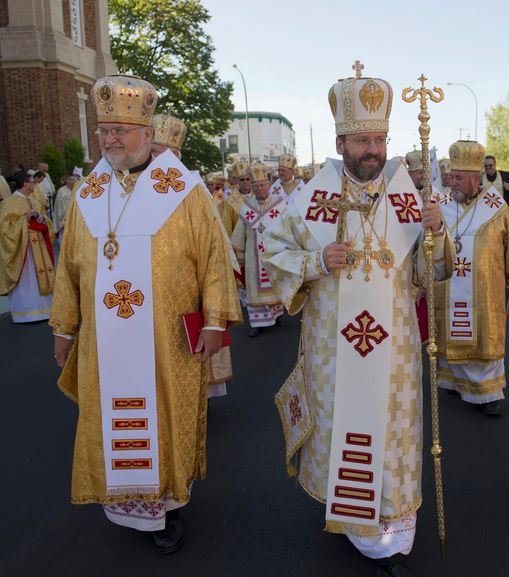
Ukrainian Archbishop Stefan Soroka of Philadelphia, Archbishop Sviatoslav Shevchuk, major archbishop of the Ukrainian Catholic Church

Ukrainian Archbishop Stefan Soroka of Philadelphia, Archbishop Sviatoslav Shevchuk, major archbishop of the Ukrainian Catholic Church

I would like to share with my readers the thoughts that our Metropolitan Archbishop Soroka shared with regard to our Ukrainian Greek-Catholic Church in the United States. He began by saying that our Church continues to be challenged by many very obvious challenges, as well as many subtle influences. He maintains that this is also true of our Church in other parts of the world.

Some of these influences have been at work for decades, while some have become more pronounced since the independence of Ukraine. He maintains that it is be fair to say that we are seeking to know our identity, who we are in our own eyes, in the eyes of the larger Catholic Church and in the eyes of our sister Orthodox Churches.

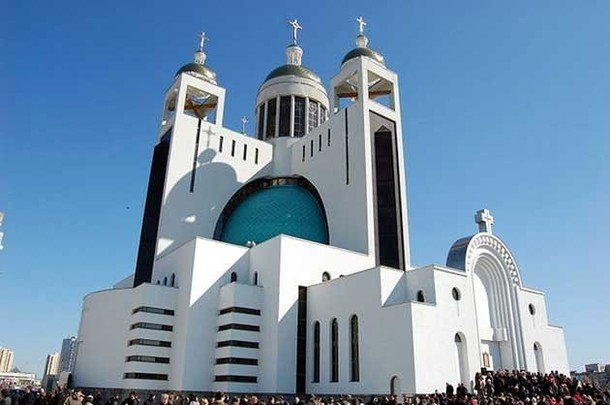
With Ukraine’s independence, there has occurred a shift in our identity as a surviving Church in the diaspora to a Church in the United States that is part of the Ukrainian Greek-Catholic Church based in Kyiv. We are no longer a diaspora – which in itself says that we would return to the motherland. We are a Ukrainian Greek-Catholic Church here in the United States with our own hierarchs, clergy and faithful, with our own unique needs. We are journeying together in faith with the larger universal Ukrainian Greek-Catholic Church, which happens to be the largest of the Eastern Churches within the Catholic Communion of Churches.

Metropolitan Stefan maintains that our people here in America are truly searching for a spiritual home, a place where their thirst for God can be satisfied. Each of us are challenged in our spiritual journey daily. We are all thirsting for the presence of God, to   understand His ways, to know His love, a love expressed through those with whom we journey in our lives. We seek to understand ourselves better. We seek the God within us, that we may know Him and celebrate Him through our words and actions. And we need others in this journey of faith, for growth in our understanding and love of God. We all seek a sense of family, of community, God’s holy community in His Church, in our parishes.

The degree to which we develop this deep and gut-felt sense of family, of community within our Church will determine the future of our Ukrainian Greek-Catholic Church in the United States. This will mean a stepping back and re-evaluating the manner in which we celebrate being Church. This will   require some bold changes. This will mean truly coming to know ourselves, first and foremost, as Christians, that is followers of Jesus Christ.

Reflections on the Scriptural Readings for this Weekend — 20150927

image379What is the true message of the Cross? Jesus is quoted as saying to some people who assembled to hear Him teach, If a man wishes to come after me, he must deny his very self, take up his cross and follow in my steps.

As scholars tell us, it is doubtful that Jesus would have had His own crucifixion in mind. That would have meant that Jesus had pre-cognition of His death on the Cross. The anointing or marking of a person with a cross was, however, practiced among Jews as a sign of repentance and of marking a person as one of God’s possessions. It was often connected with penitential and baptismal rites and is at the basis of the New Testament theme of the baptismal seal. So the quote could read: Whoever does not put a mark on himself cannot be my   disciple.

In this eighth chapter of Mark’s Gospel, which is the reading we use this weekend, Mark reports Jesus teaching His listeners that there is no profit in amassing all the things of this world if you risk destroying yourself. We can’t know how His listeners understood these words. As Christians, who already believe in an afterlife, they have a very definite meaning. We do know that the people of His day, who were always   anticipating the coming of a Messiah, probably took this to mean that how they were living would have an influence on how they would be treated when the Messiah came. While the Jewish people anticipated that a Messiah would grant them freedom from the bondage of the Romans, the Messiah would also have expectations, as all the prophets before him did, of how the people lived. It was Yahweh’s expectation that His people live according to His laws. We know that throughout the Old       Testament, He frequently chastised His people for not living as He had commanded. It would seem very reasonable that this is the way that people heard the teaching of Jesus. It is also true that within the words of Jesus there is a message for us Christians. It IS important how we live this earthly existence. It sets the pattern for the life that will come after this earthly life.

One can only guess the meaning of these words to early Christians as they faced persecution. They probably derived the strength from them to stand firm in their faith as they faced death.

So how do we choose to live? In accord with a set of rules or in accord with the Spirit of Jesus. How we live this life does make a difference if we truly believe that life is immortal.

Smart and Stupid Ways to Think About God — 20150927

The seventh smart way to think about God is that GOD IS REAL. Is our personal God just a hallucination? A phantasm? Is God merely an invention by some highly imaginative creator?

Maybe we all should have stayed sun worshippers and given up an idea as cumbersome as monotheism. Idol worship is easier.

Yet if God is only personal, there is nothing that separates Him from the visions of witch doctors or madmen. If God is only personal, there could be a different God for everyone. Our God would degenerate into a pantheon of demigods, all competing for cosmic supremacy.   Welcome back to ancient Canaan!

But our God must be the One God. He cannot just be personal. He must be universal. The God of our inner world and our outer world. God cannot just be a subjective experience, or He is an illusion. God must exist objectively, or He has no substance; He can never be considered real.

Though our personalization’s may   differ, God must have attributes people can agree upon, as readily as they agree that a chair exists, or emotions. The experience of God must be able to be shared, or it cannot be credible.

God must have definite qualities that can be experienced and reexperienced.

Remarkably, throughout the ages, there has been little debate about the reality of God. Most of the conflict between people, between religions, has been over rituals, political differences, and nuances of theology. People problems, not God problems.

Many religions have forgotten that their personal picture of God is just a way to feel closer to something that is impossible to picture. They mistake their image of God for God Himself and then insist that “their” God is the only God.

It would seem that if we were to attempt to define the characteristics of God, we would have to say that God cannot be a being Who is ungracious, impatient, uncompassionate and unforgiving. God, must be a being Who is first and foremost loving. Otherwise God would be a monster. For if cruelty, unkindness,     hatefulness, intolerance and arrogance were the traits of this being, what kind of God would this God be.

While saying this, one has to admit that humans have very often made God in their image and likeness. The God of some people is intolerant of people who do not follow a certain path or think in a certain way. If God is anything other than loving and accepting then that God is the creation of humans.

What kind of God do you believe in and serve?  

Learning Our Faith From the Greek Fathers of the Church — 20150927

Saint Maximos the Confessor

Saint Maximos the Confessor

In the last issue of this article, I began to describe Maximus’ treatment of the Transfiguration of Christ. He was not, however, content simply in describing the otherness of such a vision. His fundamental concern is above all ascetic and therefore refreshingly practical. Hence, most prominent among the theological themes Maximus touched upon is that of the process by which the vision of Christ transfigured may be attained, addressing the question: What relevance does the deification of the assumed human nature of the divine Logos have for our own lives? It is no coincidence, therefore, that it is by focusing on Maximus’ treatment of the Transfiguration that the clearest and most succinct answer to this fundamentally significant question is to be found. Maximus’ vision of Christ transfigured is comprised of two very discernible elements: firstly, that of the deified humanity of Christ, and secondly that of the manifestation of his divinity. Both elements are evident in Maximus’ writing on the Dionysian phrase, his   visible Theophany where Maximus maintains that visible refers to the vision of his divine body or the animated flesh of Christ, which bears witness to the Incarnation as an event of permanent significance. Maximus proceeds to contrast Christ’s visible Theophany to what he calls his noetic Theophany, which refers to the intelligible revelation of the divinity of Christ, received, that is, through the intellect and which corresponds to St. Dionysius’ noetic illumination.

In this present life, however, the noetic theophany of Christ can only be experience in part. For as Maximus adds, this vision will be communicated to us then in a more perfect way through the intellect. Hence, a more perfect intelligible perception of the divinity of Christ is possible only in the Age to Come, that is, only when the saints will have reached the Christlike state of incorruption and immortality.

I know that it may have been a real struggle to get through this. What Maximus is trying to say is that the Transfiguration of Christ can, when we consider it intellectually, tell us not only that Jesus was God Himself, that is   divine, but also that it tells us about our own human nature. All this came about because Maximus and others were attempting to understand not only how Jesus could be both God and man but also what the Incarnation of God has meant for humanity. Again, the idea of Theosis is in the background.

Understanding Our Ukrainian Greek-Catholic Church — 20150927

patcathThe Ukrainian Greek-Catholic Church is and associated Church of the Catholic Communion. This means, therefore, that it is in full communion with the Patriarch of Rome. It is neither part of, nor subordinated to the largest of the Churches in the Catholic Communion, the Latin Catholic Church. It is indeed startling for some Western Christians to find that the Catholic Church is not a monolith, but rather a communion of Churches, all of whom share one sacramental life. The relationship of the Ukrainian Greek-Catholic Church to the Latin Church is not a juridical one but, most importantly, a sacramental one.

When a Church is in communion with another Church it means that they can celebrate the Eucharistic Liturgy together. As we know from experience within our Detroit community, we frequently celebrate non-liturgical services together with our Ukrainian   Orthodox and Protestant brethren.

When our Church reestablished full communion with Rome, we retained all of our ancient, apostolic traditions. Our traditions include the particular way we worship, the way that we think about God (theology) and the way that we live our Christian lives. Our theology and spirituality is, as hopefully you are discovering from the Bulletin articles, different from that of the Latin Church even though we are in communion with the Latin Church. Our Church is equally Catholic as the Latin Church. What too often happens is that many people think that “communion” with Rome means that we have to look like and think like the Latin Church in order to be considered “Catholic.”

Our communion with the Latin Church means that both they and we recognize each other as being of the same faith and, therefore, able to celebrate the Eucharist together. The Eucharist is the ultimate sign of unity.

Saying this, it is important that we restate that our communion does not mean that we think about the truths of the faith in the same way. It also means, however, that we also don’t maintain positions that contradict each other. We just state things in a different way.

For example, while we don’t include the Filioque in our Creed, we don’t assert that the Latin Church is in error because it does insert it. Our position is based on our understanding of the Trinity, if such a thing is even possible.

I know that at times people seem to find it difficult to accept the fact that we are Catholic and yet approach our faith in a different manner. We are not second-class Catholics. Our approach is equally true.