Learning Our Faith From the Greek Fathers of the Church — 20150920

Saint Maximos the Confessor Преподобный Максим Исповедник Μαξίμου του Ομολογητού

Saint Maximos the Confessor

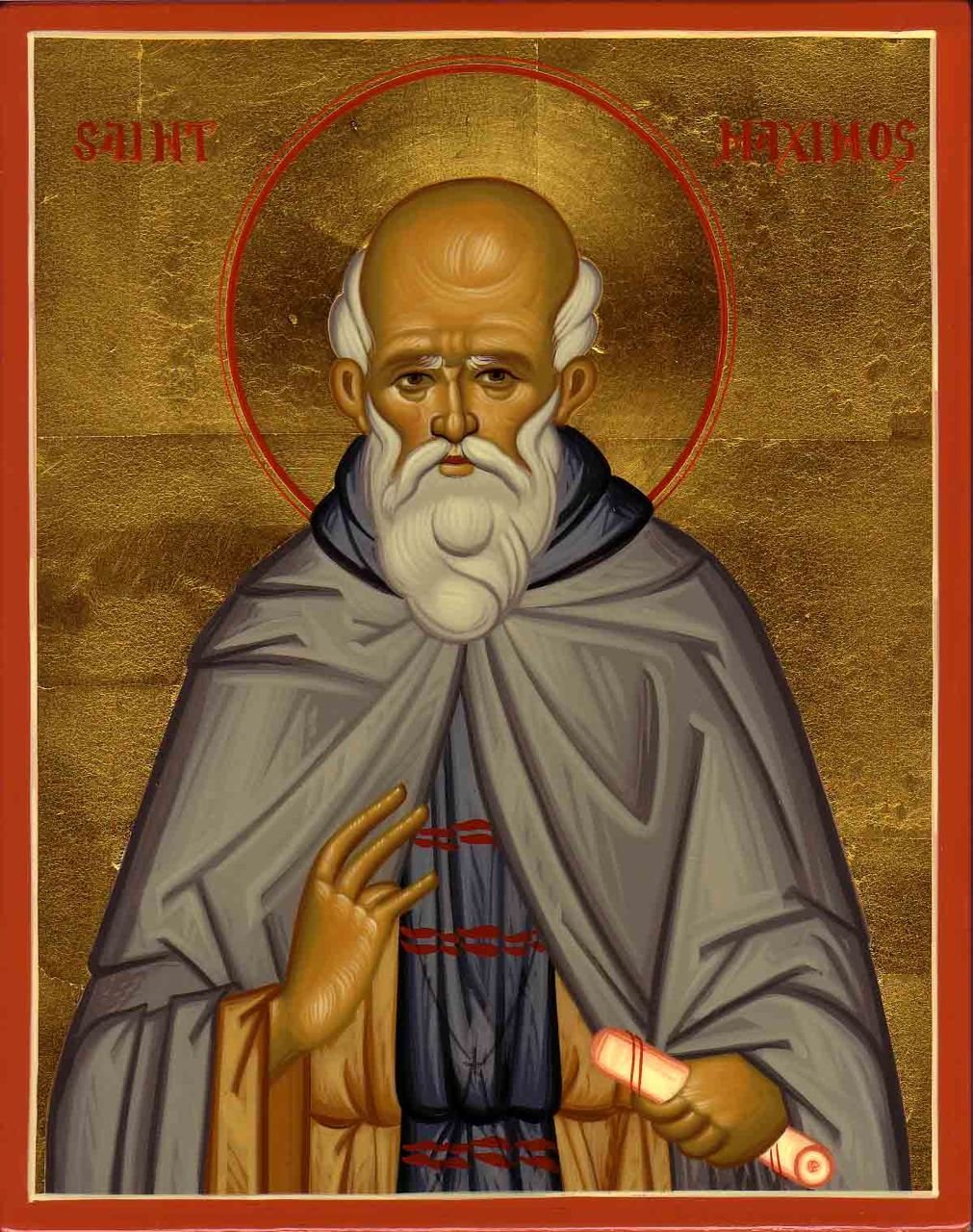
Another outstanding Father of the Church, which everyone should be acquainted with, is MAXIMOS THE CONFESSOR. I truly hope that his name does not come as a surprise to anyone reading my Bulletin since I have mentioned him many times before. He is one of the foremost Fathers of the Eastern Church.

The complex and convoluted structure of his thought and literary style, coupled with the highly allegorical character of his interpretation of the sacred scriptures, all make reading Maximus an extremely difficult task. But, I believe, any truly Eastern Christian should be aware of his writings and thought.

A further complication in Maximus is that the headings that appear in many of his writings often appear to be misleading, as them seem to bear little or no direct resemblance to their content. This is often due to the fact that his individual writings must be put into the context of his total writings.

Nevertheless, despite these initial difficulties and apparent obstacles, to the persevering person is revealed a depth of meaning and an originality of thought which is second to none in patristic literature. The tight cohesion of his thought is matched only by his profound understanding of the spiritual life, which pervades his theology. Indeed, taken at any given point, his thought immediately brings one into contact with the whole of an extremely complex and all-embracing vision of God, man and the universe.

The cyclical or repetitious character of his thought is equally evident in his treatment of the Transfiguration of Christ – reflected in the overlapping and intertwining of the numerous themes and   motifs contained therein. Indeed the uniqueness of his ultimate contribution to the question of the Transfiguration resides chiefly in the application of the Mt Taborian revelation into the vast landscape of his theology.

Maximus’ treatment of the Transfiguration is influenced by the early Apologists of the so-called Alexandrian school (particularly Origen and Cyril of Alexandria), the school in Cappadocia, namely Gregory of Nyssa and Dionysius the Areopagite.

The concept which dominates Maximus’ vision of the Transfiguration of Christ and his theological system as a whole, is influenced by Dionysius’ idea of the deification of man. Although not called by the name Theosis, this central ideal of Eastern spirituality seems to permeate all of Maximus’ writings.
CALLED TO HOLINESS — 20150920

Universal Call to Holiness

Universal Call to Holiness

It is important to remember that the call to holiness is a call to cooperate with God in developing the spiritual side of our nature as human beings. When God created humans, He gave them a two-fold nature, that is a nature which has a physical dimension as well as a spiritual dimension. Both of these dimensions are of extreme importance if we are to achieve the fullness of life and know who God created us to really be.

When you reflect on the life of Jesus, you quickly come to realize that one of His revelations to us was this understanding of who we are as human beings. We are this unique combination of the infinite and the finite; the immortal and mortal; and the physical and the spiritual. We are not just a body (physical) which is only biological in nature. We are an unique combination of spiritual and physical powers which are joined so that we can learn and understand what it means to be the greatest of all of God’s creations. We are unique among all of God’s creations. While we have many powers that are similar to other living things, we also have powers that are uniquely different from other biological beings. Further, we have the potential to grow in the likeness of our Creator-God. Our call to holiness is, therefore, a call to recognize who we are in God’s creation and, recognizing that uniqueness, to cooperate with His Spirit to develop ourselves as the human beings He intended when he created us.

One of the wonderful things about our God is that He realized that we humans would need insight into the truth of who we are as human beings. Because of this, He became incarnate – became a man – so that He could personally show us how to live in order to actualize the potential He has shared with us to become like Him.

God created us and revealed Himself to us in the way that He did so that we can voluntarily come to know and love Him and be like Him.

Understanding Our Ukrainian Greek-Catholic Church — 20150920

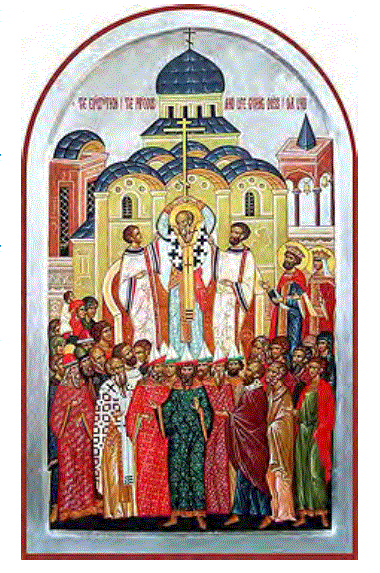
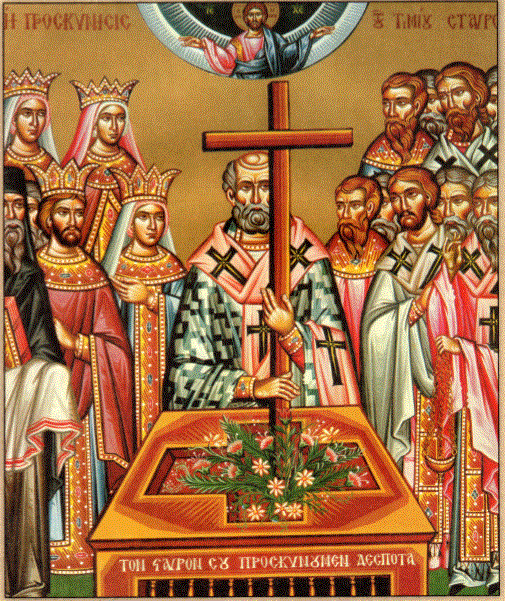
holycrossAlthough our Church celebrated the Feast of the Exaltation of the Holy Cross on Monday, September 14th, we are celebrating it as a community this weekend, which is within the octave of the feast. It is one of the 12 major feasts, as everyone knows, of our Church.

While it is a very ancient feast, its history, like that of the finding of the Cross, has been obscured by various legends. It is not easy to separate historical fact from pious legend.

Historians of the Eastern Church generally agree that two particular events gave rise to the institution of this feast: the finding of the holy Cross in the fourth century and its recovery from Persian captivity in the seventh century.

The institution of the Feast was first preceded by the finding of the Cross. Christian tradition has transmitted to us several different legends about the finding, three of which are attributed to St. Helena, the mother of the Emperor Constantine the Great. The finding of the Cross is believed to have taken place in 326. Historians who mention its finding say nothing about its first   exaltation after its discovery nor does pious tradition give any account of it.

It owes its origin to the consecration of the Church of the Resurrection which was erected on Golgotha, in Jerusalem by Emperor Constantine. The church was consecrated on September 13th in 335. Then, on the day following, there was a solemn elevation of the Cross to the public. During its elevation people exclaimed “Lord, have mercy” many times. Since that time, the Eastern Church has celebrated the feast on September 14th.

The second important event, which rendered the feast universal in the East, was the return of the Cross from Persian captivity. When the Persian King Chosroes captured the city of Jerusalem in 614, he carried off the Cross. Then fourteen year later, Emperor Heraclius was victorious over the Persians and recovered the Cross. It was brought back to Jerusalem and on September 14th a second solemn celebration took place during which the Cross was again elevated   before the people.

Since the feast of the Exaltation calls to mind the crucifixion and death of Christ, it has been given equal rank with Great and Good Friday since the middle of the seventh century. Besides this feast, our Church also pays honor to the Cross at the mid-point of the Great Fast, which is called the Sunday of the Veneration of the Holy Cross.

The Veneration of the Cross is, by tradition, accompanied by fasting, prostrations and a special hymn.

Further Thoughts About the WAY of Jesus — 20150920

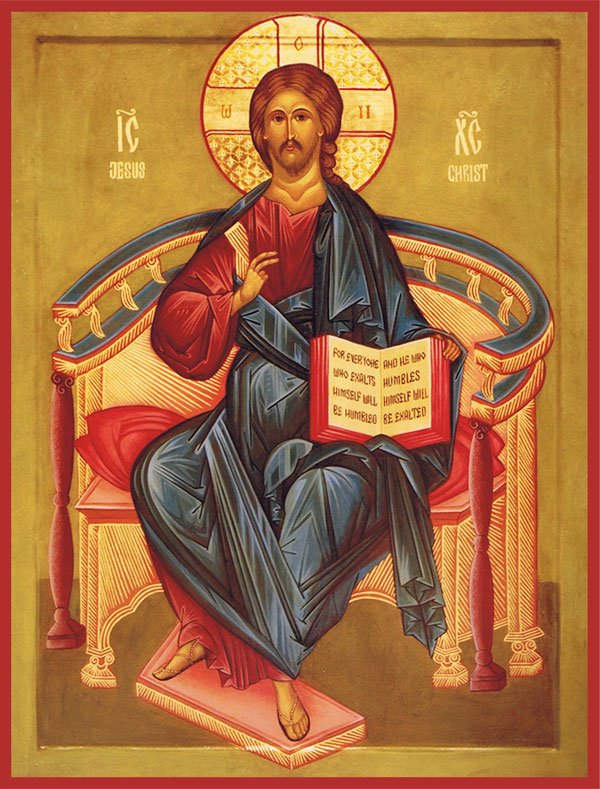
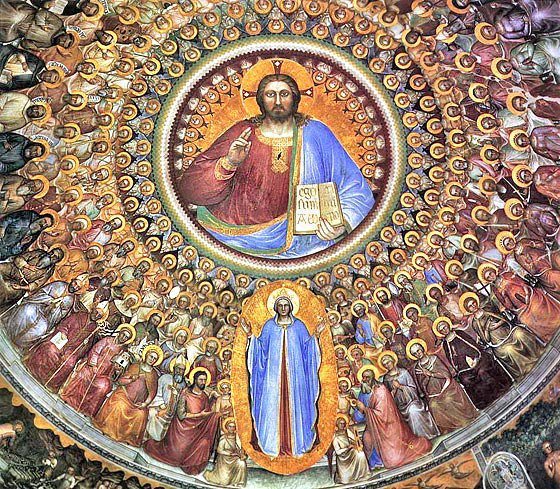
pantocratorWe can grow in the likeness of God by embracing the WAY of Jesus. God has given us the potential to do this. It seems, however, that this only happens when we first admire the man Jesus and decide that we want to live like He did. So we must ask ourselves this pertinent question: Do I truly admire the Person called Jesus and I do I really want to be like Him? We will never embrace His way of thinking and behaving if we don’t admire who we think He was when He was here on earth. It would seem very difficult not to admire how He lived and died. His was a life that spoke of nobility and dignity. I really can’t think of any person not admiring Who He showed Himself to be.

Once we can truly say that we admire how Jesus lived, then we are ready to imitate Him. If we embrace the WAY of Jesus, we assert that we want to imitate how He lived and died. We have the power to imitate Him because God’s Spirit resides within us, only waiting for us to call upon Him to assist us.

Something truly happens to us when we decide to imitate Jesus. When we do, we begin to identify with Him. He truly becomes our hero and our model. We then recognize our connectedness to Him. Indeed Jesus, as truly man, is connected to us insofar as all humans share in the same human nature and life. We are joined to Jesus as either brother or sister. We begin to realize that He faced life challenges that are similar to those that we must face. We also know how He responded and, because we are the temples of God’s Spirit, we know that we can live with the same nobility and dignity that He did.

When we begin to truly identify with Jesus, we begin to understand the meaning and purpose of life. Indeed this earthly life is given to us just as it was given to Him to allow for spiritually grow and the development of a deeper union with God.

While I suspect there are many things that stop us from truly imitating Jesus and identifying with Him, I believe that most of the barriers and blocks that keep us from making an effort to accomplish this task rests with our own misguided notions of who we think we are and our misguided notions of Who we think Jesus IS.

Through the centuries I think that a lot of misinformation was given us with regard who we are in God’s kingdom. In order to grow in His likeness, we must begin to see ourselves as His children, to whom He has given the potential to grow in His likeness. As Peter said first: God became man so that man might   become God!

The Spirituality of the Christian East — 20150920

In the last issue of this article, I presented the first two of three stages of “freedom from anger”. As was fairly obvious, I think, anger usually is the result of a lack of humility. The first two stages of dissipating anger are: (1) keeping one’s mouth closed when the feeling of anger arises, and (2) keep thoughts silent when you feel upset. The final step is: not to take offense at insults or be grieved by injuries.

What is very obvious when we search our lives and those of others, few of us ever truly master anger! To master anger, however, does not mean to become incapable of it. This is an important notion. Even our Lord   became angry when He saw people turning the temple of God into a marketplace. He was also furious with the hypocrisy of the religious elite.

Now if it is indeed true that Christ, in His humanity, is like us in every respect except sin, then we cannot say that all anger is sinful. As the psalmist says: Be angry and do not sin (Ps 4:4).

Of course, we must sometimes be careful when we speak of Jesus as an example for, as God, He had a right to do and say some things no one else has the right to do or say. But this makes the example of profound humility we see in His Passion all the more powerful and relevant to us. For He expressed no anger when He Himself was the victim of sin, although no one but Christ could ever claim to be undeserving of true disrespect and suffering. Our ultimate example is the King of Glory abused and crucified in humility and love.

While pride is the cause of anger, anger is, in turn, the root of so many other sins. Those who are experienced in doing battle with the passions are keenly aware of this. From experience they know that anger leads not only to sins of a similar nature, such as hatred, but of other acts that we call sins.

Reflections on the Scriptural Readings for this Weekend — 20150913

setp14This weekend we hear these profound words of St. Paul: May I never boast of anything but the cross of our Lord Jesus Christ! Through it, the world has been crucified to me and I to the world. We are called to make these words our own. May we also never boast of anything but the Cross. God has revealed to us through Jesus that the primary task given to us in this lifetime is to bear the cross given to us like Jesus, with nobility and dignity. It is through the cross that life presents to us that we find transformation. Being determined to carry our Cross as Christ did, brings about this transformation. This requires us, then, to take time and reflect on how Jesus carried the Cross that was given to Him. He carried it without complaint or sadness. He voluntarily embraced the Cross and did not consider it to be any kind of punishment. He saw that the Cross given to Him was an instrument which He could use to show His followers truly how to live. His voluntary acceptance of the Cross declared for all time that the struggles in life can be truly transformative if only humans voluntarily embrace them with dignity and grace.

This weekend we also hear these beautiful words from John’s Gospel: Yes, God so loved the world that He gave His only Son, that whoever believes in Him may not die but may have eternal life. We do well to spend some time thinking about these words. They express a truth which is truly wondrous and eradicate any fear of death, filling us with hope.

Think about these words and ask yourself: Do I really believe that God loves me? These words express the belief that God loves us SO MUCH that He came Himself to show us how to live and to assure us of our immortality.

How we live allows us to embrace the truth of these words. The saints have found that the more they tried to live like Jesus lived the more these words resonated with them. We must remember that we can only experience what we truly believe. In short this means that if we truly want to experience eternal life we have to believe that it is true and that God, Himself, has shown us this truth.

This is true of all things in life. We cannot truly love another if we don’t feel and realize that not only are we loved but that we are loveable.

Learning Our Faith From the Greek Fathers of the Church — 20150913

St. Cyril of Alexandria

St. Cyril of Alexandria

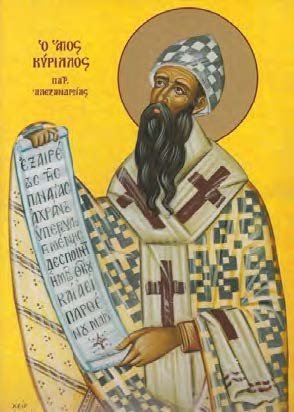
As you, my readers, have probably already decided, Cyril is not necessarily easy to understand. In the last issue I shared with you that in Cyril it is the Transfiguration glory that is a foreshadowing of that vision of Christ glorified which man has been capable of receiving since the Ascension. He   advanced this idea as he presented his ideas about the resurrection of the human body. There is a fascinating corollary to Cyril’s assertion: that man is, subsequent to the Ascension, capable of both receiving and enduring the vision of Christ glorified. Explicit scriptural accounts of post-Ascension visions of Christ are relatively few. Most of these are either directly or indirectly connected with the Conversion of Paul. They are: the Martyrdom of Stephen the Protodeacon; the Conversion of Saul; the Vision of Ananias; the Foundation of the Church in Corinth; Paul’s Vision in the Temple; and following Paul’s appearance before the Sanhedrin; to which an explicit reference to the vision of Christ in 2   Corinthians 4:6 may be added. Also, the Vision of John the Divine in Revelation. One must compare 1 Corinthians 15:   5-8 where Paul makes no distinction between the visions of Christ during the period between the Resurrection and the Ascension and his vision of Christ on the road to Damascus. However, it is also true that Paul at the time of this vision had not yet received the Holy Spirit. This would constitute an exception among these references to the vision of Christ in glory, since, in accordance with Cyril’s view of the scheme of things, Paul’s own spiritual state at that time could have been no more advanced than that of the three disciples at the Transfiguration. Indeed, this would account for his inability to endure the revelation, and his resulting blindness – elements which are not present in other instances of post-Ascension visions of Christ. None the less, Paul’s vision was one of Christ glorified. Moreover, it would also follow that these post-Ascension visions of Christ are regarded as examples of what must have been the common experience of all the apostles.

The Resurrection of Christ, together with His Ascension signify, firstly, the glorification of the human nature of Christ Himself – of His human body and soul. And secondly, they reveal the intended glorification of our whole human person, our whole hypostasis – soul and body.

I am sure that most of us have never even thought about this. What will we be like after death

Smart and Stupid Ways to Think About God — 20150913

Picture1Hopefully you, my readers, are having as much fun with these smart and stupid ways of thinking about God as I am   having in sharing them. As I shared, I am taking these ideas from Michael Shevack and Jack Bemporad, although I’m editing the material a good deal.

The sixth smart way to think about God is GOD IS PERSONAL. This is how the authors begin talking about this.

Sooner or later we all have to put up or shut up – we have to stop thinking about God and start acting. If you believe in God, you can’t spend an eternity sitting on the fence. You have to commit. Either you start bringing God into your personal life and start living Him, or even your smartest lessons will       remain hopelessly stupid. If you believe in God, He must become a practical matter. He must have real and true   consequences for your life or you are, to put it bluntly, a hypocrite.

If you believe in God, you can’t do anything you want. You can’t live just for money! You can’t live just for pleasure! You can’t live just for yourself!

If you believe in God, there are real-life decisions you have to make and they are not always convenient.

God should affect your life-style, that is your habits, your goals, your family. God should affect how you interact with others, even your enemies.

If you believe in God, He must become the standard by which you evaluate your decisions. Our living God must be a part of living, integrated into our lives on every level. Either we start to develop this kind of relationship with Him or we are functional atheists. The important thing is to begin to relate to God in a way that makes you feel closer emotionally and intellectually. Then pray. It’s a way of having a conversation with God. He can help you connect to life more deeply and more intimately than before. You may be able to feel God’s presence in the people and events that enter your life. God has to become at least as much a part of your daily ritual as brushing your teeth.

Religion can be a help, especially if it encourages questions and encourages people to grow within themselves and   in their relationship to God and others. With the support of religion, a person can work through difficulties, grapple with doubts and gain a closer, more intimate feeling toward God.

Hopefully our religion helps us develop a more intelligent image or idea of God. It provides the thoughts and ideas of centuries of people thinking about God and His relationship with us. It can help us discover our true God inside ourselves. Although we may not be able, at first, to hear Him within us, if we are patient and persist in trying to come to know Him, we will begin to hear His voice within us.


The Spirituality of the Christian East — 20150913

In dealing with the eighth step of the Ladder, which is MEEKNESS and the LOSS OF ANGER, St. John presents three stages of freedom from anger. Overcoming anger is by no means easy. The Ladder presents three stages of progress to mastering this passion. The first step toward freedom from anger is to keep the lips silent when the heart is stirred. If we are able to keep our mouth shut, even when we are upset, we are at least making a beginning of not giving in to anger. Despite what St. John says about     bottling up anger being far worse than losing one’s temper, it is also worth remembering that letting our anger out can often be very harmful to those around us. If we strive to refrain from acting or speaking in anger for the sake of others, rather than for admiration and praise, then we are acting with good intentions and we are at least learning to keep anger from dominating one of our faculties: the faculty of speech.

A second step in learning how to deal with anger is to keep thoughts silent when the soul is upset. This step suggests that we must not only keep our lips silent but also our thoughts. We must learn not to dwell on an offense or to think bad things of those who we think have wronged   or wounded us. Anger dwelled upon becomes a grudge, a refusal to forgive and forget, a denial of humility. While we may speak well of     others, our thoughts can be full of cursing and arrogant condemnation. If these thoughts come from the heart – that is intentional thoughts that emanate from the sickness of our soul, rather than fleeting thoughts that enter our minds as temptations – they condemn us before God no less than if we uttered those thoughts aloud. When angered, we must learn to let the anger go. As St. Paul says, Do not let the sun go down on your wrath!

CALLED TO HOLINESS — 20150913

As I have tried to suggest in this article, spiritual growth is accompanied with a growth in consciousness/awareness of God’s presence in our world and in us. It compels us to look at others and creation in a different manner. When we come to see God’s Spirit in others and in all the forms of life on our planet, we know that we have made progress in our spiritual development.

As I have also suggested in this Bulletin and in my sermons, the purpose and tasks presented to us by life are meant to help us develop as spiritual beings. This requires that (1) we see ourselves as spiritual as well as physical beings, and (2) we see that the purpose of life is to bring about this spiritual development. We just naturally grow as physical beings, albeit there are things that can facilitate our healthy, physical growth.

The same is not true about our spiritual nature. We have to work at spiritual growth by first increasing our awareness of God’s presence in creation and then engaging in acts that will increase our spiritual nature.

God became a human being in the Person of Jesus to help us understand what we must do to develop our spiritual nature. Jesus showed us what we must do and how we must think in order to encourage this spiritual growth. The call to holiness is a call to spiritual growth.

Why do we need to spiritually grow? In order to become the persons that God intended when He created us. We can only have a relationship with God when we spiritually grow – when we increase our awareness of His presence and when we begin to see ourselves and creation as God sees them.

The way that we were created requires that we engage in those things that can bring about spiritual growth. It is through our spiritual nature that we have a relationship with God. It is also through our spiritual nature that we can participate in the fullness of life.