Called to Holiness — 20150329

Universal Call to Holiness

Universal Call to Holiness

You are encouraged, as we enter into the Great and Holy Week, to make time to think about your life’s journey. I truly believe that if we take time to reflect upon the life of Christ, we will find that God has revealed to us how to live this life given to us in such a way that we will spiritually grow into a greater likeness of Him, Who is the expressed image of God. Jesus showed us how to live! He expressed the necessary attitudes and behaviors that we must integrate into our lives so that we can truly become children of God and fulfill our destiny to be more fully united with Him. It is our destiny, St. Maximus says, to be united to God. Our earthly existence is given to us to help us learn how to be spiritual beings and to be like Him, Our Creator, Redeemer and our God. Our earthly existence presents us with multiple opportunities to become more like Him. He showed us Himself how to live this earthly life through the Person of Jesus. He calls us to do everything in our power to adopt the Jesus way of living so that we can be united with Him. Out of love He has made every effort to reveal this truth to us. He only awaits our response to His loving invitation to become like Jesus. This Great and Holy Week allows us time to join with the Church in thinking about how Jesus lived and plan how we might accomplish being like Him.

The Divine Liturgy and Our Worship of God — 20150329

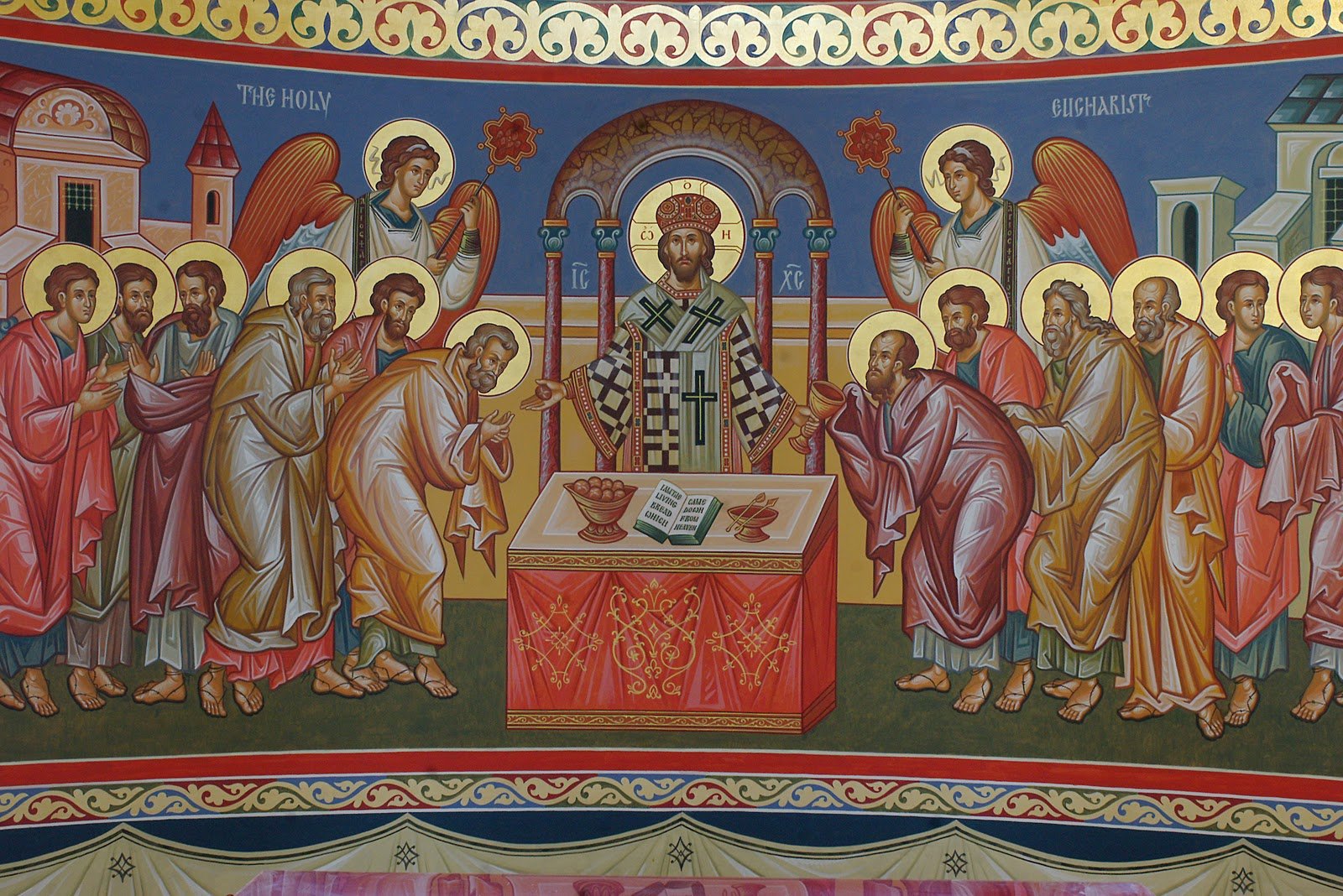
Holy Eucharist IconWe do well to think about how our Church observes the Great and Holy Week. With the exception of Great and Holy Thursday, when we celebrate the Institution of the Eucharist, and the Great Day (Easter) itself, the services used to celebrate this week are: the Presanctified Liturgy, Matins and Vespers. In fact, the true celebration of Easter begins with the celebration of Resurrection Matins. This Morning Prayer Service shares in great detail the Church’s understanding of the revelation God has made to us through Jesus’ resurrection.

For example, the two main services for Great and Good Friday are: Matins of the Twelve Gospels and Vespers of the Burial of Christ. This reminds us that in the early Church, Christians worshipped God every day by praying Matins and Vespers and then, on the weekend, they celebrated the Divine Liturgy. Because the early Church maintained Saturdays as the Sabbath and Sundays as the Day of the Lord, Saturdays and Sundays are always liturgical days outside of any fast period. When keeping one of the fast   periods in our Church (traditionally there are four fast periods) a person never has to fast on Saturdays or Sundays.

The four fast periods are:

St. Philip’s Fast – Preparation for Christmas    (November 15 – December 24)
The Great Fast – Preparation for Easter
The Apostles’ Fast – Preparation for the Feast of SS Peter and Paul (June 11 – June 28)
The Dormition Fast – Preparation for the Feast of the Dormition (August 1 – August 14)

Again, we embrace these fast periods as a means of helping us spiritually grow. The discipline that comes with fasting is important for spiritual growth.

During Holy Week, I believe that the two most important services we have are Great and Good Friday Vespers and Easter Matins. They tell us so very much about what we believe and help us to understand the revelation that God has made to us about life.

In these services you will also find the Jewish roots to our faith. On Easter we pray in song about Jesus being the New Adam and the New Moses and the New Exodus that humankind has been led through by Jesus, the Christ. It tells us that we are clearly the New Israel and that the Church is the New Jerusalem. This takes an understanding of what these mean. Israel was seen as the Bride of God and Jerusalem as the Foundation of God.

You are encouraged to come and pray with me!

Gaining a Deeper Understanding of the New Testament — 20150329

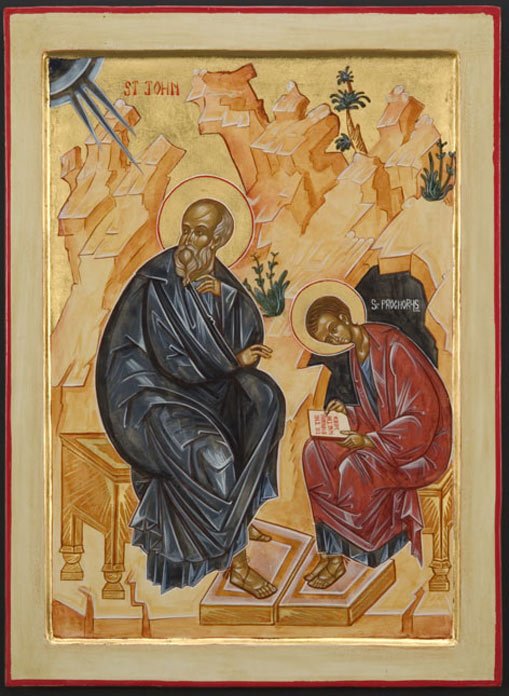
Gospel of JohnI have been sharing thoughts about the Gospel of John during the past several weeks. This week I would like to share thoughts about the beginning of John’s   Gospel, the Prologue, since we will be   hearing it next weekend on the Great Day, Pascha.

Whereas Matthew and Luke begin their stories of Jesus with his birth and Mark with John the Baptizer, John begins his with creation – indeed, before creation. His gospel opens with a  magnificent prologue that is perhaps an adaptation of an early Christian hymn. Its first words are the same as the first words of Genesis: “In the beginning.” The allusion is deliberate, not accidental.

The prologue of John’s Gospel continues. What was in the beginning was the Word, and the Word was with God, and the Word was God. The Greek word translated into English as word is logos, sometimes capitalized. In Greek philosophy, the logos referred to the principle of reason ordering the universe. It was the opposite of chaos. Though John’s meaning might include this, his context was thoroughly Jewish. Within Judaism, God created by word, speaking the world into being. Prophets spoke the word of the Lord, God’s countercultural word and also promise-filled word.

The word of God in Judaism is closely associated with the wisdom of God, especially in documents written in the five hundred years or so before Jesus, some of them perhaps more or less contemporary with Him. There the wisdom of God and the word of God become virtually nterchangeable. God created the world through wisdom, wisdom spoke through the prophets, and wisdom (like the Spirit of God) permeates everything. In both Hebrew and Greek, the word for wisdom is grammatically feminine, and in Jewish writings about the wisdom of God, wisdom is often personified as a woman, commonly called Sophia in scholarship today.

Given the equivalence between the word and wisdom of God, John could just as well have written, In the beginning was Wisdom, and Wisdom was with God, and Wisdom was God. But John chose the word logos, a masculine noun in Greek, even though what is meant is without gender and beyond gender. And so the text continues with the masculine pronoun: He was in the beginning with God. Furthermore, he was not only with God, but active in the process of creation: All things came into being through Him (the Word), and without Him not one thing came into being. If John had written about the wisdom of God rather than the word of God, the pronouns would have been feminine.

When you listen to the Gospel proclaimed on Pascha, think about this. John is saying that the Word of God is Jesus and God created everything by the Word. It is here that we begin to see the formulation of the doctrine of the Trinity. The Creator spoke the Word and all was created

Learning Our Faith From the Greek Fathers of the Church — 20150329

In the last installment of this article, I presented some of the thoughts of Maximus which are the foundation for Eastern Christian spirituality. Maximus stated, in deification man achieves the supreme goal for which he was created. This goal, already realized in Christ by a unilateral action of God’s love, represents both the meaning of human history and a judgment over man. It is open to man’s response and free effort. By God becoming human in the Person of Jesus Christ, He gave us an opportunity to cooperate with Him in transforming ourselves ever more into His image and likeness. By becoming a human, God modeled for us how to live in order to spiritually grow and become more like Him, thus allowing for a deeper union with Him. We must always remember that God, out of love for us, took the initiative to show us how to live.

Truly closely connected with our understanding of God’s incarnation – God becoming man – is our understanding holy fathers iconof Mary, His Mother. The only doctrinal definition on Mary to which our Byzantine tradition was/is formally committed is the decree of the Council of Ephesus which called her the Mother of God or Theotokos. This decree is, obviously, Christological in nature and not Mariological. Nevertheless the decree corresponds to the Mariological theme of the New Eve, which has appeared in Christian theological literature since the second century and which testifies, in the light of the Eastern view of the Adamic inheritance, to a concept of human freedom more optimistic than that which prevailed in the West. (You will recall that in the   Eastern Church the Adamic inheritance is mortality and not sin).

But it is the theology of Cyril of Alexandria, affirming the personal, hypostatic identity of Jesus with the pre-existent Logos, as it was endorsed in Ephesus, which served as the Christological basis for the tremendous development of piety centered on the person of Mary after the fifth century. God became our Savior by becoming man; but this humanization of God came about through Mary, who is thus inseparable from the person and work of her Son. Since in Jesus there is no human hypostasis, and since a mother can be mother only of someone, and not something, Mary is indeed the mother of the incarnate Logos, the Mother of God. And since the deification of man takes place in Christ, she is also – in a sense just as real as man’s participation in Christ – the mother of the whole body of the Church – our mother.

The Reformation in the West brought about a denial of Mary as God’s Mother. The Eastern Church, true to Ephesus, has never denied this truth and only addresses Mary as the Mother of God.

The Spirituality of the Christian East — 20150329

Transfiguration

Transfiguration

The more I think about the spirituality of the Eastern Church the more I am convinced that it captures something very important. I truly believe it captures the true meaning and purpose of life. Think about what our spiritual says about this life on earth. It says that it has been given to us so that we might cooperate with God in growing ever more in His image and His likeness. It also tells us that it was God’s intention, when He created us, to have this earthly life present all the possible opportunities for us to grow in our ability to truly understanding the meaning and purpose of life. For this to happen, however, we have to open our minds and hearts to the lessons that life is attempting to teach us. This means that we have to believe that life presents unique opportunities to each of us to spiritually grow. Everything about life, I believe, is geared to help each us individually grow in our understanding of our relationship with our Creator. It is all a matter of opening our hearts and minds to discern what life is attempting to teach us.

I also believe that our God respects and honors our free will. Why? Because He created us with it. He doesn’t reject us or threaten us in any way when we acts in   ennoble ways. He only continues to love us, ever calling us to return His love. I truly think the parable of the prodigal son is inspired and tells us that this is true. He created us out of love and gives us multiple opportunities to not only come to know of His love but also to return His love.

It is my hope that those who read my Bulletin will, during the coming Holy and Great Week, will truly experience the Week as a true sign of God’s love. He embraced all of the struggles of love to tell us that He truly understands us and human life. He also tells us that He is with us as we journey through life.

Understanding Our Ukrainian Greek-Catholic Faith — 20150329

Our Church presents us with an array of themes based chiefly on the last days of Jesus’ earthly life during the first part of Great and Holy Week. The story of the Passion, as recorded in the Gospels, is preceded by a series of incidents   located in Jerusalem and a collection of parables, sayings and discourses centered on Jesus’ divine sonship, the kingdom of God, the Parousia, and Jesus’ castigation of the hypocrisy and dark motives of the religious leaders. The observances of the first three days of Great Week are rooted in these incidents. The first three days constitute a single liturgical unit. They have the same cycle and system of daily prayer, that is the Hours which include Matins (Morning Prayer) and Vespers (Evening Prayer). The Scripture lessons, hymns, commemorations, and ceremonials that make up the festal elements in the respective services of the cycle highlight significant aspects of salvation history, by calling to mind the events that anticipated the Passion and by proclaiming the inevitability and significance of the Parousia.

jesusbridegroomThe Matins of each of these days is called the Service of the Bridegroom. The name comes from the central figure in the well-known parable of the ten   virgins. This title of Bridegroom suggests the intimacy of love. It is not without significance that the kingdom of God is compared to a bridal feast and chamber. The Christ of the Passion is the divine Bridegroom of the Church. The imagery connotes the final union of the Lover and the beloved. Indeed the title Bridegroom suggests the Parousia.

The Fathers of the Church saw this parable as related to the Second Coming. It is associated with the need for spiritual vigilance and preparedness, by which we are enabled to keep the divine commandments and receive the blessings of the age to come.

The tropar “Behold the Bridegroom comes in the middle of the night…”, which is sung at the beginning of Matins on Great and Holy Monday, Tuesday and Wednesday, exhorts the Church to this essential expectation of watching and waiting for the Lord, who will come again to bring His beloved people back to the Father’s home.

It must be remembered that the Church, the New Israel, has always been seen as the Bride of God, Who is the true Bridegroom. Think about the type of intimate relationship that the Church   envisions for us with our God.

A Prayer-A Day for the Great Fast — 20150329

cross_vineIt is truly my hope and priestly prayer that this Great Fast has been spiritually beneficial for you and that as we arrive at the Great and Glorious of all Days, Pascha-Easter, that your heart is filled with the joy of knowing that you are loved by God – loved so very much that He spared nothing so that you and I might know how to live this life. I hope that you truly believe that His suffering, death and resurrection were endured by Him so that we might know that life is immortal and that we might have some insight as to how we can effectively meet the challenges which life presents to us. The Church has again reminded us how He met the challenges of His life. He did not complain! He was not bitter! He was forgiving and found within Himself the strength to love as He was hated by others and to face death with nobility and grace.

A Prayer-A Day for the Great Fast SUNDAY, MARCH 29th

On this most blessed day, O my Lord, we recall Your voluntarily entrance into Jerusalem, the place of Your death.  You came as a humble servant, riding on a donkey, to reveal to me the importance of humility. You did not allow the adulation of the crowd to change You. You also voluntarily went into Jerusalem to model how to live when being unjustly and how to confront with nobility the hatred of others. Help me to truly learn the lessons that You taught me by embracing the challenges of life without bitterness and anger. Help me to live my life with the same nobility that Jesus did. As I request Your help, O God, I offer my praise to You, Who I know to be Father, Son and Holy Spirit, not only now but forever and ever. Amen.

A Prayer-A Day for the Great Fast SATURDAY, MARCH 28th

Heavenly Father, make me aware of what You intended to teach me when Jesus raised His friend Lazarus from the dead. The very act of raising him from the dead reveals that human life is immortal and that I have been given this life to grow in Your image and likeness. I know that Jesus’ expressed love for His friend Lazarus also reveals to me Your desire to have a personal relationship with me. I ask you to help me respond to Your love in such a way that I grow in my union with You  As I request Your help, O God, I offer my praise to You, Who I know to be Father, Son and Holy Spirit, not only now but forever and ever. Amen.

A Prayer-A Day for the Great Fast FRIDAY, MARCH 27th

Heavenly Father, help me to truly prepare for the Great and Holy Week. Help me to concentrate on the events that my Church celebrates, drawing from them an understanding of how I must live in order to be Your child. I know that Jesus, Your Son, revealed by the way He lived His earthly life, that loving others unconditionally and treating all as you wished to be treated, is an effective way of growing as a child of God. You truly lived as God intended people to live. You embraced human life in the Person of Your Son so that we I might know how to more effectively live my life. As I request Your help, O God, I offer my praise to You, Who I know to be Father, Son and Holy Spirit, not only now but forever and ever. Amen.