Understanding Our Ukrainian Greek-Catholic Church — 20150913

I shall, this weekend and next, change the focus of this article on our Church in order to share some thoughts on the major feasts that we celebrate. On this seventeenth weekend after Pentecost, we celebrate the feast of the Nativity of Mary, the Mother of God. While this feast was actually celebrated on September 8th, we celebrate it as a community this weekend since it is one of the 12 major feasts of our Church. Our celebration is within the octave.
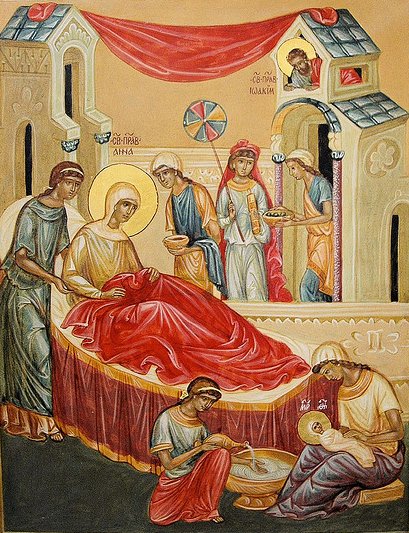
NativityoftheotokosThis weekend is also the weekend before the feast of the Exaltation of the Holy Cross which we will observe as a community next weekend. It also is one of the 12 major feasts of our Church. This feast falls on Monday, September 14th.

While the Church does not have the custom of celebrating the earthly birthday of the Saints of God, but rather celebrates their heavenly birthday, that is the day of their death which, for them, is the beginning of eternal life. She does make exception, however, for the two greatest Saints in the Church – Mary, the Mother of God and John the Baptizer. We celebrate not only their heavenly birth but also their birth on earth like we do for Jesus Christ.

We celebrate Mary’s birth almost at the very beginning of the Church Year. This feast is so ancient that the time of its appearance cannot be accurately determined. St. John Chrysostom and a host of other saints mention it. It also seems that St. Helena, mother of the Emperor Constantine, built a church in Jerusalem honoring this feast. The official introduction of the feast in the East is ascribed to Emperor Mauricius (582-602). The date of this feast was selected because a church in her honor was consecrated on this day in Jerusalem. It was also chosen because on this day nine months were completed from   December 9th, the day that the Church celebrates the conception of Mary by SS Joachim and Anna.

The day following this feast honors the memory of the Holy and Righteous Ancestors of Christ, Joachim and Anna. The veneration of these righteous grandparents of Jesus began to take root quite rapidly after the institution of the feast of Mary’s birth.

As the first major feast of the Church’s Year, it sets the tone for the year and calls us to also be bearers of Christ in our world. It highlights the role of humankind in God’s work of salvation. We believers are called to bear Christ into our world by the way that we embrace His WAY of living.

Gaining a Deeper Understanding of the New Testament — 20150913

saintlukeWe have been considering two books in the New Testament (NT) purported to have been written by the same author, Luke. There was a practical reason that the author wrote this single work in two volumes. In the ancient world, the   maximum length of a scroll was about 30 feet (interestingly, the world “volume” comes from the Latin word for “scroll”). Anything longer was heavy and awkward to use.  Finding a text meant unrolling the scroll to the appropriate place. And so the author wrote two volumes, each a scroll about 30 feet long. More of the NT was written by him than anybody else. Luke and Acts are about 30 percent of the NT – longer than the letters of Paul combined, and 80 percent as long as Matthew, Mark and John combined.

Scholars do not know who the author was. The documents do not name him. Second-century Christians assigned authorship to “Luke” and identified him with the “Luke” who was a companion of Paul in the 50s. This would make the author an eyewitness to some of what is narrated in Acts. It would also affect the dating of Luke-Acts. But the majority of modern scholars are skeptical or at least very uncertain that Luke-Acts was written by a companion of Paul.

For about a century, conventional wisdom suggested that Luke and Acts were written in the late 80s or 90s. But in the last decade, a growing number of scholars have dated them significantly later, in the first decade or two of the second century. Thus there is no consensus about their dating, though probably at least a slight majority still favor the 80s or 90s. They see Luke, like Matthew, as written a decade or two after Mark and thus as a voice from   a generation or so later. In this view, there is no compelling reasons to date Matthew earlier than Luke or vice versa. Thus Luke and Acts would belong in the first half of the NT when considered chronologically – not long after Mark, roughly contemporary with Matthew and before John, Revelation and several other letters. Dating them later is the exception to the rule, which is to reflect consensus conclusion when possible and, when there is no consensus, to follow majority opinion.

Some conservative Christian traditions date Luke and Acts even earlier, to the early 60s rather than the 80s or 90s. They correctly note that Acts ends without mentioning the death of Paul, who was executed in Rome around the middle of the 60s.


Hopefully this helps us understand the NT better!

The Divine Liturgy and Our Worship of God — 20150913

As I have tried to share with you, my readers, it is critical that when we attend the Divine Liturgy that we so   dispose ourselves to offer our lives,   together with Jesus, back to God in true thanksgiving for the gift of life. Of course we have to be psychologically disposed to do this. If we don’t like our lives or, in some way, feel dissatisfied with our lives, we cannot possibly worship God like Jesus did. It is critical, I believe, that we thank God from the bottom of our hearts for who we are, knowing that He chose to create us as we are. We are His creation and what He creates He sees as good.

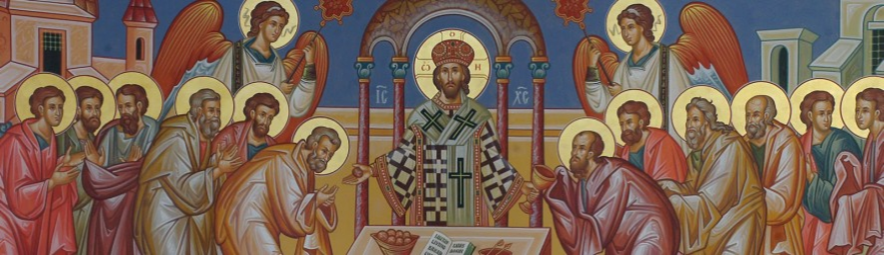
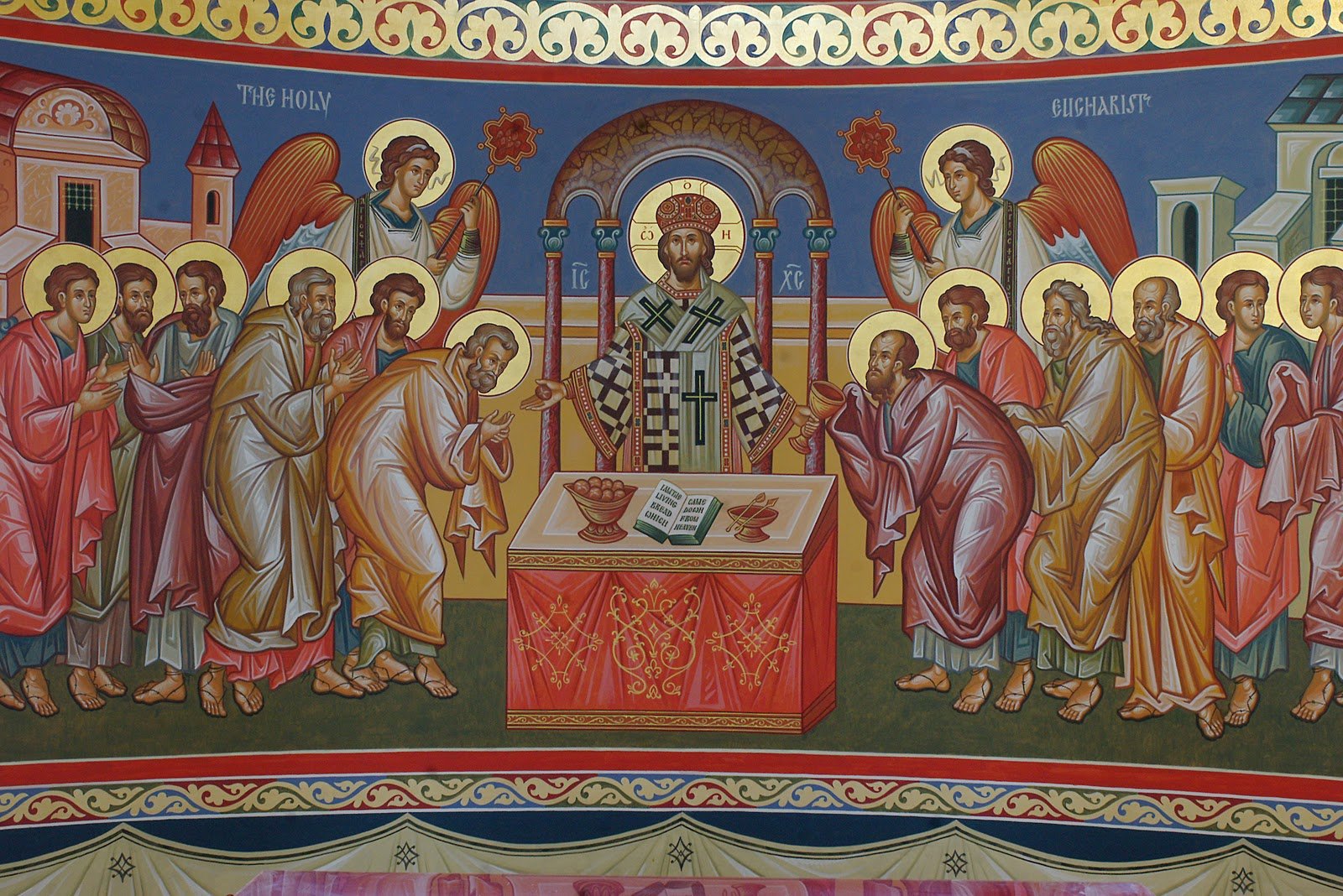
Holy Eucharist Icon

I wonder if you have ever thought about why we pray these words in the Epiclesis of our Divine Liturgy: we offer to You this spiritual and unbloody sacrifice. What does it mean that we offer a spiritual and unbloody sacrifice? Almost immediately after this we pray: We offer to You, Yours of Your own, in behalf of all and for all.

A clue to what our spiritual and unbloody sacrifice is rests, I believe, in these words: Yours of Your own. This raises another question: What do we have that is God’s own?

As I think about it, I realize that my life is a participation in God’s own life. It is His thought of me as I am, animated by His Spirit, that makes me, me. Nothing comes into existence that does not exist within God as an idea, to use human terms. (In saying this I must qualify my words. The only way that I can attempt to express the mystery of creation and my existence is to posit a relationship between my existence and His awareness or consciousness of who and what I am). It is our belief that all created things have their existence in God and cannot claim they are the source of their existence. God is the One Who calls us into existence.

I truly believe that our worship, our Divine Liturgy, is meant to be thought provoking, helping us to realize what we do by way of worship. The Divine Liturgy is not something that just the priest does by himself. It is a communal activity which requires also individual involvement. I also think this is why we hear these words several times in the Liturgy: BE ATTENTIVE!

I believe that true worship must be intelligent and thoughtful if it is to be true worship. Everyone can think about the words that are prayed even if they can’t sing. Participation is meaning what is said and done in the Liturgy!

Further Thoughts About the WAY of Jesus — 20150913

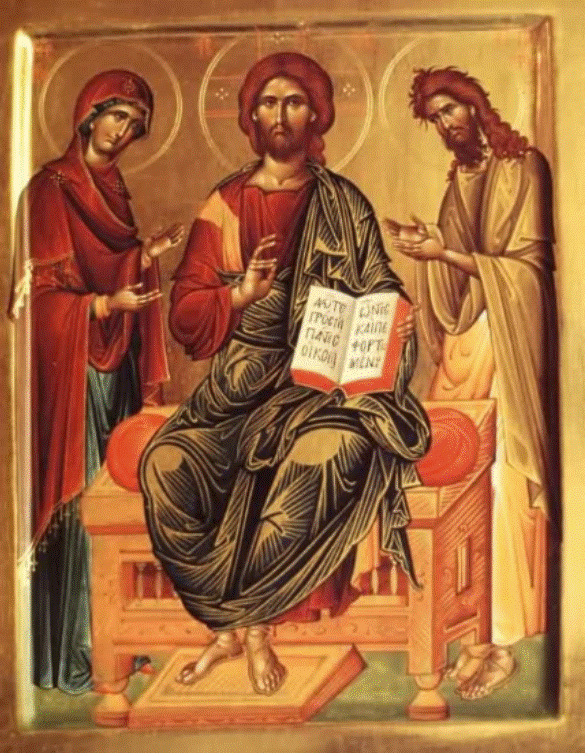
deisisFinding the meaning and purpose of your life is probably the most important thing that a person can do during his life. I find that many people think that finding happiness is the most important thing. I know, however, that those who pursue happiness are more frequently disappointed since life never seems to provide them with the happiness that they imagine and desire. Happiness seems to be a figment of our human imagination. We think we know what will make us happy until we actually achieve it. I have yet to find anyone who says that life has turned out exactly as they wanted. Of course if life turned out the way we wanted I am sure that we would never grow and learn the lessons of life.

Finding the meaning and purpose of life are probably, when all things are considered, the most important of any of life’s pursuits. To truly have a clearer understanding of life and what you are supposed to learn from the challenges and struggles of life, makes a difference. This is probably due to the fact that no human escapes life without some real challenges and struggles! It is only when a person has gained a clearer understanding of the meaning and purpose of life that s/he can learn the lessons that the struggles of life are meant to help us learn. Learning how to accept life’s lessons gives meaning to life.

Jesus saw that the primary meaning and purpose of His life was to bear witness to the love of the Father. All of the struggles that His life presented were designed to help Him bear this witness to His fellowmen.

Jesus taught us by His very behavior that voluntarily accepting the challenges of life without bitterness or anger can lead one to a deeper relationship with God and others. Consider what His example accomplished. His followers gained the courage to spread His teachings throughout the known world and to even die for the sake of His teachings. His example of how to live and die literally changed the world. By His voluntary acceptance of one of life’s most difficult challenges, namely His cruel death and the hatred that was directed toward Him, He was able to reveal to humankind that the meaning and       purpose of life is to activate the potential that God has shared with all humans, the potential to grow in God’s likeness.

It is important that you ask yourself this question: What do I think is the meaning and purpose of my life? And then try to honestly answer it!

The Divine Liturgy and Our Worship of God — 20150920

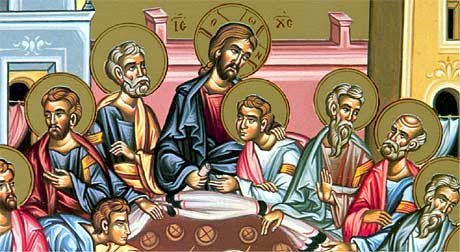
Mystical Supper

Mystical Supper

As I am sure all of my readers already know, Jesus, before He was crucified, created a ritual that became the new way of worshiping God. His act of saying that bread and wine can be His very Body and Blood through the power of the Holy Spirit, made it possible that He could, for all eternity, continuously offer an unbloody sacrifice to His Father in cooperation with His Church and find a way to be present to His followers until the end of time. His command to repeat this ritual also provided His followers with a means of offering their very lives, together with Him, to the Father. By His actions He created a new, personal way to worship God. He revealed to humankind that the worship of God is not by offering and destroying something you own but spiritually offering your life to God in thanksgiving for life. Food (i.e., bread and wine) is a perfect symbol of life. The offering of one’s life is the ultimate act of worship, especially when joined with the spiritual sacrifice of Jesus.

So the ritual that we use during the Divine Liturgy uses symbols of life and offers them to God in thanksgiving. Now the important thing is to make this offering personal – make it something that you intend and went to do. This takes thought! This requires intention! This means that we intentionally want the bread and wine to represent our very life and that we desire to offer our very life to God in thanksgiving for the gift of life in union with Jesus.

This ritual action also requires something of us. It requires that we psychologically make sure that we are in union with the community with which we worship. Why? Because in order to be in communion with Christ, we must first be in communion with others, especially those who worship with us. If we are not in communion with others. This communion with others, however, is not limited to only those with whom we perform this ritual.

This all makes perfect sense when you think about it. If, indeed, God is the life-force within all humans, then to be in communion with God means to be in communion with all others. This is why the symbols of bread and wine are so very perfect. It takes many grains of wheat and many grapes to make bread and wine. One grain of wheat or one grape doesn’t work! In order for bread and wine to be produced, the grains of wheat and the grapes must be crushed to form dough and wine.

Reflections on the Scriptural Readings for this Weekend — 20150906

You shall love the Lord your God with your whole heart, with your whole soul, and with all your mind. This is the greatest and first commandment! The second is like it: You shall love your neighbor as yourself!

image379Today we join our voices with the young lawyer in the Gospel and ask Christ, our true God: Teacher, which commandment is the greatest? And while I know that all probably already know His response, we again hear His words:

I wonder what these words really mean to us who say that we are followers of Jesus Christ? I wonder what they suggest to us about how we should live this present life?

In our present world, which seems to be filled with such hatred and violence, I wonder whether Jesus would give the very same answer? Of course I have to immediately say, yes He would give the very same answer. Why? Because His world was also filled with great hatred and violence. He taught that the only godlike way that hatred and violence can be countered is with love. Naive? I’m sure that many would like to think that this approach is naïve. Why? Because it probably means that they have to change the way that they live and think. God forbid that God would like humans to be more godlike!

The Eastern Church tells us that we have been created in God’s image and given the potential to become like Him as He manifested Himself in Jesus.

We know how Jesus lived through the New Testament and Holy Tradition. Jesus responded to hatred and violence with love. He did not allow the hatred, which was so rampant in His society, to influence Him. He did not allow the hatred of others to cause Him to hate others. This is why we can say that He, as a man, was godlike. He lived what He believed. He truly believed that in order to be God’s son He had to love others as Himself – He had to see others, despite the way they treated Him, as temples of God’s own Spirit.

This, I believe, is the true challenge of Christianity – to love those who hate us and to forgive those who hurt us. This is the godlike way to live.

I am sure that some may be tempted to reject the notion that God expects us to live in this manner. Some may even be tempted to reject the notion that the plan life gives us is an opportunity to transform ourselves into the persons that God intended when He created us.

Consider this teaching of Christ! It raises a very important question: What exactly is the meaning and purpose of life? Think about this question and then try to honestly answer it.

Learning Our Faith From the Greek Fathers of the Church — 20150906

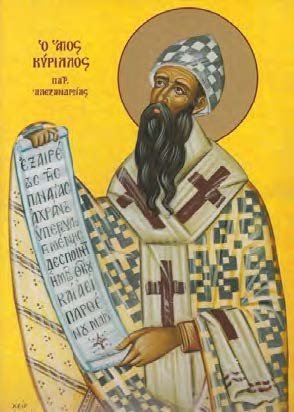
St. Cyril of Alexandria

St. Cyril of Alexandria

If you, my dear readers, have been trying to follow this article, you have already gotten a sense of the struggle the early Church went through in order to come to some real understanding of Who Christ IS and what exactly happened to Him. St. Cyril, like many of the Fathers, came to the conclusion that the glory of the body of Christ, as revealed at the Transfiguration, should be regarded as a preview of His Resurrection glory, not as it was revealed to Thomas and the others immediately following the Resurrection, but as it was revealed to them from the Ascension onwards.

This does not mean, of course, that the body of Christ had not already been glorified at the time of the Resurrection. On the contrary, the Fathers and Cyril maintain that Christ, if He so desired, could have revealed His body in “its due and proper glory” immediately following His Resurrection; but that His disciples would not have been able to bear such a manifestation before Christ’s Ascension to the Father – before, that is, the disciples had received the gift of the Holy Spirit. Cyril illustrates this point by referring to the reaction of the three disciples on the mount, who were unable to endure the vision of the transfigured Christ.

Interestingly, Cyril also maintains that Christ breathed the Holy Spirit on His disciples on the first day of His Resurrection (John 20:22). Now this at first sight appears to suggest that the disciples, well before the Ascension, were in fact ready for the vision of Christ in glory. But this, according to Cyril, is not the case. It is clear that the period between the Resurrection and the Ascension is viewed by Cyril as one of preparation for the disciples. (At this point the dynamic nature of the life in Christ in Cyril becomes apparent). Cyril says that the Holy Spirit had been dwelling in and sanctifying the disciples since the first appearance of Christ in Jerusalem, so as to prepare them for the Ascension – the vision of Christ glorified – Pentecost, and all that was to follow. In Cyril it is the Transfiguration glory that is a foreshowing of that vision of Christ glorified which man has been capable of receiving ever since the Ascension. Therefore, the Ascension marks for Cyril a most important turning point in the history of man’s receptiveness to the vision of God.

This, I know, may be difficult to understand. It highlights the lengths to which the Fathers went in order to truly understand Who Jesus, the Christ, IS.

The Spirituality of the Christian East — 20150906

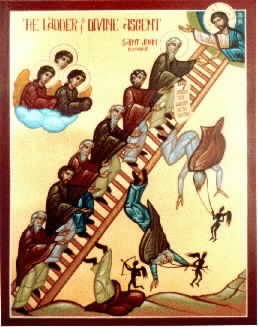
Ladder of Divine AccentThe eighth step of St. John’s Ladder is MEEKNESS and LOSS OF ANGER. A few words about anger are in order.

The passion of anger is not merely a tendency to lose one’s temper. Rather it is a spiritual disease that is not always apparent. St. John connects anger with pride and conceit, and therefore sees humility as its cure. He says:

Freedom from anger is an endless wish for dishonor, whereas among the vainglorious there is a limitless thirst for praise. Freedom from anger is a triumph over one’s nature. It is the ability to be impervious to insults, and comes by hard work.

How is pride the root of anger? St. John is not speaking of righteous indignation – anger at sin – but of anger that arises from wounded pride. While people’s rudeness or nastiness may seem a just cause to be angry, the passion of anger often has nothing to do with being stirred against sin. Even when someone makes a fair and perceptive criticism with the intention of helping us, anger is sometimes roused within us. Sometimes – either inwardly or outwardly – we lash out at our critic because we fail to see the truth that is being pointed out to us, for only when we are humble are we able to see things as they really are. Moreover, we think ourselves superior to our critics, so that even if we do admit the criticism is correct, our reaction is, “Who are you to criticize me? The more prideful we are, the more incorrigible we become, for we begin to see ourselves as superior to everyone – though, of course, we are too proud even to admit we see ourselves that way.

Thus St. John regards anger as a complete contradiction to a life of humility and repentance. Humility remedies anger because it remedies pride. The more true our repentance, the less wounded we are by anger.


Think about the times you have become angry. Isn’t St. John right?

The Divine Liturgy and Our Worship of God — 20150906

Mystical Supper

Mystical Supper

It is critical, I believe, that when we   worship we think of making our worship personal. Although we worship as a group, that which is offered up must also be individual. We must offer our own very lives back to God in worship. Our worship is modeled on the worship of Jesus. He offered Himself to the   Father in thanksgiving for life. We must not fall into the pattern of the past and choose to offer only Jesus up to the   Father, allowing ourselves to only offer up something – someone – who has been given to us. We must join with   Jesus and offering our very lives back to the Father.

I sense that so often Catholics, in particular, fall into the error of offering up Jesus to the Father in worship. Jesus already did that as a means of showing us how to worship God. The worship that Jesus modeled for us was/is the offering of one’s self to the Father in thanksgiving.

This means, therefore, that we must think about ourselves as being truly represented by the bread on the paten and the wine in the chalice. They are symbols of human life since they are food. Jesus used them to signify that He was offering His very life back to the Father. We join with Him in doing this.

The symbolic offering of ourselves to the Father in worship, however, is truly meaningless unless it is joined with a firm commitment to transform or change ourselves, attempting to make ourselves more in the likeness of God as represented in the Person of Jesus Christ. When we say that we want to grow in the likeness of God, we are actually saying that we want to become more and more like Jesus as we know Him through the Sacred Scriptures and Holy Tradition. To be like God is to be like Jesus, God Incarnate.

This means, however, that we must first realize that we have to change and then commit ourselves to changing our hearts and minds, working to bring them more into concert with the mind and heart of Jesus.

To do this we must fast and pray so that we have the courage to become more like Jesus. Then it means that we must examine our lives and determine what we must do to be more like Jesus. In most instances, I think, it means to bring our thinking more into concert with His thinking about life and,         especially, about others. We must learn how to see all others as brothers and sisters of the very same Father.

Further Thoughts About the WAY of Jesus — 20150906

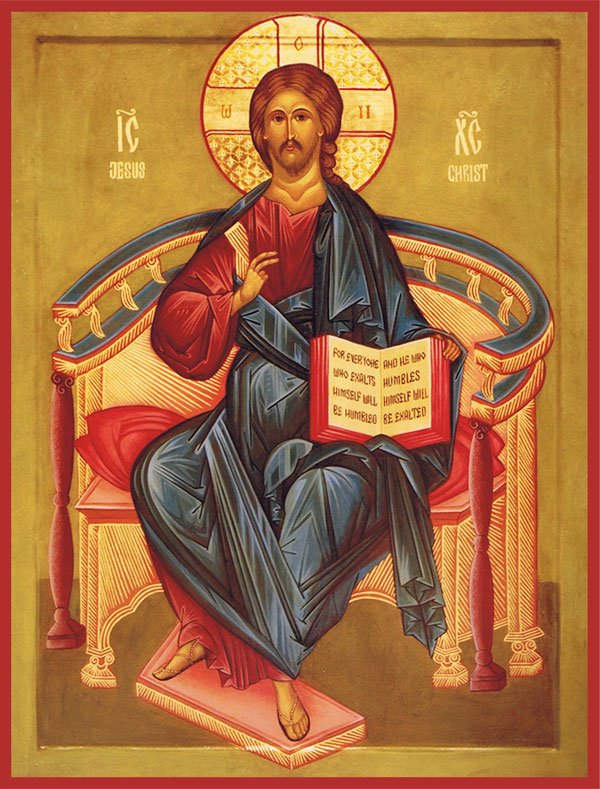
pantocratorThe WAY of Jesus, as I have shared with you before, is a way of personal change and transformation. It is accomplished by our actions to activate the potential we have been given by our God to grow in His likeness. His likeness, as we all know, is seen in the Person of Jesus, Who is God Incarnate.

So the WAY involves us cooperating with God’s Spirit within us to choose to change the way that we think and behave. Our thinking, of course, always crystallizes into our attitudes – the way that we look at God, life, others and even religion. If our attitude about God is that He is a punishing deity and unconcerned about us, then we will act in a way that reflects this attitude. If we feel that others can’t be trusted and are only desirous of taking advantage of us, then we will act in accord with this belief. If religion is only a series of rules and regulations, then we will not find the peace and joy which religion is meant to bring to us. If life is always bittersweet, then we will never really find peace.

Our thinking controls everything that we do. Unfortunately our thinking is also controlled by unconscious thoughts and ideas which we may have developed during childhood. Our thinking controls the way that we look at our world and our lives. If we think of this world as a hostile place, we will never find the beauty that exists in creation.

Given all of this, God came in the Person of Jesus to help us see that this earthly life is given to us in order to help us find the meaning and purpose of our lives and also see the love that He has for us. Remember that we pray in our Divine Liturgy that God’s love for man is beyond expression. God unconditionally loves us as only God can. We recall that even in Genesis it says that God created all things, even man, and found them good.

Now I realize that the experiences of life can make people bitter. I see it every day. Again this is due to their thinking. When people categorize life experiences as either bad or good, then I am sure that they will be disappointed since they probably experience more bad experiences than good. Why do I say this? Because humans tend to categorize any experiences which don’t meet their fantasies about life as bad. I hear so very often people say: Life isn’t fair! Of course they say this because life doesn’t always turn out the way that they want. Is life suppose to be fair by our personal definition? If it is, then I would suggest we would not grow and never come to understand the meaning of life.