Gaining a Deeper Understanding of the New Testament — 20151213

Saint PaulAs I shared in the last issue, there are multiple reasons to believe that First Timothy is later than Paul. One reason is that the articulated role of women in the Christian community appears to be very different from the one portrayed in the genuine letter of Paul. In the letters known to be written by Paul, there is an equality of male and female in Christ Jesus. In 1 Timothy there is a stark contrast. In chapter 2 (8-15), there is a statement that men should pray and women should dress modestly (in this case modestly really means inexpensively). The issue is the different roles assigned to men and women.   First Timothy restricts the role of women and disqualify them from any type of leadership roles in the community. This is difficult to reconcile with the Paul of the seven genuine letters.

The author of 1 Timothy provides a theological justification for this constriction of women’s roles by stating: For Adam was formed first, then Eve; and Adam was not deceived, but the woman was deceived and became a transgressor.

In 1 Timothy women are seen as responsible for bringing sin into the world. In the seven genuine letters, Paul never blames Eve. For him, the image of life apart from Christ is life in Adam.

As this passage in 1 Timothy ends, it does affirm that women, despite being responsible for sin, can be saved. How? Note the means: Through childbearing, provided they continue in faith and love and holiness, with modesty. This does not sound like the Paul of the seven genuine letters. By assigning Paul as the author of 1 Timothy, we distort his contribution. Most people think of Paul as a misogynist from passages such as those found in 1 Timothy.

As I shared in the last   issue, 1 Timothy includes lists of qualifications for bishops and deacons. Elders are also mentioned, though nothing is said about their qualifications. In our modern day, priests serve in the role of elders.

To begin with bishops, back then the word meant something quite different from what it does now. The Greek word episkopos meant overseer, and in a late first and early second century Christian context it could have referred to the overseer of a particular Christian community or perhaps several communities. Only later did it refer to the chief ecclesiastical official or a larger geographical area. When 1 Timothy was written, clearly bishops were leaders of more than one community. The qualifications for bishops are interesting.
Understanding Our Ukrainian Greek-Catholic Church — 20151213

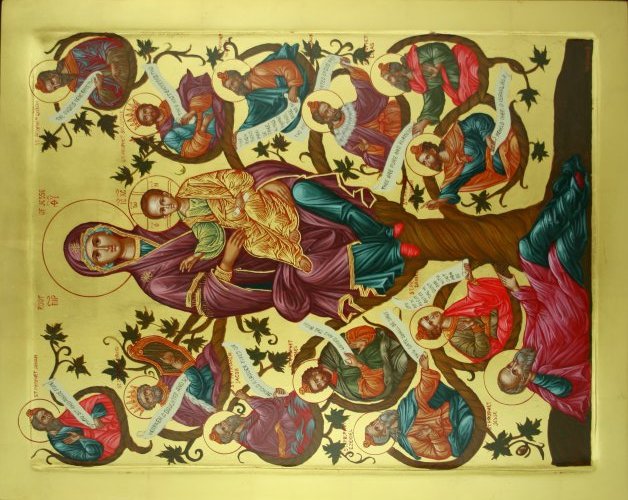
Tree of JesseOn this second weekend before the feast of Christmas, our Church and all Eastern Churches on the Gregorian calendar, commemorate the Holy Forefathers – the earthly ancestors of Jesus Christ – beginning with the first man, Adam, and on through Seth, Enoch, Noah, Abraham, Isaac, Jacob, King David, and others. These ancient people, separated from us by millennia, nevertheless have a direct and close bearing upon us contemporary Eastern Christians.

What connection is there between them and us? Our Church brings them to our attention now because of their faith. We are asked to recall and to imitate their strong and enduring belief in a promise given by God to mankind through the person of Adam. That promise, according to the Book of Genesis, was that God would eventually send a Messiah, that is a person who would show us how to live. All the forefathers – who lived on earth long before the birth of Christ – lived and burned with this faith, never allowing it to be extinguished.

The Church sees these Forefathers as a shining example given to us, who are living on earth after the incarnation of God in the Person of Jesus, so that we might likewise believe that God’s promise has been fulfilled. Just like those ancient people we, too, have never actually seen Christ! They only knew that He would come into the world, while we know that He did come into the world. But they firmly   believed in His coming and their faith was justified. We are called to firmly believe that He has come and that He has revealed to us how to live.

We are expected to have an even greater faith. We are called to believe that the Lord was, and is, and will be! That He lived on earth as a man and taught us how to live and that He now lives through His Church, remaining with us. We are also called to believe that He will return to earth at the end of time. We are encouraged by our Church to have the same strong faith as the Forefathers.

The winter feasts that we are preparing to celebrate, recall God’s promise to Adam and calls us to believe at this very moment that this promise has been and is being fulfilled. If we open our hearts, we know that God IS being born in our world (Christmas) and IS proclaiming that the Kingdom of God is at hand (Theophany). Do you believe that God has fulfilled His promise

MAKING THE WINTER FAST REAL — 20151213

During this final week before the feast of the Birth of Christ, think about what you might do to make your celebration of this feast much more meaningful and spiritual. You have it within your power to do this. Perhaps you already sent a card or made a call to someone who is shut-in. The challenge now is to get in contact with someone with whom you might be estranged. You could do it by phone, by email or by snail mail. How you do it is not important. That you do it is. Can you imagine what Christmas might be like if you were at peace with each and every person in your life?

The Divine Liturgy and Our Worship of God — 20151213

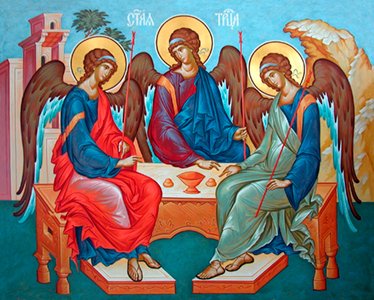
Mystical Supper

Mystical Supper

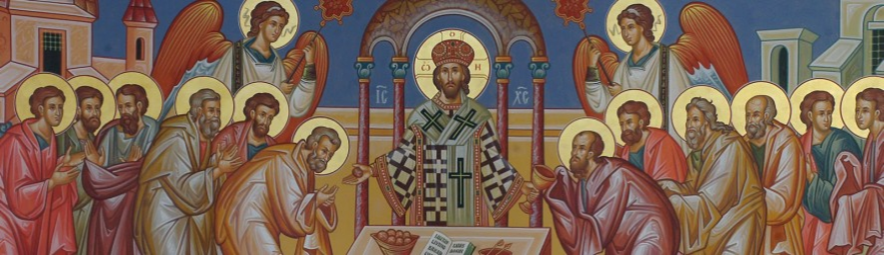
Anamnesis is not necessarily restricted to a particular part of the Eucharistic celebration. It should be remembered that while the succinct summary of the paschal mystery and statement of eschatological hope that bears the technical name of anamnesis (i.e. the prayer: Remembering, therefore, this salutary command and all that was done in our behalf: the cross, the tomb, the resurrection on the third day, the ascension into heaven, the sitting at the right hand, the second and glorious coming again) serves to focus the entire Eucharistic celebration, the entire Divine Liturgy is essentially anamnetic. Christian Eucharistic Liturgy is, first and foremost, anamnetic in character and nature. It makes real in the present moment that which took place in time. If we are truly transported into God’s Kingdom when we celebrate the Divine Liturgy (the opening statement that we declare at the very beginning), then there is no physical time and we can experience, if we allow ourselves to do so, what the apostles experienced with Jesus during the Last Supper.

While the term anamnesis and the related Hebrew word zikkaron are rare in Scripture, the Biblical canon, which grounds Christian and, in the case of the Old Testament also Jewish faith, is also anamnetic at its core. Pre-Christian and non-religious notions of anamnesis approach the Christian understanding of anamnesis to varying degrees, and serve to show the development toward the Christian sense of anamnesis as living and actualizing memory.

In Jewish worship there is this same sense of experiencing as present what happened in the past. The Exodus from Egypt, as experienced in the Passover, is something that every Jewish person experiences as real in their lives. When we experience the Christian Passover, that is Easter, hopefully it is as real to us as it was to the first Christians. That is why I always encourage all who worship with me to allow themselves to experience the joy of knowing that we are immortal. Jesus’ resurrection from the dead tells us of our immortality.

While I know that this concept of anamnesis is not necessarily easy to comprehend, it is all a matter of faith and allowing ourselves to imagine that in God’s Kingdom there is no time. The present moment is the only reality that really exists. Neither the past or the future are real! We can only experience life in the present moment.

CALLED TO HOLINESS — 20151213

Holy-Trinity-9It is important that we ask Jesus to help us consecrate our imagination, intellect, will and memory to God and to cleanse them of all the unholy things with which we have filled them. Thus given to God and filled with God they can be used without fear that they will lead us astray. Rather, we can trust them, not because they in themselves are powerful or wonderful, but because they are consecrated and guided by Jesus through His Spirit.

How do you consecrate these functions to God? It simply takes your word which is stated repeatedly until you find that they do not distract you from doing the will of God.

Here are some general principles. When an image comes into our imaginations that we judge to be wrong, immoral or evil, we have been well schooled in the ways of the world to repress that image, to feel guilty, and to call ourselves evil for having it. By repressing that image, however, we do not rid ourselves of it; on the contrary, we store it away in our unconscious minds. There it becomes a part of our false selves, a part of the way we view the world and ourselves, a part of our motivation for future actions.

Now, we know that we are in trouble when we start to use words like should and ought and must, because these words are sings that we are at war with ourselves. If we are at war within we do not have peace, and where there is no peace neither Jesus nor His Spirit can abide. If we succeed in repressing the thought, we also repress the tension of this struggle, only for it to reappear at a later time in some action that will relieve the tension and express the thought; that action will be sin. Under the guise of doing something good and Christian, then we are really doing great harm to ourselves, for the Bible does not say that we are to put evil thought out of our conscious minds and repress them into our             unconscious, thus adding to our false selves. The solution: turn more fully to God and more.

The Spirituality of the Christian East — 20151213

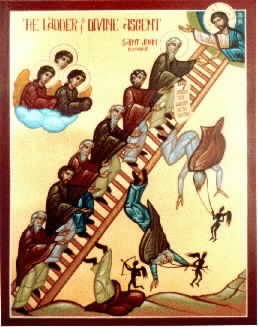
Ladder of Divine AccentThe 11th step on John’s Ladder is truly unique. It is Talkativeness and Silence. Talkativeness is the throne of vainglory on which it loves to preen itself and show off. John says that talkativeness is a sign of ignorance, a doorway to slander, a leader of jesting, a servant of lies, the ruin of compunction, a summoner of despondency, a real messenger of sleep, a dissipation of recollection, the end of vigilance, the cooling of zeal, the darkening of prayer. John tells us that intelligent   silence is the mother of prayer, freedom from bondage, a custodian of zeal, a guard on our thoughts, a friend of tears, a sure recollection of death, a companion of stillness, the opponent of dogmatism, a growth of knowledge, a hand to shape contemplation, hidden progress, the secret journey upward.

Silence is truly a virtue. John, halfway through his chapter on talkativeness, writes: I would prefer not to write too much about this, despite the urgings of my wily passions. This is no doubt the reason it is one of the shortest chapters in the Ladder. Yet it acts as a sort of appendix to the previous step on slander. He begins this 11th step with these words: The brief discussion on slander was concerned with the great danger of passing judgment on others, or rather with being judged and being punished by one’s tongue, and it touched on the fact that this vice can lay hold of the most apparently spiritual people. The time has come to indicate the cause of this vice and to give an adequate account of the door by which it enters – or, more accurately, by which it goes out…namely talkativeness.

We are reminded by John that Every idle word men may speak, will have to be accounted for on the day of judgment. We are called to beware of idle speech.        (More to follow on this 11th Step)

Reflections on the Scriptural Readings for this Weekend — 20151206

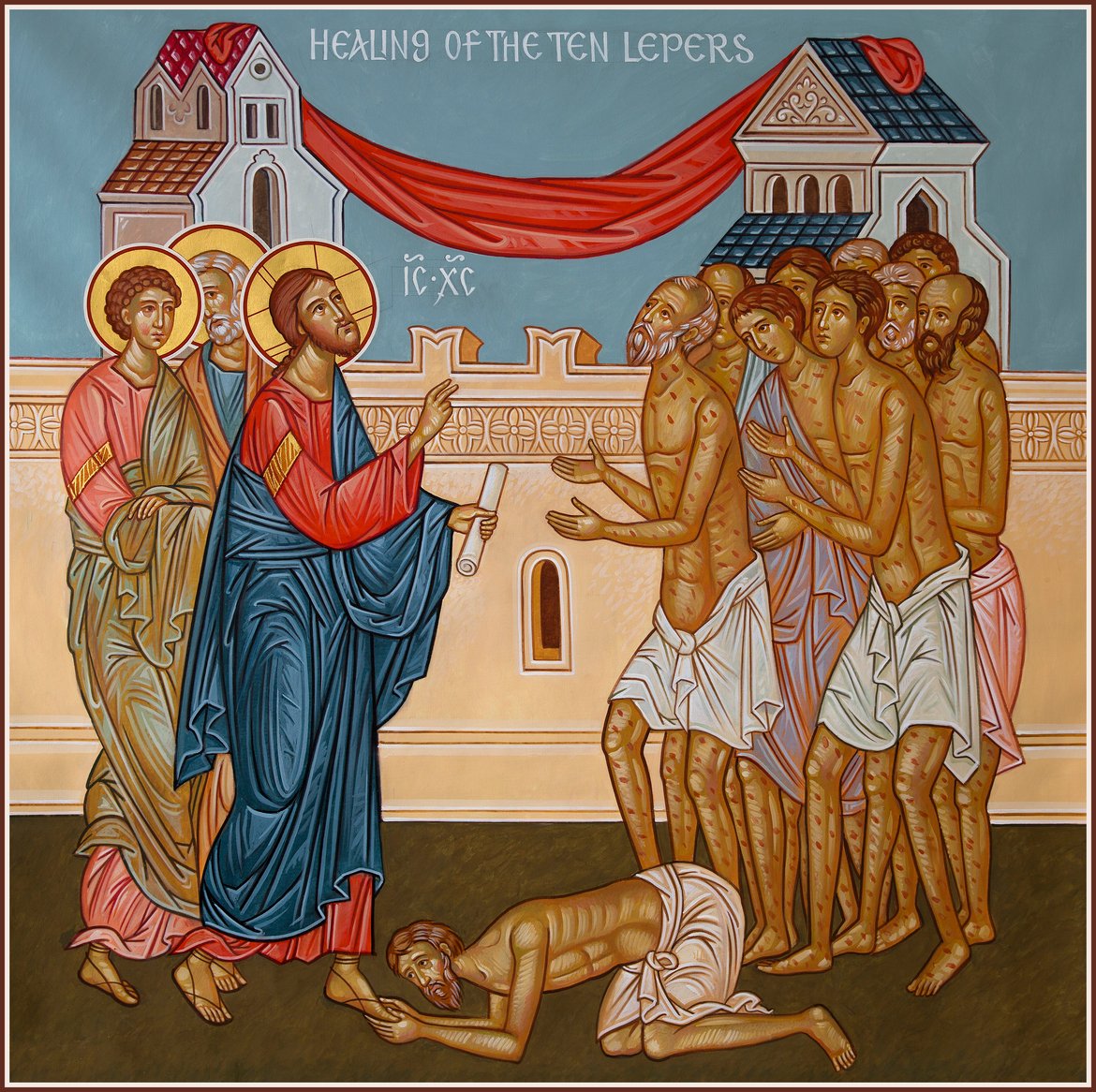
ten-lepers-iconThe Gospel story we hear this weekend is interesting in-so-far as it reminds us that too often we forget to give thanks to God for the blessings we have received. All ten lepers were cured. Only one returned and gave thanks to Jesus for the gift of a cure. I think this story highlights our natural, human tendency to overlook the many good things that happen to us and perseverate on those things that we feel are bad or we don’t like.

We humans tend to give a moral value to the challenges of life, counting some as good and others as bad. The problem with this approach to life is that it tends to stymie our learning from all of the events of our life. All the challenges of life are meant to help us grow. When we give them different moral values, we tend to learn only from a portion of the things that life is attempting to teach us.

What is interesting is that we can have 20 good things happen to us and then, when just 1 thing happens to us that we judge to be bad, we think that all of life is difficult and unkind. We always need to remember that the challenges of life are meant to help us learn how to be truly children of God and more like Jesus. If you honestly assess the challenges of life you will find, I think, that there is a real balance. It seems that life never presents any challenges which are impossible for us to deal with. St. Paul reports that when He petitioned God to remove one of his challenges God responded by saying my grace is sufficient for you. This is true. We never have a challenge that is too great for us to handle.

The Epistle reading for this weekend is taken from Paul’s letter to the Colossians. It has two important messages. St. Paul first tells the Colossians to give thanks to the Father for having made them worthy to share in the lot of the saints. He then adds this very important statement of true belief: Jesus is the image of the invisible God. What does this mean to you? If   Jesus, who is also like us, is the image of God, what does it mean for us? Do we truly believe Jesus is God’s revelation about how we should live as humans?

As I think about these readings, I am reminded that I must be thankful for all the challenges of life and not ascribe to any of them a moral value. All things can work for my good – for my spiritual development – if I take them as real   opportunities to grow. When I can come to a point in my life where I am thankful for all of life’s challenges, I know that I am spiritually growing and learning the meaning and purpose of life.

Understanding Our Ukrainian Greek-Catholic Church — 20151206

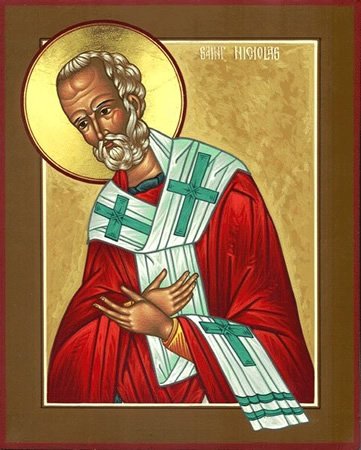
stnicholasofmyraI would interrupt my usual reflections on what is unique about our Church to recount some information about Saint Nicholas of Myra, the Patron of our Eparchy and one of the saints of the Eastern Church that is held in high esteem. Separating fact from legend in the story of St. Nicholas is difficult since so little is known of his personal life. Therefore, we must rely on the legends that have survived and on the traditions of our Church.

By tradition, Nicholas was born in the province of Lycia in the southern part of Asia Minor in the city of Patara to rich parents. The date of his birth is not known. Having inherited his parents’ estate, he became known for his generous gifts to those in need. As a youth, he made pilgrimages to Palestine and Egypt.

Scholars believe Nicholas was one of only three persons to be selected to be a bishop without being first ordained to the priesthood (the others are Saint Ambrose and Saint Severus). He was most likely a monk, a lay brother. Before being consecrated as a bishop, Nicholas would have been ordained to the offices of deacon and priest, though he would not have served as such.

He was consecrated as Archbishop of Myra as the fourth century began and it is thought that he participated in the Council of Nicea in 325 CE.

In addition to being honored as the patron saint of many countries and cities, he is most known as the patron of sea-farers.

He was imprisoned during the persecutions of Diocletian and released by Constantine after he became emperor.

Nicholas was noted for his defense of the true faith against the Arians. He died in Myra on December 6   between 342 and 352. The year of his actual death is uncertain.

Even during his life, he worked many miracles. One of the greatest was the deliverance from death of three men unjustly condemned by the Governor, who had been bribed. The saint boldly went up to the executioner and took his sword, already suspended over the heads of the condemned. The Governor, denounced by St Nicholas for his wrong doing, repented and begged for forgiveness.

He worked many other miracles, and struggled many long years at his labor. Originally buried in Myra, Italian sailors later stole his body and brought it to Bari, Italy. His relics are still exuding scented oil.

CALLED TO HOLINESS — 20151206

By our Initiation into the Church of Christ, we have been called to holiness – we have been called to actualize the potential within us for   becoming more like Christ. In fact, this is the meaning and purpose of this present earthly life. We have been given this earthly life so that we might develop our spiritual natures and be more like Christ and, therefore, achieve what God intended when He created us. To achieve this requires, however, personal transformation – requires that we transform our imaginations, intellects, wills and memories to be oriented to God.

Imagination, intellect, will and memory comprise our minds or psyches. Each of these functions is given to us by God to reflect or image a part of Him and each is supposed to do something unique and good within us according to God’s plan. These functions at our birth are incomplete and have to be developed. Why? Because otherwise we could never come to freely and voluntarily return God’s love. They on their own can discover and cling to nothing of eternal value, nothing of all the important things for which mankind longs. Therefore, we must be reborn in Jesus for our minds to enter the Kingdom of God.

It is in His understanding of this truth that Jesus said: I am the Way, the Truth, and the Life. No one comes to the Father except through me. He is the Way that redeems our wills, the Truth that redeems our intellects, and the Life that redeems our imaginations, so that, filled with Jesus, we can find our true selves and come to the Father, Who is the goal of our lives.

It is important, then to learn how to fill each of these functions of our minds with Jesus as a first step in our spiritual growth. We need Jesus to consecrate them to God and to cleanse them of all the unholy things with which we may have willingly or unwillingly filled them. Thus given to God and filled with God they can be used without fear that they will lead us astray.

The Spirituality of the Christian East — 20151206

Ladder of Divine AccentI would offer some last thoughts on the 10th Step on John’s Ladder, that is on SLANDER. We have all known many people who secretly had committed very grave sins and had not been found out and yet, cloaked in their supposed goodness, lashed out against people who had done something minor in public. Those sins that are visible or audible tend to be the sins that are condemned most, while more serious sins are concealed and go unchecked.

To refrain from judgment is the surest path to forgiveness. There is a famous story about a lazy, sinful and disobedient monk. As he lay on his deathbed, an angel appeared to him holding a large scroll. When he unfolded it, the monk saw that it was extremely long. The angel said, “This is the record of your sins.” The monk replied, “Among all those sins, is there written the sin that I ever judged anyone?” The angel tore up the scroll and the monk left the world in peace to meet his Maker.

Thus St. John writes: Do not make judgments, and you will travel no quicker road to the forgiveness of your sins. “Judge not, so that you may not be judged.” While not judging can be enough to save even the most sinful of people, judging can be enough to condemn the most virtuous.

How easily we see the faults of   others and with what difficulty we look for the good in them! We ought to look for the best in people and we should never forget that we do not know the hearts of others, nor do we know all the circumstances of their life.

If we can overcome the passion of slander, we will certainly be on the blessed road of love and repentance. This is the tenth step and he who succeeds in it has spiritually grown.

Seek first to see your own faults and cast a blind eye on those of others.